Since April 1, 2026, participants in foreign economic activity have faced an important technical change in the payment of customs duties: single personal accounts at customs are now correctly replenished only by the account holder. The reason is the new rules for processing payment documents, which were approved by the Ministry of Finance by Order No. 58n dated May 16, 2025. On the same day, the document finally replaced the previous 2013 Regulation No. 107n.
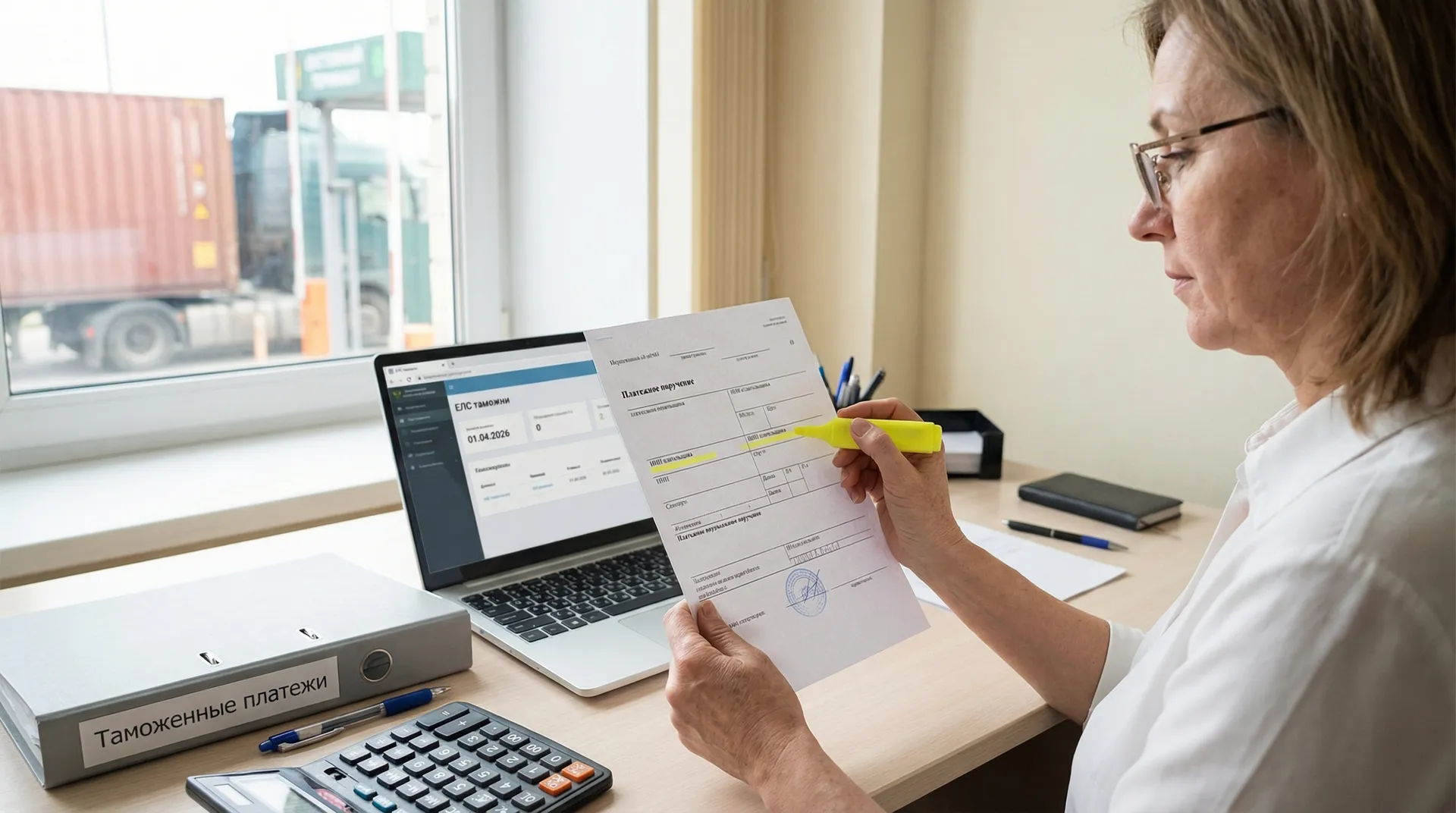
The main node of the changes is located in the section that describes filling out orders for the payment of customs duties. The requirement is explicitly stated there: the details “Actual payer”, “INN of the actual payer” and “CHECKPOINT of the actual payer” are not filled in for such payments.
In practice, it was these fields that for many years made it possible to make payments in favor of another person when money left the account of an intermediary, bank, agent, or group of companies, and crediting was required to the ELS of a specific importer or exporter.
Now the payment logic is getting tougher. The INN in the document must correspond to the account holder from whom the debit is being made. When crediting, the customs authorities see the payer as the only point of reference. A payment that comes from a third party may not receive correct identification for the owner's ELS. As a result, the money runs the risk of passing into the category of unexplained receipts or going to be refunded to the sender.
Separately, the Ministry of Finance clarified the approach to payer statuses for customs purposes. Specialized codes remain in circulation, including statuses for legal entities, individuals, and sole proprietors, as well as separate statuses for foreclosures and for guarantors. The industry explanations emphasize that it is possible to pay for another person through the lines of compulsory collection or in the role of a guarantor or guarantor.
The risk group includes companies that used the holding's centralized treasury account, payment agents, settlement structures, as well as “we'll pay today, we'll catch up with the documents tomorrow” schemes for urgent release. Starting from April 1, such scenarios require reassembly: the payment must be made from the account of the participant in the foreign economic activity to whose ELS it is necessary to transfer, or the role of the guarantor in a legally correct design must be pre-arranged.
What should I do right now?:
- check who actually sends customs payments to the company and from which bank
- update payment templates and payer statuses in the accounting system
- to coordinate with the broker and the financial service the rules of replenishment of the ELS for each delivery
- prepare advance financing in advance on the account of the owner of the ELS, so as not to catch a stop on the issue due to a refund