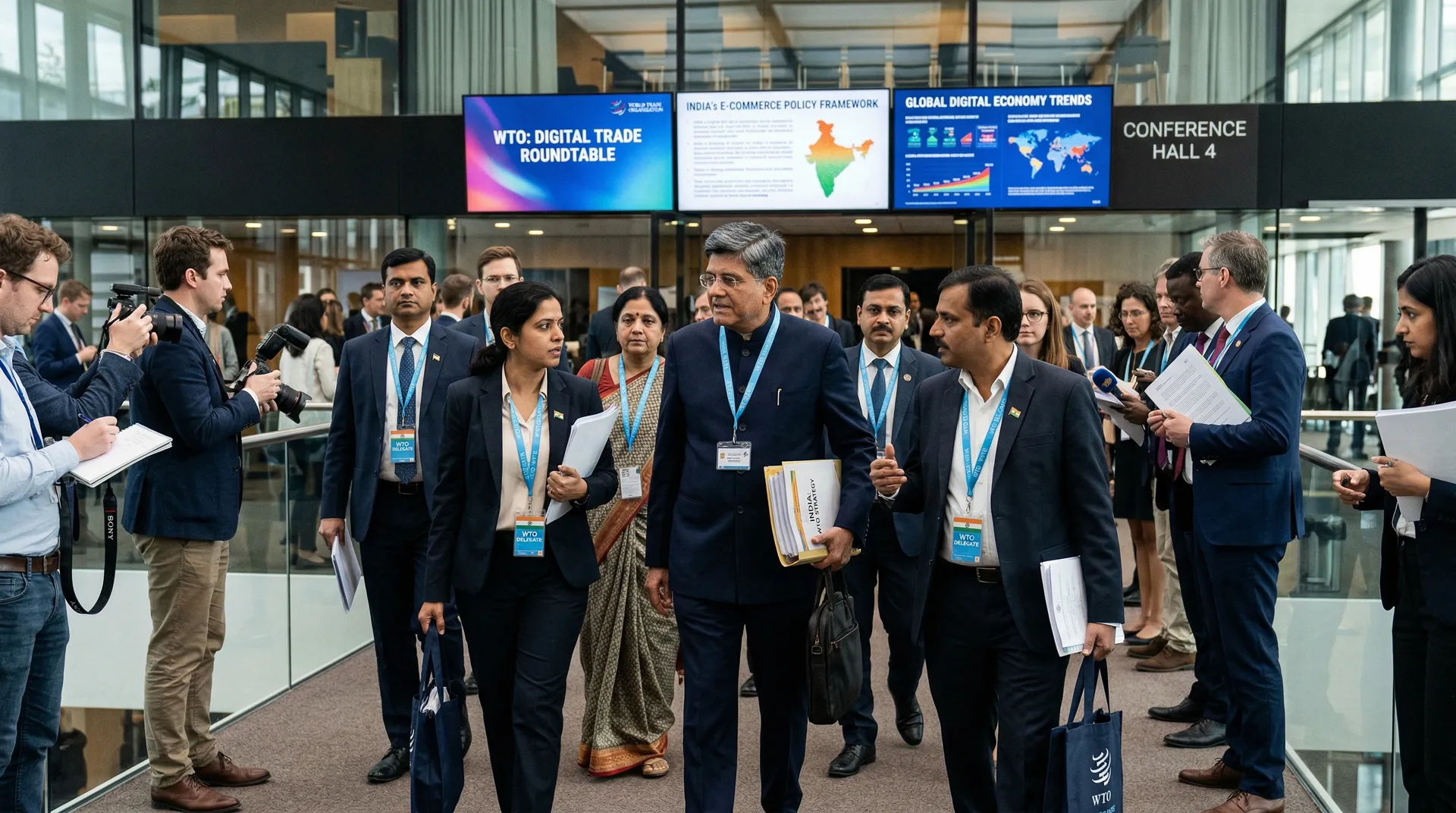
India is making a more flexible move in one of the most sensitive global trade discussions. At the WTO negotiations, New Delhi made it clear that it could agree to a two-year extension of the moratorium on levying duties on electronic transmissions. At the same time, the Indian side maintains a principled position: the issue cannot be closed forever without a new assessment of the consequences for developing economies.
This dispute has long ceased to be a technical one for global trade. We are talking about the right of states to determine the future of the digital market, the tax base, the regime of cross-border e-commerce and the balance between the interests of global platforms and national economies. India has consistently stressed that an indefinite ban on such duties limits the space for trade policy and deprives countries of some potential revenue.
The willingness to discuss a short extension shows that New Delhi does not intend to disrupt the negotiation process. India reserves a maneuver for itself and at the same time fixes the red line: the decision must take into account the interests of the developing world and not turn into a unilateral victory for the largest digital players. This approach is especially important for the BRICS countries, which are increasingly building their own ecosystems of e-commerce, payments and cross-border services.
For businesses, this means one thing: digital commerce remains a zone of high regulatory uncertainty. While the largest economies are arguing about the rules, platforms, merchants and technology companies are forced to consider the risk of changing the regime of cross-border transactions. In this configuration, India acts as a country that is trying to transfer the dispute from the plane of ideology to the plane of trade sovereignty and long-term settlement.