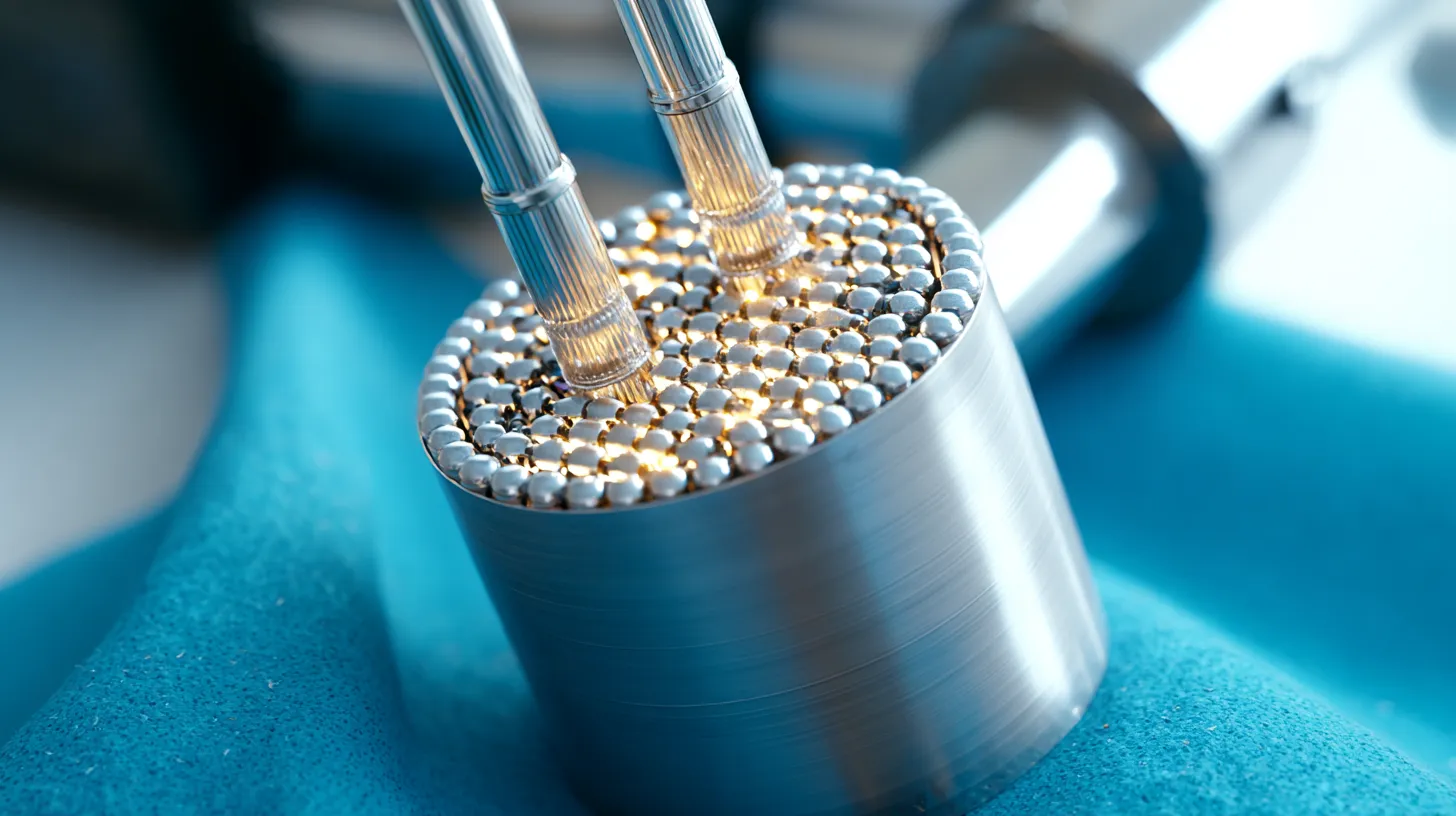
Indian researchers have announced a technological breakthrough in the field of energy storage — an improved cathode material has been created at the Bengaluru State Institute, which makes zinc-ion batteries much more capacious, safer and more durable. The development represents one of the most promising alternatives to lithium-ion solutions, which, despite their popularity, have environmental and operational limitations.
The key innovation is the special thermochemical treatment of vanadium oxide. Scientists intentionally create defects in the structure of the material and turn it into zinc-vanadium oxide. These microstructural features make it easier to move the charge inside the battery, which significantly improves the efficiency of the device. This approach increases battery life — it can withstand thousands of recharge cycles without significant loss of capacity and degradation.
Today, lithium-ion batteries dominate the global market, but their production requires rare metals, is often accompanied by environmental pollution, and the devices themselves are subject to fire risks. Against the background of growing requirements for environmental friendliness and safety, zinc-ion systems, characterized by stability, accessibility and minimal environmental impact, are attracting more and more attention.
Indian development makes such solutions more competitive. The increased energy intensity and wear resistance open up prospects for the use of improved zinc-ion batteries in a variety of industries, from smartphones and consumer electronics to electric vehicles and energy storage systems powered by solar power plants. Experts note that due to lower cost and ease of production, such batteries can become a mass alternative to traditional lithium-ion technologies.
According to the researchers, this is just the beginning. The team is already continuing to work on optimizing the composition and finding ways to scale production. India expects to strengthen its position in the global battery market by offering environmentally friendly and safe solutions for the economy of the future.