RVB, a combined company of Wildberries & Russ, is launching an application project in Tomsk that could set a new standard for last-mile automation. Engineers at the Faculty of Information Technology of Tomsk State University are developing a prototype logistics station with a fully automatic circuit: receiving parcels from a cargo drone, placing them in cells and issuing orders to customers. A public demonstration of the finished solution is scheduled for May 2026.
The key bet is made on the continuous operation of the station without the constant presence of personnel. The architecture of the project includes several bundles at once: a "futuristic postamate" as a robotic pick-up and delivery point, its own cargo drone for the typical dimensions of marketplace parcels, as well as an automatic battery replacement mechanism. Such a set is important for real-world operation: it is the battery and the charging cycle that most often limit the regularity of departures, especially in cold and wind conditions.
A special emphasis in the project is the applied nature of the development and access to industrial expertise. Igor Koval, Director of RVB's Innovation and Ecosystem Development Department, linked the company's expectations to the release of a ready-made prototype within a fixed time frame and to the practical testing of solutions on the marketplace infrastructure.:
"It is valuable for us that TSU students take up the solution of applied problems. The guys will work on developing a prototype for six months, and in May they will present a ready-made solution. We are interested in the emergence of new technological solutions and are happy to share the experience of the company's experts with young engineers who are already shaping the technological landscape of the country with us. Students' participation in practice-oriented projects allows them not only to develop their professional competencies, but also to test promising products on the platform of Russia's largest marketplace. I am sure that such initiatives create the basis for the development of logistics of the future," said Igor Koval, Director of the Department for Innovation and Ecosystem Development at RVB.
The practical value of such a station goes beyond urban deliveries. The drone shoulder closes hard-to-reach areas and reduces dependence on local road restrictions, which is especially important for distributed regions and seasonal routes. Wildberries has previously tested unmanned delivery between a logistics center and a pick-up point, which means the company is consistently assembling a technological puzzle: a flight segment, a landing site, and a standardized pick-up point.
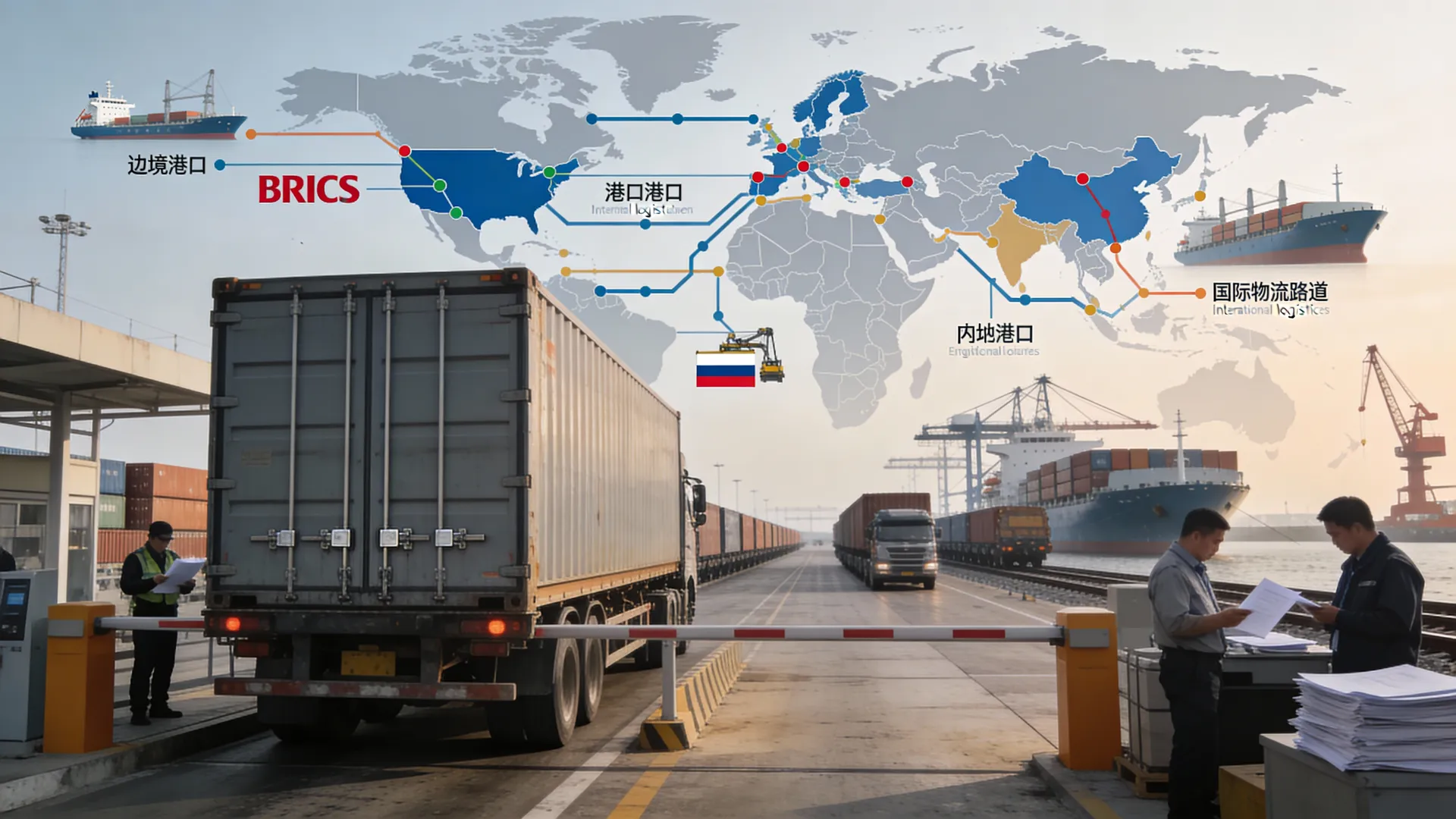
For foreign economic activity and the BRICS markets, the potential effect will manifest itself in hybrid schemes: the main stream comes by rail, motor transport or air, then the parcels are laid out in regional hubs, and the "last kilometers" are closed by a network of stations with an unmanned shoulder. In such models, the importance of digital traceability, identification of shipments, and chain security is growing. When scaling up, it will be necessary to work out in advance the requirements for landing zones, rules for the operation of UAVs, insurance, cyber protection of the station and access control to cells. For cross-border shipments, the issues of customs statuses and the correct linking of product data to a specific cell and recipient will be added in order to exclude issuance errors and disputes.
The Tomsk project looks like an attempt to assemble an industrial-level "constructor" based on a university with a fast prototyping cycle. If the tests confirm the claimed automation and reliability, the market will gain a new growth point.: a network of postamates designed for autonomous operation and integration with unmanned delivery in real conditions.