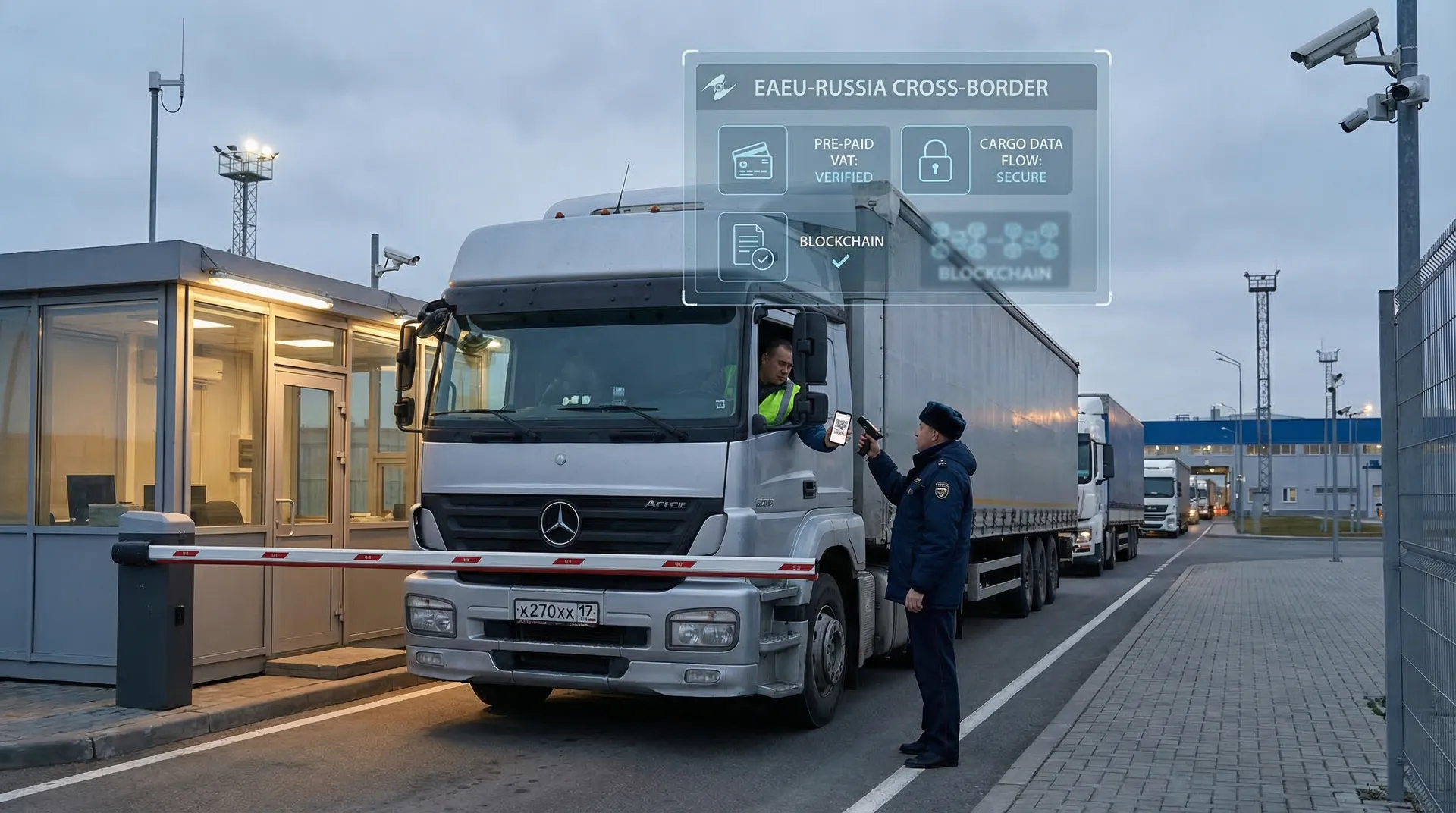
Russian customs practice has noticeably tightened its approach to goods that are imported through the EAEU countries, but were originally produced in "unfriendly" states. For businesses, it looks like this: the delivery is processed as a transfer within the union, and at the control stage in Russia, there is a requirement to pay additional duties at increased rates linked to the country of origin.
The key nerve of the story lies in the difference between the "status of the goods of the union" and the actual origin. On paper, the goods could pass through customs clearance in one of the EAEU countries and then move freely. In practice, inspectors increasingly compare the origin with the lists of increased rates and charge additional payments already upon importation into Russia. Wide categories of consumer goods are at risk: food, clothing, cosmetics, and certain beverages.
For logistics, this changes the math of routes. The "bought in the EAEU — brought to the Russian Federation" schemes no longer guarantee a stable payment profile. Companies are starting to budget for two scenarios: base rates and an "elevated" contour if the origin is confirmed as "unfriendly." This affects the choice of consolidation warehouses, the terms and conditions of Incoterms, and even product range decisions.
The main practical conclusion for foreign economic activity teams is that documents of origin become the center of risk management. We need structured procedures: verification of certificates and statements of origin before shipment, transparent tracing of the supply chain, comparison of HS codes with lists of increased rates, and verification of the correctness of information in shipping documents. At the contract level, the role of supplier guarantees and financial reservations in case of additional charges increases.
A separate area is marketplace deliveries, where the turnover rate is high, and documentary discipline often suffers due to the fragmentation of batches and the multitude of counterparties. The customs risk quickly turns into the risk of sales stoppage and cash gaps: the duty is overcharged — the batch is "stuck" — the product cards are empty — fines for delays are increasing. Therefore, companies are increasingly carrying out verification of origin at the earliest stage — even before purchasing on the foreign market, so as not to "treat" the problem at the border.