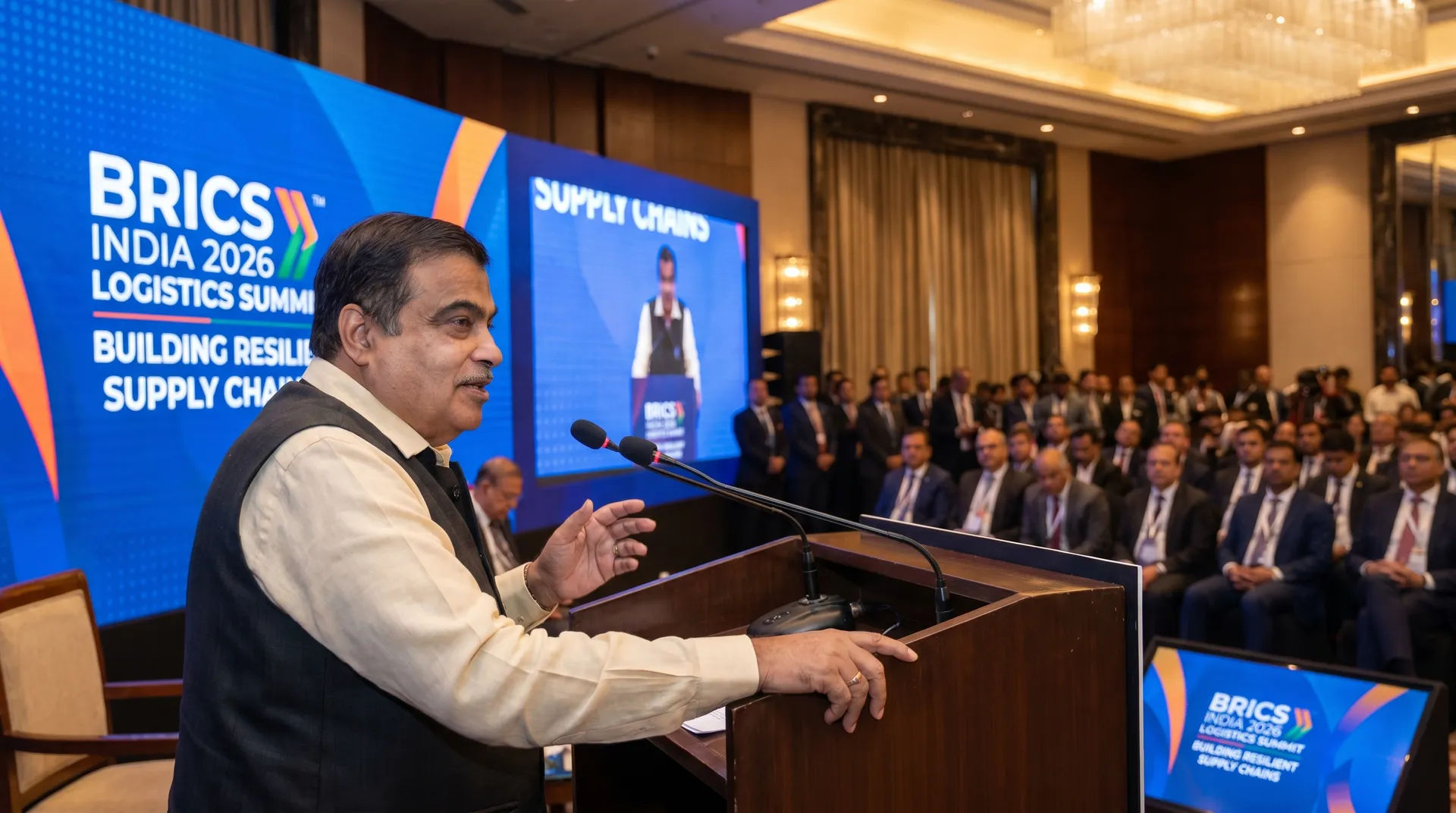
India openly formulates a strategic goal: to become a global logistics hub, relying on the BRICS presidency and large-scale investments in infrastructure. At the Logistics Shakti Summit 2026, this ambition received concrete figures.
Minister of Transport and Highways Nitin Gadkari stated bluntly: "We have set a clear goal to reduce the share of logistics from 14-16% to a single digit of 9%. With investments of 1 trillion rupees in multimodal infrastructure, every 100 rupees invested generates 321 rupees of GDP growth. Projects that used to take 9 hours are now completed in 2.25 hours."
The context is fundamental: logistics costs in India are twice as high as in China. This directly affects the cost of everything that is produced or imported through Indian ports and corridors. Reducing this figure to 9% will change the country's competitiveness as a trading partner across the entire supply chain, from Russian fertilizer suppliers to Chinese electronics manufacturers.
The summit took place at a time when India is simultaneously chairing the BRICS and building new trade routes. The first session discussed exactly this: how to bypass conflict zones, including the closed Strait of Hormuz, through the new BRICS corridors. Representatives of the Russian trading ecosystem participated in the work.
We discussed air cargo separately — India wants to build dedicated cargo terminals without depending on passenger flights. This is an important signal for suppliers working with fast delivery in India.
Gadkari's figure is an investment of 1 trillion rupees, which is about $12 billion. With this scale of investments, India will become a fundamentally different partner in the BRICS supply chains in a few years.