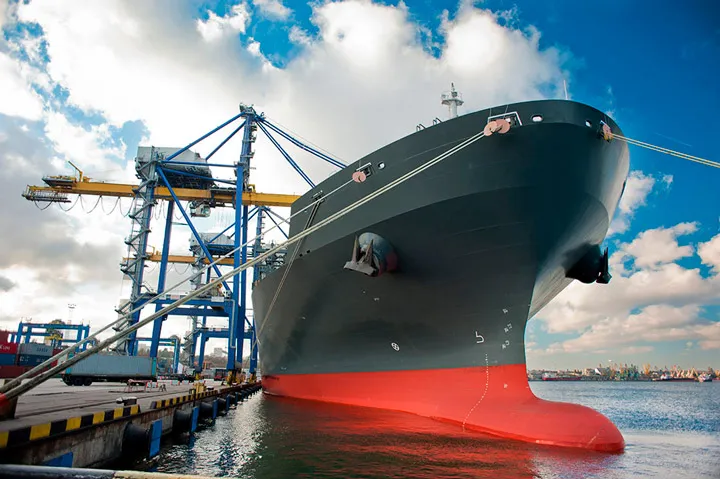
In China, the world's largest all-electric cargo ship called Gezhouba has been launched. The ceremony took place in Yichang, Hubei Province. The event marked an important milestone in the development of environmentally friendly and intelligent shipping, Xinhua news Agency reported.
The vessel has a length of almost 130 meters and is capable of carrying more than 13 thousand tons of cargo. The ship is powered by 12 lithium batteries with a total capacity of 24,000 kWh, which allows it to travel up to 500 kilometers on a single charge.
The main feature of the cargo ship is the built-in intelligent control system, which supports remote navigation and automatic mooring. Due to this, the vessel is able to operate in a semi-autonomous control mode, increasing the safety and efficiency of transportation.
Experts estimate that the new cargo ship will save about 617 tons of fuel per year and reduce CO₂ emissions by tens of thousands of tons, making it one of the most environmentally friendly developments in the global shipping industry.
According to Yan Xinping, an academician of the Chinese Academy of Engineering, the Gezhouba project combines the latest technologies in the field of energy storage, distributed power sources and ship design, going beyond individual innovations and creating an entire technological ecosystem.
Other BRICS countries are also showing interest in electric water transport. Passenger electric vessels are actively developing in Russia, which already run along the Moskva River - by 2026 their number will reach 39 units, and by 2030 — 60. In the UAE, as reported by Emirates News Agency, electric tugboats and hydrofoils are already being used, confirming the global transition to clean technologies.