Brazil and the European Union are moving into the practical phase of launching the EU–Mercosur agreement, which forms a new architecture for foreign trade between South America and Europe. The negotiations focus on reducing tariff barriers, expanding market access, and synchronizing regulatory requirements.
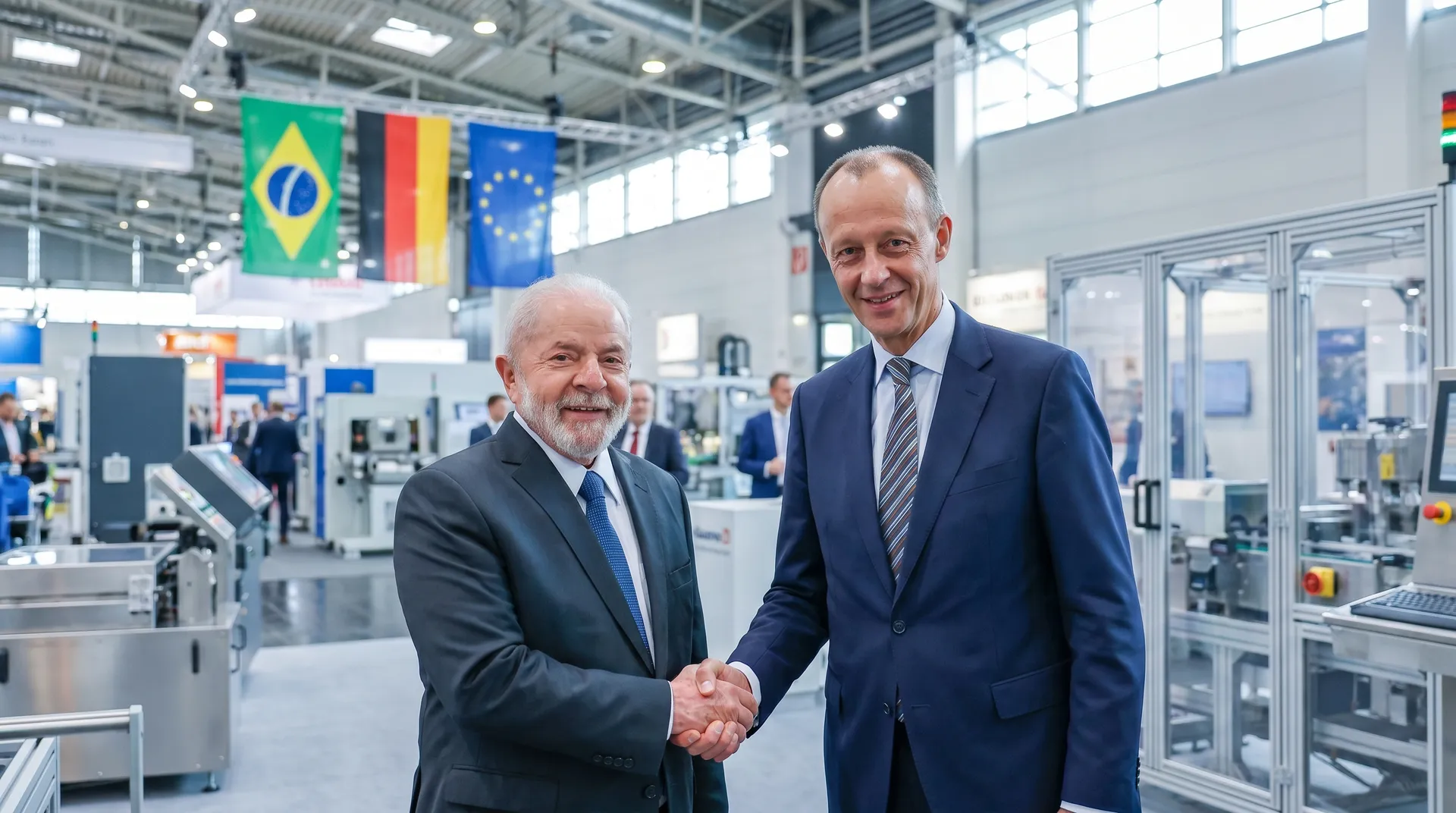
At an international industrial site in Germany, the leaders of the two countries confirmed their political will to accelerate the process. Brazilian President Luiz Inacio Lula da Silva and German Chancellor Friedrich Merz outlined a time frame and stressed the strategic importance of the agreement for both sides.
The deal covers a wide range of industries, from the agro-industrial complex to mechanical engineering and chemical products. For Brazilian exporters, this means easier access to the European market, including lower duties on key product groups. The European business, in turn, gets expanded opportunities to supply equipment, technologies and services to South American countries.
Special attention is paid to logistics. Increasing trade turnover will require modernization of the port infrastructure, strengthening of transport corridors and optimization of customs procedures. Market participants are already anticipating an increase in container flows between Atlantic ports, as well as an increase in demand for storage facilities and multimodal transportation.
An important element of the agreement is the rules of origin and standards of sustainable development. The European side insists on compliance with environmental requirements, which affects the export of agricultural products and raw materials. Brazil, in turn, promotes the interests of industrial processing within the country, seeking to increase the added value of exports.
Finalizing the agreement could be a turning point for the entire foreign economic activity system in the region. Companies are already preparing to renegotiate contracts, reconfigure supply chains, and switch to new trading conditions. For the global market, this is a signal of the formation of another large economic cluster with stable trade links.