






The €500 million ($557.5 million) investment package for the Persian Gulf countries remains in force. Earlier, facilities worth €120 million in the UAE and €130 million in Saudi Arabia were announced.
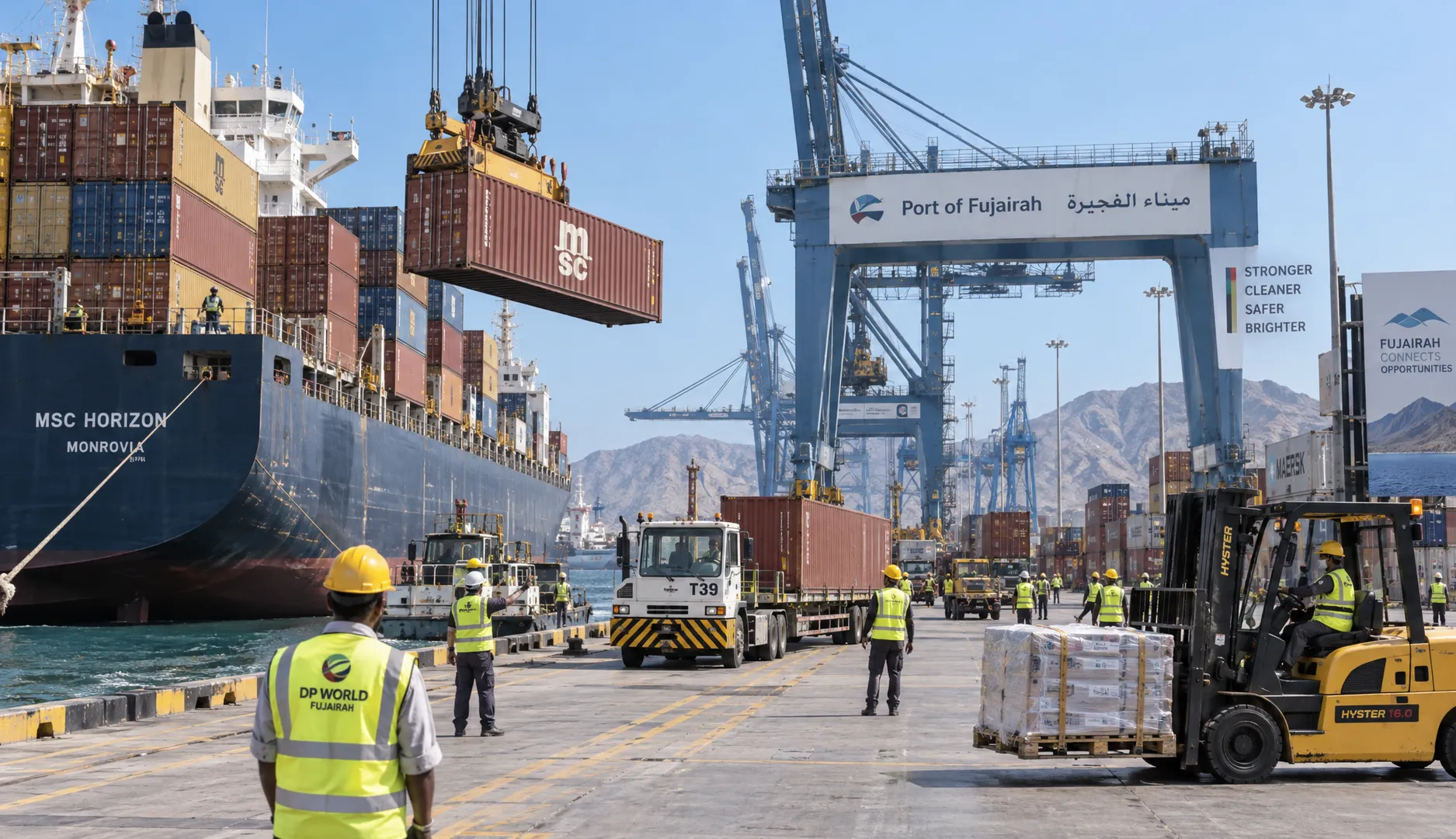
The focus of the current expansion is the east coast of the UAE: the areas of Khor Fakkan, Dibba and Fujairah. This is where the emirate's authorities plan to develop port infrastructure that allows cargo flows to be redirected around the Strait of Hormuz, where tension has persisted since the start of the conflict with Iran.
"We will continue to invest here," said Tobias Meyer, head of DHL Global Forwarding for the Middle East and Africa, without specifying amounts for the new facilities.
In parallel, DHL Global Forwarding signed a 20-year partnership with Etihad Rail, the operator of the UAE national railway network, to set up a joint venture in freight transport.
Meyer describes the current state of the market as manageable, though costly. Rising freight rates, fuel costs and the forced shift to alternative ports have significantly increased operating costs across the industry. Cargo that cannot reach its destination port in the Gulf is unloaded in India or Sri Lanka, and its onward delivery becomes an additional cost item.
"You have a big shortage of available capacity. There is a lot of extra work because other ports are being used," Meyer said, adding that extra port calls and a land leg come on top of that.
"More people touch the cargo, so vessel waiting times grow… logistics always depends on fuel prices, and they have risen because of the conflict," he explained.
According to Meyer, the industry will need three to six months to normalise after the conflict ends. For now, he says, the situation has stabilised after the initial peak.
"Everyone knows the routes, so unless there are new shocks and disruptions, I think we will cope," he concluded.
For foreign trade participants working through the UAE, the picture is as follows: routes via the emirate's eastern ports are becoming a fully working alternative. Infrastructure investments by the largest operators and state programmes to expand port capacity are forming a stable corridor that does not depend on the situation in the Strait of Hormuz. The horizon for rate stabilisation is three to six months after de-escalation.
Related news:
- A container ship sank in the Strait of Hormuz: how to choose a route — how to choose a route after a container ship was lost in the Strait of Hormuz
- Iran and Oman agreed on a limited shipping corridor through the Strait of Hormuz — a temporary Iran–Oman corridor for vessels in the Gulf
- UAE–Russia freight rose 2.7 times: $10,360 per container — what sea shipping from Jebel Ali to Novorossiysk costs
- The EAEU–UAE agreement has entered into force: how the new tariffs work — what tariff benefits the EAEU–UAE agreement provides
- Persian Gulf countries — an attractive harbour for Russian entrepreneurs — why Russian businesses choose the Persian Gulf countries