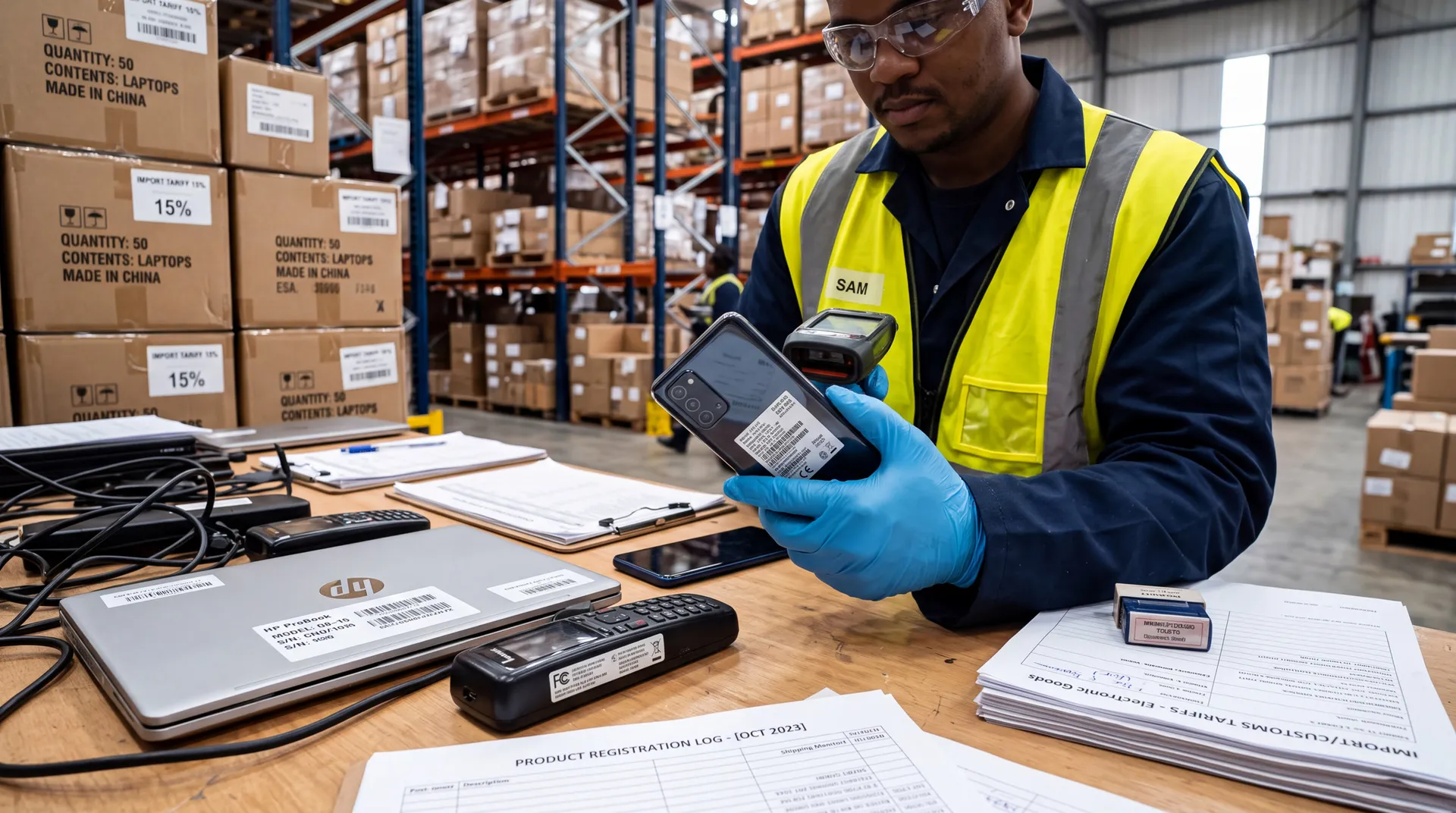
The memorandum on personnel training is a visible part of the agreements. Less noticeable, but more practically significant, is the work on the digital integration of the customs systems of the two countries. Vladimir Ivin, Deputy Head of the Federal Customs Service, identified this area as a priority at the XI CIPR-2026 conference.
What is CIPR and why is the FCS acting there?
The Digital Industry of Industrial Russia is one of the largest industry conferences on the digitalization of the public sector and industry. The FCS's participation in such an event is not accidental: the customs service is actively developing its own digital tools and integrating with other government systems — the Federal Tax Service (FTS), the Rosselkhoznadzor (Phytosanitary Data), and the EAEU Traceability System (RNPT).
The next logical step is cross—border integration with major trading partners. China is the largest of them.
How the Russian-Chinese customs works now
Today, information exchange between the customs offices of the two countries takes place in manual or semi-manual mode: documents are transmitted in paper or PDF format, verification takes time, discrepancies in data create delays. This is a normal situation for most pairs of countries, but with a turnover of $240 billion per year, it becomes a bottleneck.
In practice, a Russian exporter sends goods to China, where they pass through Chinese customs again, with a re—examination of documents that have already been verified by the Russian side. And vice versa. The mutual digital exchange of data makes it possible to eliminate this duplication.
How it works in international practice
The most advanced example is the digital customs interaction between the EU and a number of Asian countries within the framework of the Customs—to-Customs Data Sharing program. Customs services exchange structured cargo data in real time: data from one country's export declaration is automatically verified when creating another country's import declaration.
The result is faster output, fewer additional requests, and a lower risk of product classification discrepancies.
What does this give the business?
For companies exporting to or importing from China, digital data exchange in the future means:
— fewer requests for additional documents if the data has already been verified by the partner customs — faster release of goods on both sides of the border — fewer classification discrepancies: it is more difficult to refer to "different interpretations of the code" when the systems exchanged data — less paperwork for participants in simplified registration programs (AEO).
Implementation horizon
Digital integration of customs systems is a medium—term project, not tomorrow. Data formats will need to be coordinated, channels tested, and information security issues addressed. The realistic horizon of the pilot is 2027-2028.
The practical conclusion for businesses is to invest in their own digital infrastructure right now. Companies working with EDI, structured declaration formats, and digital documents will integrate faster into new systems when they become available.