How to enter public procurement: requirements, advantages and where to get money for participation and execution
Public auctions (public procurement) is an organized process of purchasing goods, works or services for the needs of state and municipal institutions at the expense of budgetary funds. The purpose of bidding is to ensure transparency, competition and budget savings in the selection of suppliers.

The main laws governing public procurement in the Russian Federation
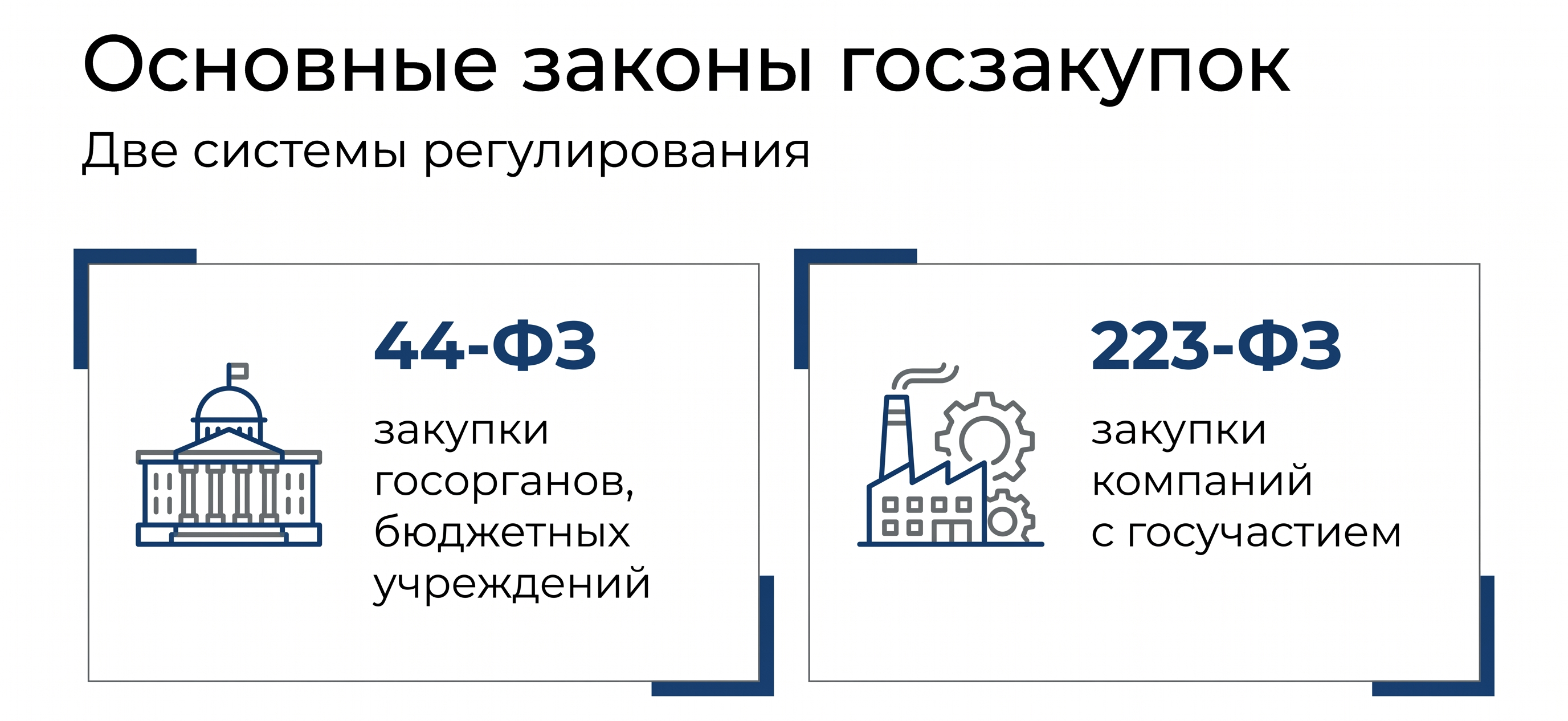
- 44‑FZ regulates the procurement of government agencies, budgetary institutions and state—owned companies;
- 223‑FZ regulates the procurement of companies with state participation (for example, Gazprom, Russian Railways, Rostelecom, etc.).
How are the auctions going?
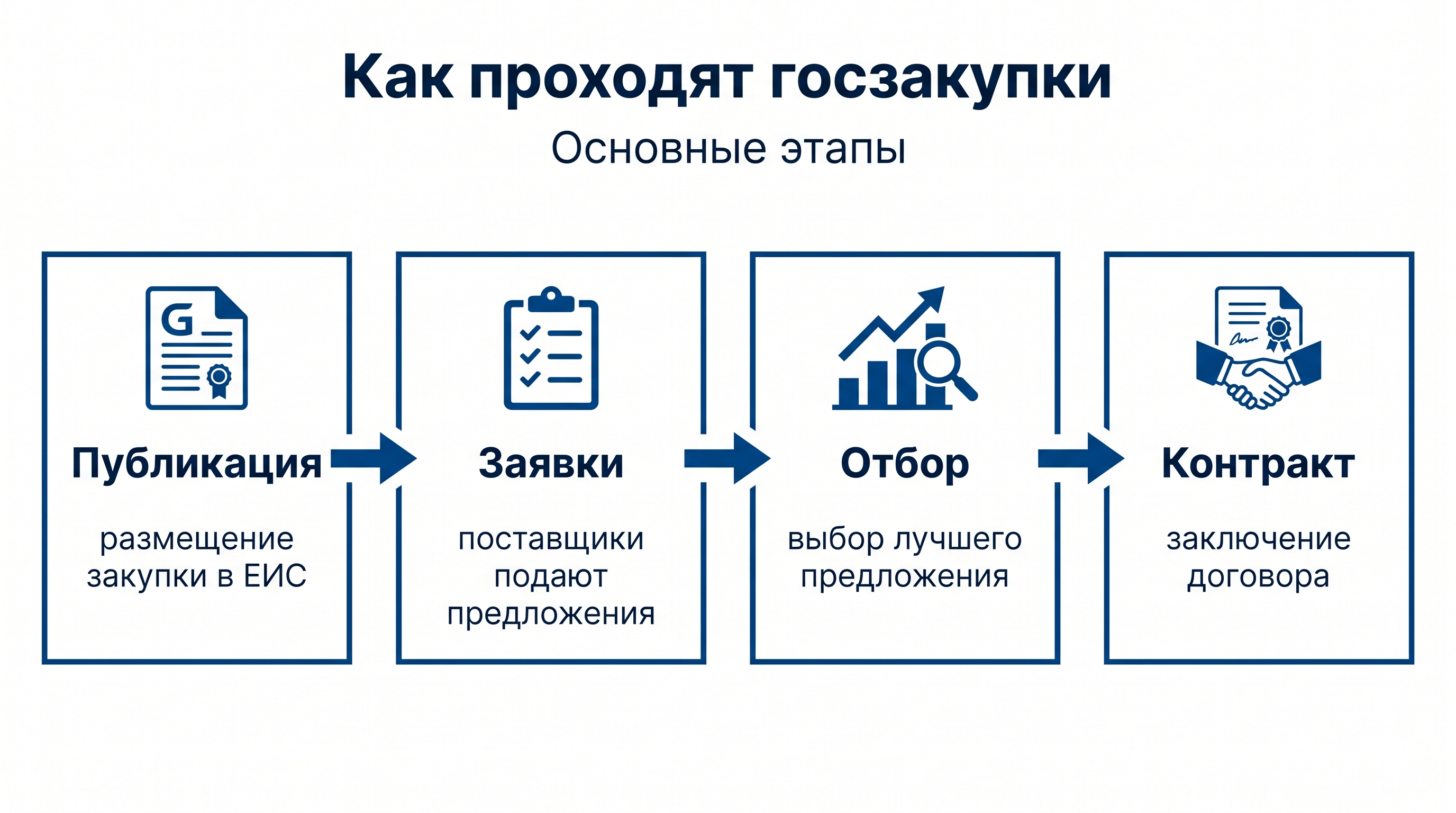
- The Customer publishes the purchase notice on the official website of the Unified Information System (UIS) and on electronic trading platforms (ETP).
- Suppliers submit applications that meet the requirements of the documentation.
- Based on the results of the bidding, the winner is determined, who offers the best conditions (most often, the lowest price).
- A government contract is signed with the winner.
Who needs government auctions for?
- Customers include federal, regional and local authorities, state and municipal institutions (schools, hospitals, universities, etc.), state—owned companies and organizations with state participation, budgetary and autonomous institutions.
- Suppliers are legal entities, individual entrepreneurs (sole proprietors), self—employed citizens (in some cases), consortia (associations of companies for large projects).
Advantages of bidding for the organization
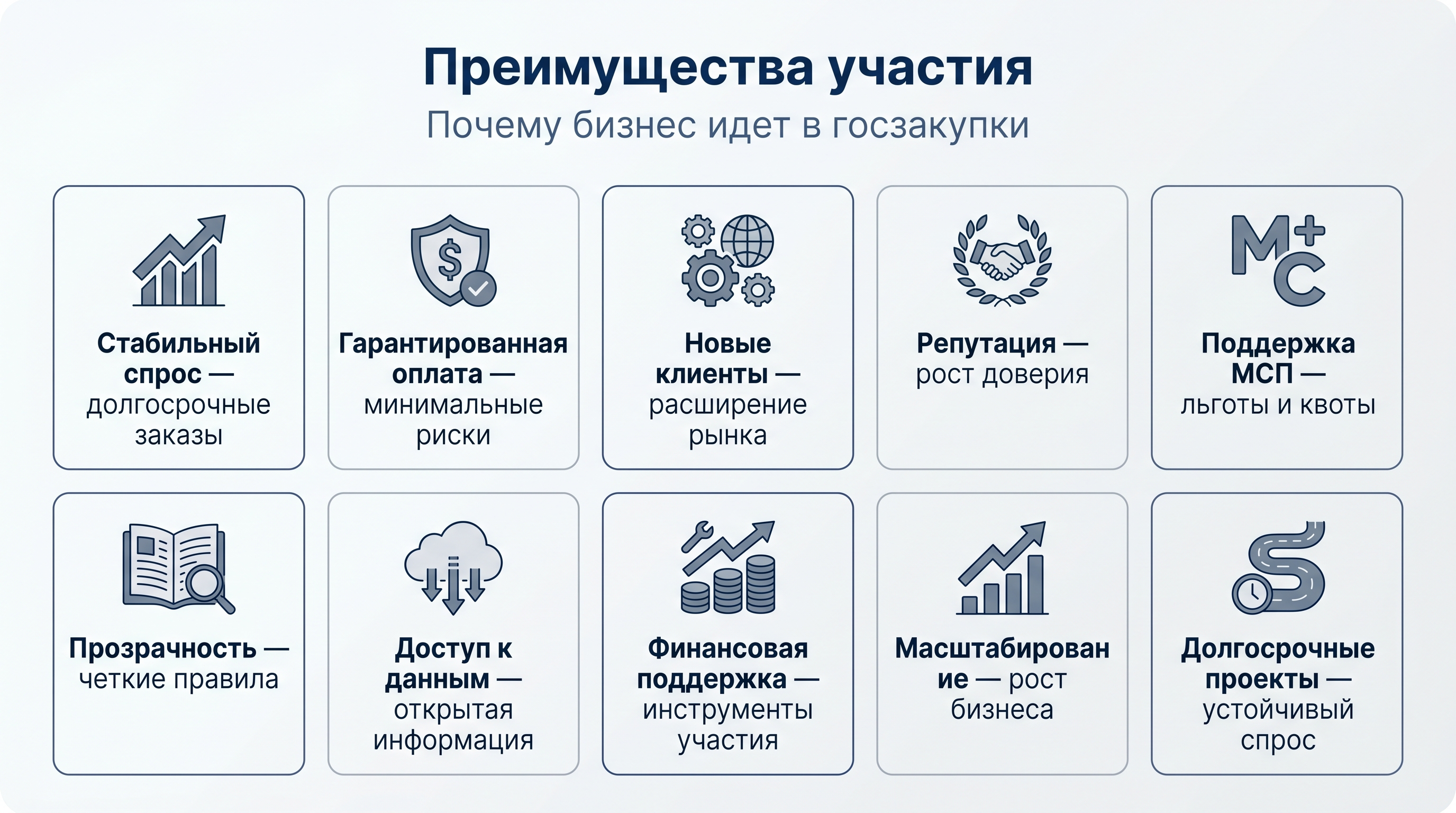
- Stable demand and large orders. Government customers provide long-term contracts and large volumes of purchases, which allows them to plan production utilization and company development.
- Guaranteed payment. Budget funds reduce the risk of non—payments - payments under government contracts, as a rule, occur on time and in full.
- Expanding the customer base. Participation in the auction allows you to reach new customers, including federal and regional ones.
- Enhance your reputation and trust. The status of a supplier of government agencies increases the prestige of the company and serves as a good recommendation for working with private clients.
- Opportunities for small and medium-sized businesses (SMEs). The legislation provides for benefits and quotas for SMEs: special purchases only for SMEs, simplified collateral requirements, and shortened contract payment periods (up to 15 business days for SMEs).
- Transparent rules of the game. Strict regulation of 44-FZ and 223-FZ reduces the risk of subjective selection and corruption. All stages of the bidding process are documented and available for verification.
- Access to information. All procurement information is publicly available on the EIS, which allows you to plan participation in advance and analyze the market.
- Financial support. Special financial instruments have been developed for bidders: tender loans, bank guarantees, and contract execution loans.
- The ability to scale. Successful experience in executing government contracts allows you to participate in larger and more complex purchases, increasing business turnover.
- Long-term prospects. Government programs (national projects, infrastructure construction) generate steady demand for many years to come.
Who can participate in public auctions
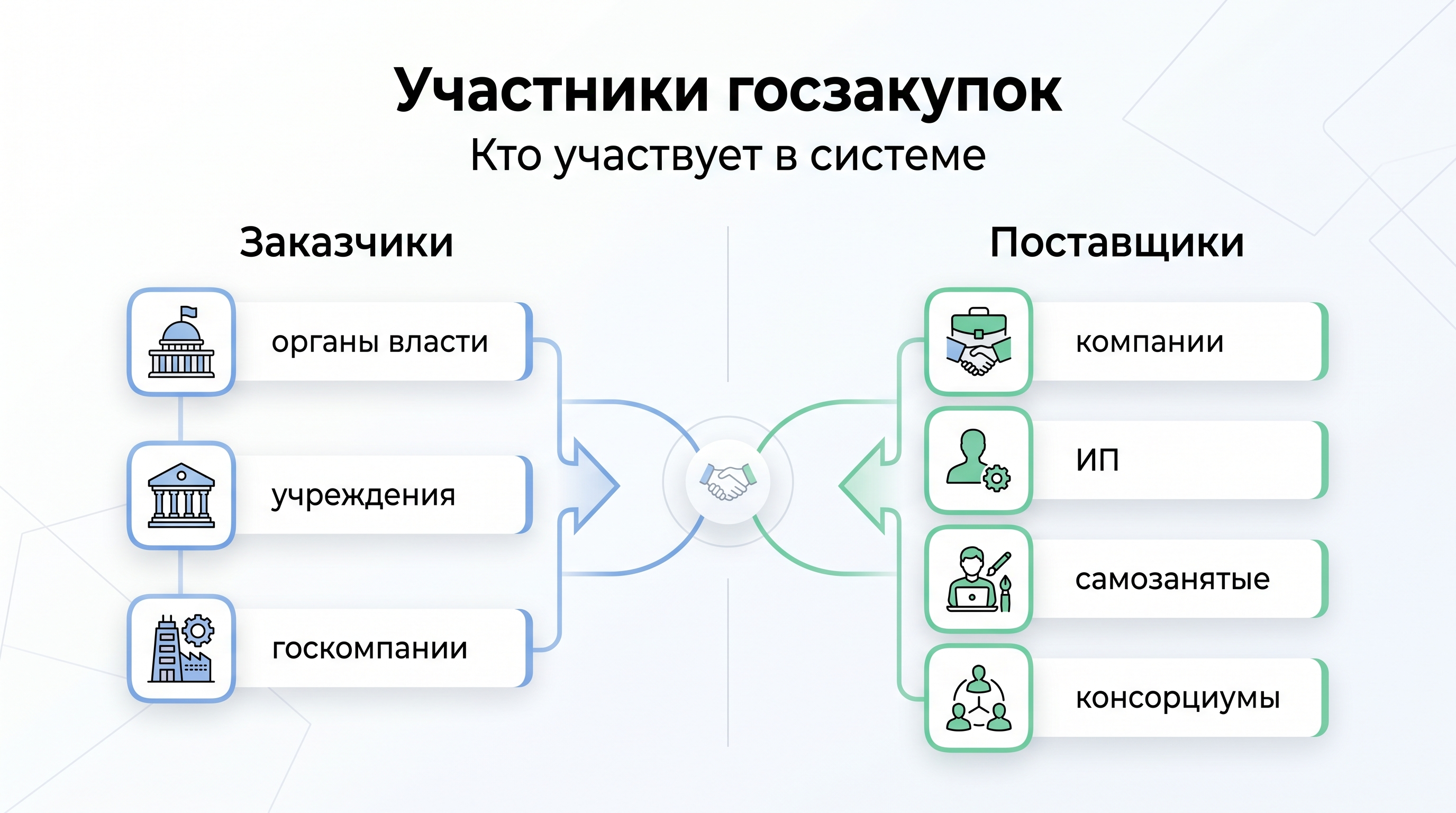
- legal entities (Russian companies — LLC, JSC and others, as well as foreign companies, if this does not contradict the security requirements or the tender);
- individual entrepreneurs (must be officially registered);
- individuals (usually allowed only in purchases for specific services, whether creative or expert);
- consortia and joint ventures (several companies may join together to participate in procurement, especially in large government projects; they must have formal agreements on joint responsibility).
Basic requirements for participants
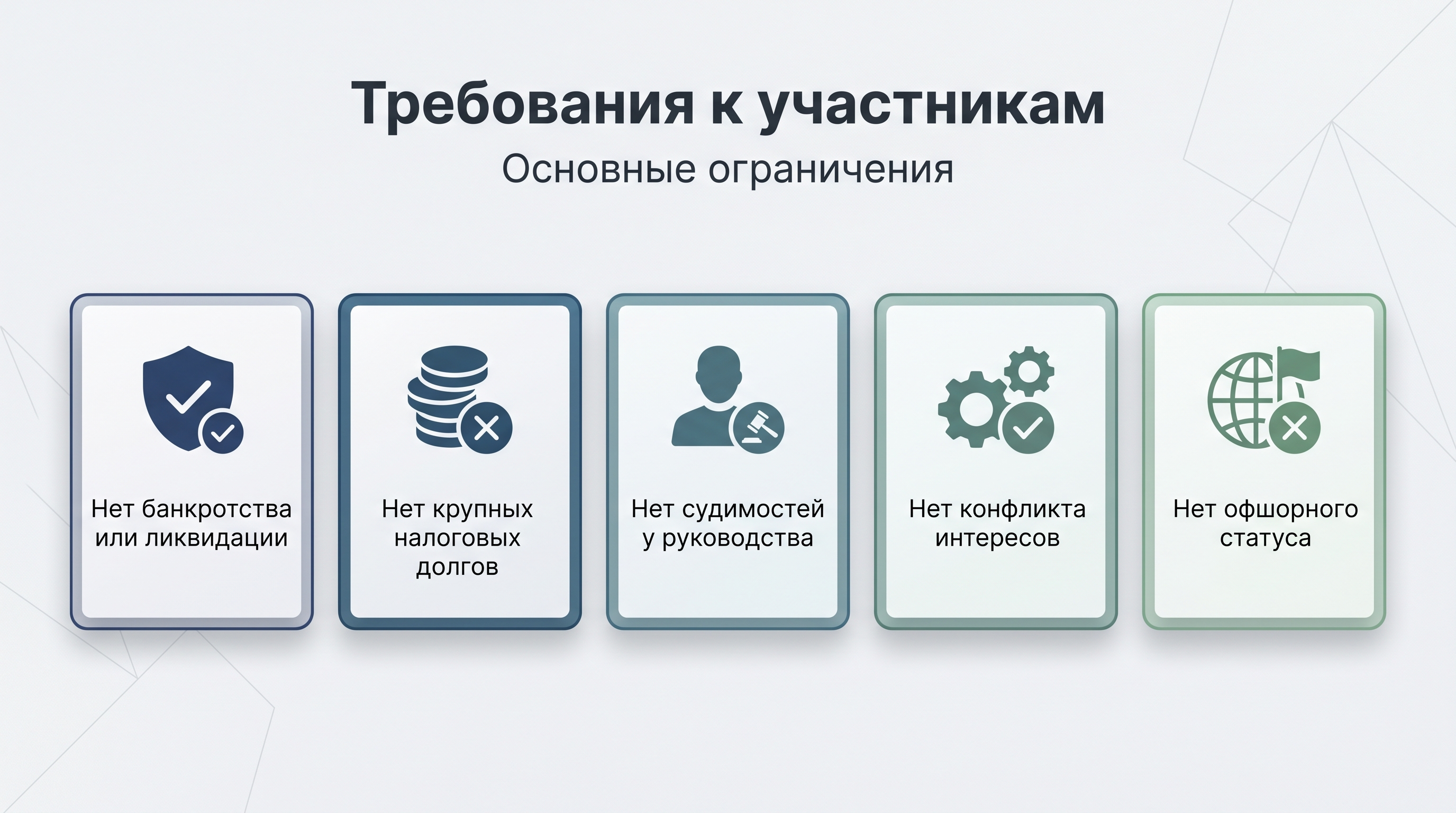
- you cannot be in the process of liquidation, bankruptcy or administrative suspension of activities.;
- A company cannot participate in public procurement if its tax and fee debts amount to more than 25% of its total assets.;
- the management should not have a criminal record for economic crimes (Articles 289, 290, 291, 291.1 of the Criminal Code of the Russian Federation) and for illegal remuneration under Article 19.28 of the Administrative Code;
- there should be no conflict of interest between the participant and the customer;
- The participant must not be an offshore company or a foreign agent.
Additional requirements may include the necessary licenses, certificates, membership in the SRO (if required by law for a specific type of activity), work experience, availability of production facilities and financial stability.
Financial instruments
- A tender loan is a targeted loan that allows you to contribute the necessary amount to participate in the tender if the company or sole proprietor does not have the funds to secure the application (usually from 0.5% to 5% of the contract value). It is used to secure an application, pay a commission on a bank guarantee, or execute a contract.
- A bank guarantee is a tool that compensates the customer for costs if the contract is not fulfilled by the supplier or is executed in violation of requirements. It can be used to secure an application, fulfill a contract, or guarantee obligations. The bank issuing the guarantee must be included in the list of government-approved credit institutions.
- A performance loan is a targeted loan that is provided to the winning bidder to fulfill the terms of the contract. The interest on such a loan may be lower than on a regular bank loan. Banks check the experience of fulfilling government contracts, the duration of the company's work, annual turnover, number of employees, financial indicators and availability of other loans.
Conclusions:
- Public auctions are a mechanism for ensuring state and municipal needs through a competitive selection of suppliers.
- Bidding is beneficial for businesses due to stable orders, guaranteed payment, and opportunities for development.
- Various categories of suppliers can participate, but with strict requirements.
- Financial instruments (loans, guarantees, loans) help to overcome financial barriers to bidding.
Successful participation requires a thorough study of legislation, preparation of documents and analysis of the conditions of specific purchases.
Do you want to bid too? Write to me, let's join this process together!