Russia and Azerbaijan are promoting digital rules for international road transport: at the 24th meeting of the Intergovernmental Commission on Economic Cooperation, the parties agreed on an action plan that should create conditions for the use of the e-CMR electronic international consignment note in both countries. This is a practical step for the cargo market: the less paper in the chain, the faster the flight processing and the lower the risk of errors in the documents.
The discussion on the transport agenda was broader than a single invoice. The delegation of the Russian Ministry of Transport put on the agenda the issues of synchronizing infrastructure and border checkpoints, as well as the development of the North—South international transport corridor. These topics are directly related: if a corridor grows in volume, it is not the kilometers of the route that become the bottleneck, but the speed of control and the quality of data exchange between transportation participants and departments.
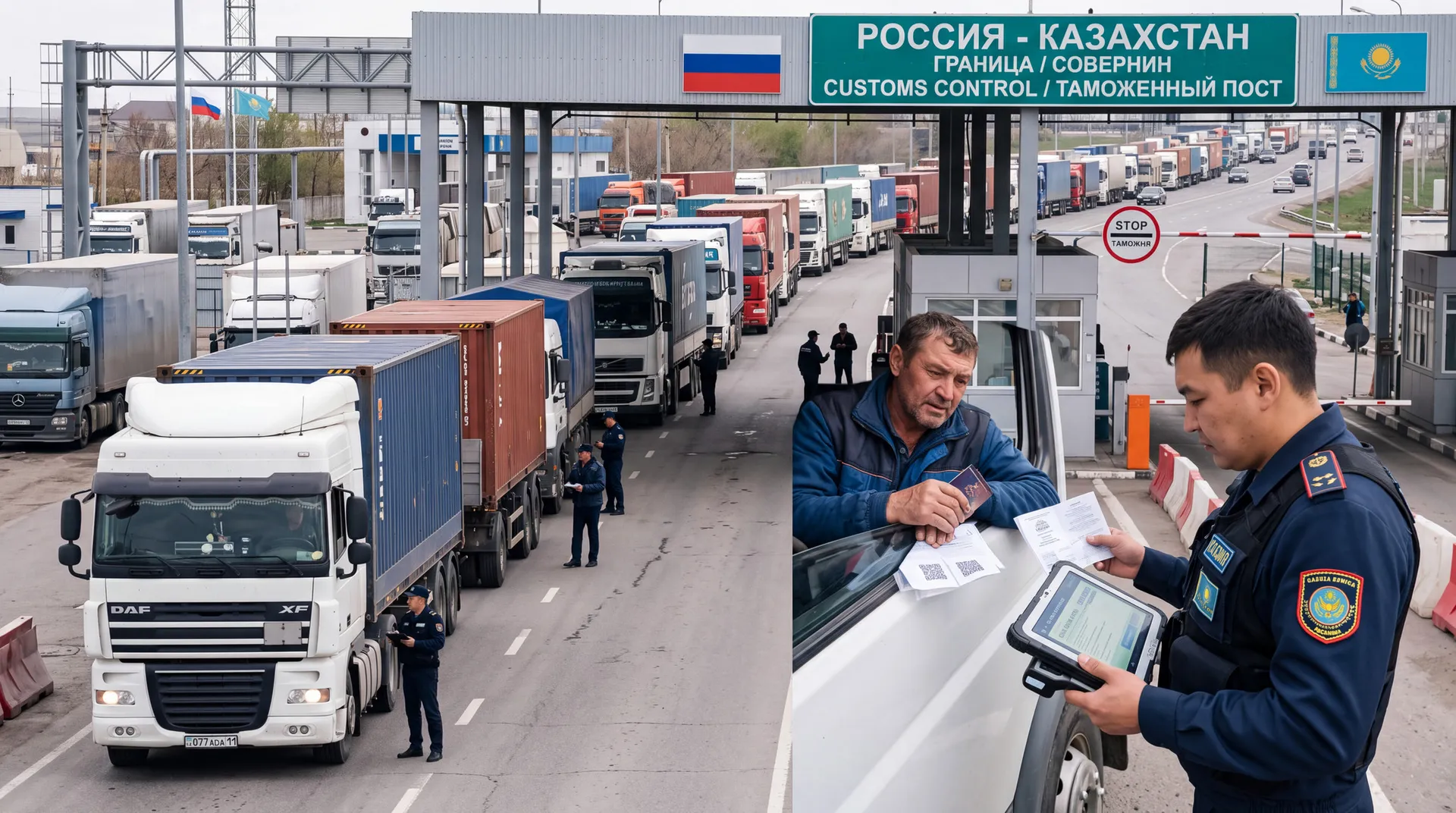
e-CMR for trucking is a transition to a single digital package of transportation data: cargo, sender, recipient, route, acceptance and delivery marks. In an ideal model, this has an effect on several sites at once. The carrier prepares documents faster and spends less time on corrections. The forwarder receives more transparent tracking and flight confirmations. The cargo owner closes documents and payments faster. For checkpoints, the digital format simplifies the preliminary verification of information and reduces the burden on registration.
A separate benefit is for multimodal chains around North—South. When the automotive arm is connected to railway and port logistics, the value of standardized data increases dramatically. The more stable the electronic exchange, the easier it is to assemble end-to-end routes, schedule windows at terminals, and reduce downtime. As a result, businesses have more predictability in terms of deadlines, and this is a key parameter for foreign economic activity contracts, where fines and delivery schedules are tied to specific dates.
A signed action plan by itself does not mean an instant transition of the industry to an electronic invoice. Such decisions are usually followed by pilots, information system configuration, and coordination of data formats and control procedures. But an important signal has already been given: the two countries are linking the development of transportation with digital tools and are going to launch them in an application mode, rather than in the form of declarations of intent.