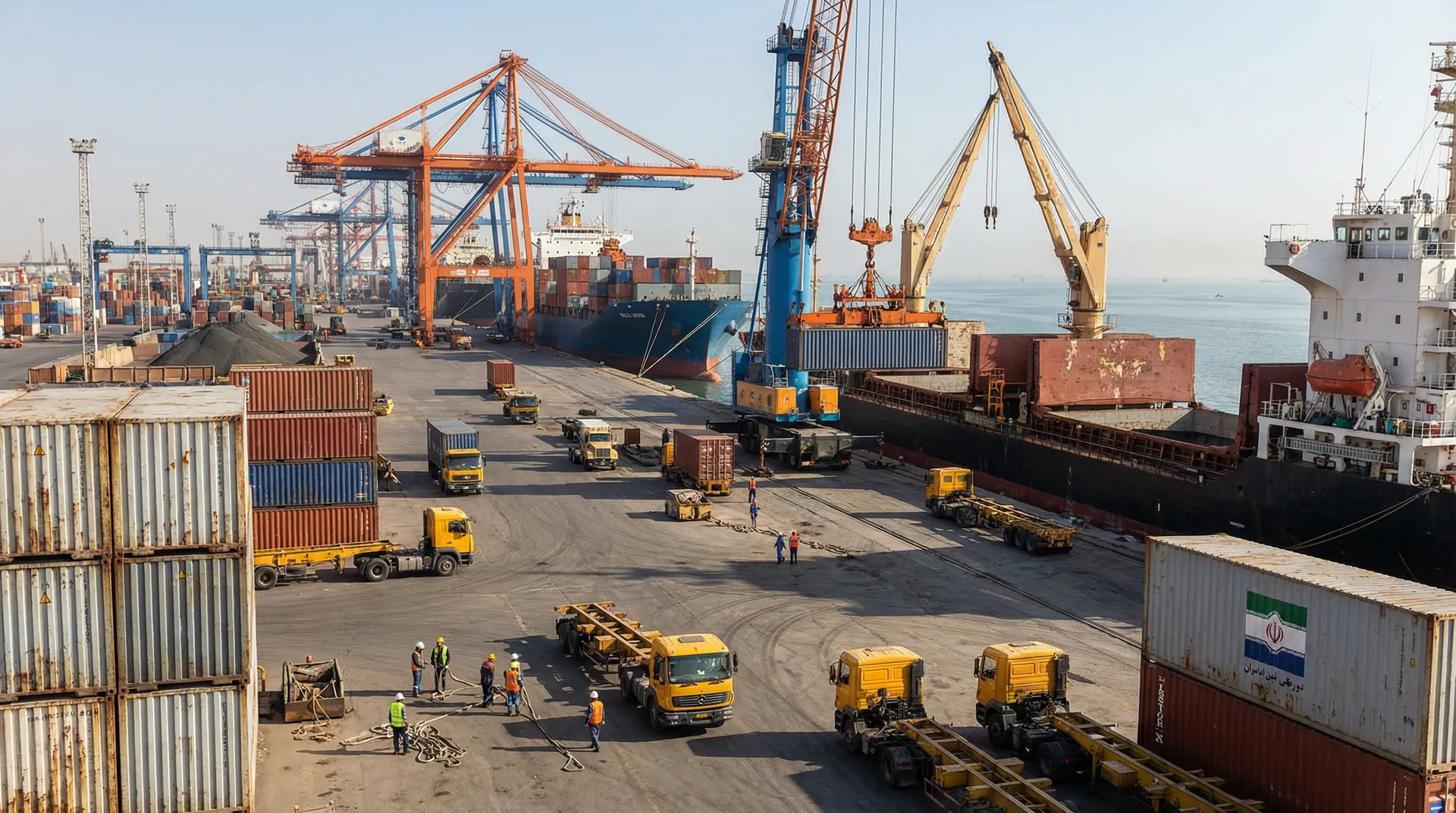
Iranian ports continue to operate normally and maintain cargo handling without stopping. According to the Iranian Maritime Administration, unloading and loading are taking place in all ports of the country, including the largest sites through which a significant part of foreign trade and industrial supplies pass.
The meaning of this news goes far beyond the usual industry message. Against the background of the tense situation in the Middle East, the very fact of stable port operations is important for business. When the market receives confirmation that the processing of containers, bulk shipments and socially significant goods is continuing, this reduces the nervousness of importers, exporters, carriers and insurance companies.
In recent years, Iran has relied on logistical stability as an element of economic security. For the country, this means a rapid turnover of imported raw materials, food and equipment, as well as maintaining export opportunities in the face of pressure on traditional sea routes. Hubs that handle bulk cargoes and provide transit in conjunction with land corridors are of particular importance here.
The official signal is formulated very bluntly: operations are proceeding “without the slightest pause.” For the market, this formulation is important in itself. It means that Tehran is deliberately bringing the port industry into the public domain as proof of the manageability of foreign trade logistics. In a practical sense, this strengthens the position of Iranian routes in regional trade and increases their value to BRICS partners and neighboring countries that need a predictable supply chain.