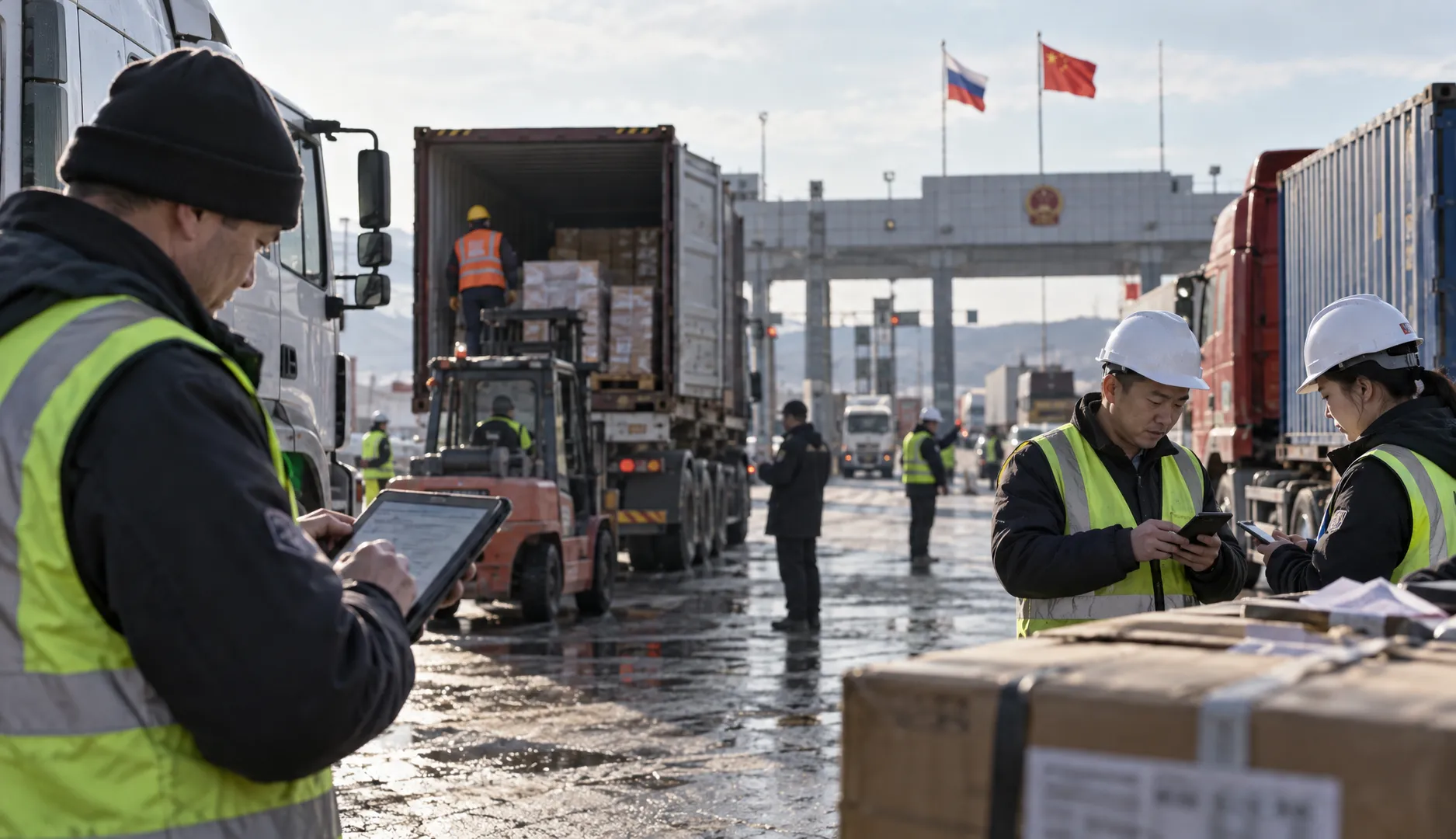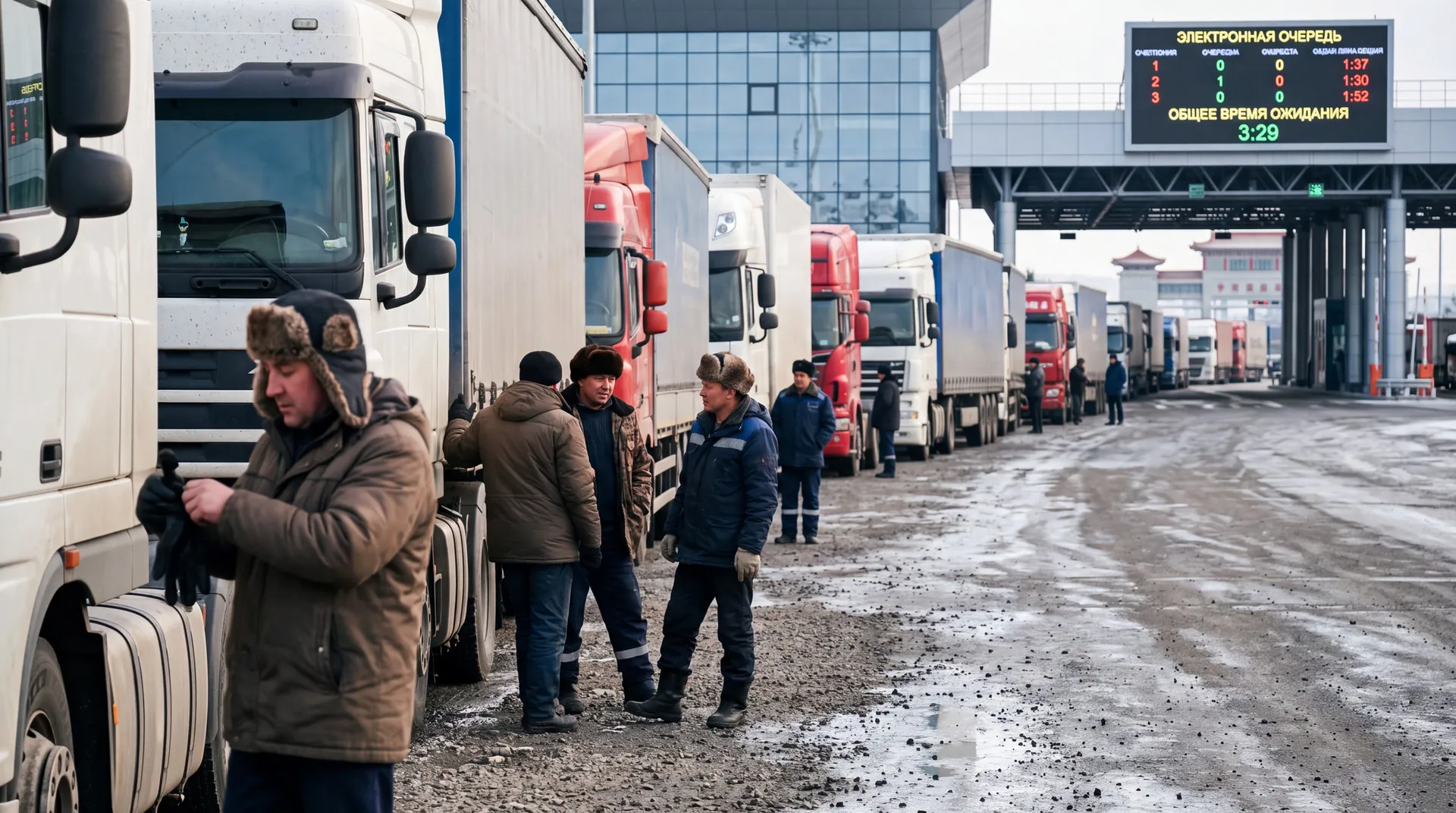
The driver, who was transporting cargo through the Pogranichny checkpoint/Suifenhe, spent almost five days at the border: four of them were waiting to leave Chinese territory, and only about a day took procedures on the Russian side. The checkpoint was restarted after reconstruction a few months ago.
According to data from the electronic queue, in which the vehicle occupied about 900th place, 180-190 trucks passed the border per day. The declared capacity after the reconstruction is up to 1,300 vehicles per day in both directions. If you subtract bus services, divide them into two directions and adjust for breaks, the cargo flow in one direction should be at least 400 units per day per 22 lanes. The real indicator is no more than 200.
"According to the plan announced earlier by Russian officials, the capacity of the new freight crossing, opened this year, is up to 1,300 vehicles per day (in both directions). Something doesn't add up in my numbers. We take away 200 bus trips, divide by two, minus breaks, and get at least 400 per day in one direction on 22 lanes. But so far, no more than 200."
The main reason for the congestion is not the Russian side, but the mechanics of the electronic queue in Suifenhe. Local carriers register in the system in advance, without the actual availability of cargo. If the cargo does not appear, the slot simply burns down. In parallel, it is possible to cross the border out of turn for "a couple thousand yuan": it is estimated that up to 40 cars use this scheme daily.
"The introduction of an electronic queue, on the one hand, streamlined the visible passage of the border, on the other — led to delays, abuses and increased costs."
Chinese drivers standing in line attributed the congestion to the slow work of Russian border guards. However, the ratio of waiting time — four days in China versus one day in Russia — refutes this version.
For shippers working with Chinese suppliers through Primorye, the situation worsens at the most inopportune moment: November–December is traditionally the high season. The forecast for January looks tough: if the dynamics continues, the time to cross the border through the Pogranichny checkpoint/Suifenhe may increase to 7-10 days. Back in mid-October, the queue took 1-2 days.
Companies planning supplies for the first quarter of 2027 through this transition should lay a doubled transit buffer and consider alternative routes now — before the peak load turns the forecast into reality.
Related news:
- Pogranichny and Kraskino increased their capacity by 9 times — what capacity was promised after modernization
- A portal scanner for trucks without stopping has been launched at MAPP Pogranichny — a new scanner for trucks at this crossing
- Traffic jam 20 km near Zabaikalsk: Manchurian authorities introduce queue rules — queues and rules at the crossing near Zabaikalsk
- How to transport goods from China now: an honest analysis of price and speed — comparison of routes from China by price and timing