More than 10 thousand containers have accumulated in the port of Kaliningrad due to a shortage of the fleet.

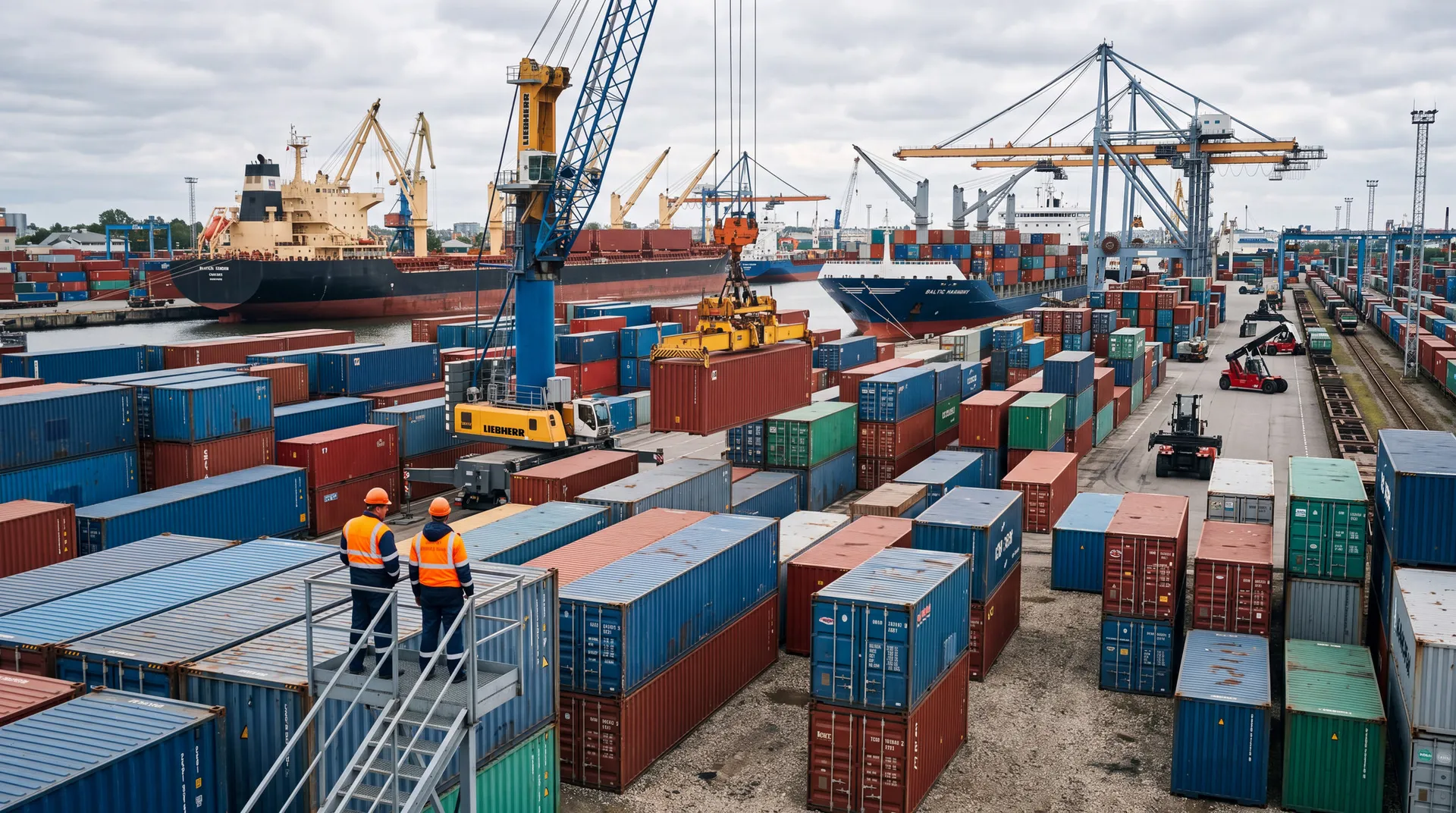
The immediate cause of the congestion was the exhaustion of the quota for road transport through Lithuania. The limit of 37 thousand tons was chosen back in October. After that, the finished products of the Kaliningrad automaker began to be shipped in containers by sea, which dramatically increased the burden on the port infrastructure.
Alexander Trofimenko, CEO of TBK logistics company, describes the situation bluntly: the volume of cargo exceeds the capacity of the fleet operating on the line. Containers are located both in Kaliningrad itself and at terminals in St. Petersburg and the Leningrad region — a traffic jam has formed at several nodes at once.
At the same time, the load on rail and ferry services is increasing. Sergey Sapegin, the head of the Kaliningrad Railway, reported that the volume of such shipments had doubled compared to 2022. Operating ferries are used simultaneously for rail and road transport, which limits their capacity.
Empty containers create a separate problem. They take up terminal capacity and require return transportation, reducing the useful capacity of the infrastructure. Market participants insist on attracting an additional specialized fleet, including vessels for transporting cars.
An upgrade of the ferry fleet is being considered in the future to fix the bottleneck. A project has been announced for the construction of two new railway ferries for the Ust-Luga—Baltiysk line. However, construction is a horizon of several years, whereas the terminals are already overloaded.
For cargo owners working with the Kaliningrad route, the situation means an increase in waiting times for shipment and a potential increase in storage costs. Companies planning shipments via the Baltic in the coming weeks should check with carriers in advance the actual dates and availability of slots in the fleet.
Related news:
- Kaliningrad has retained all types of transit, and sea transportation has increased 5—fold since Kaliningrad switched to sea transit
- Kaliningrad is under naval blockade: ferry shortage and logistical impasse — shortage of ferries on the Kaliningrad line
- Carriers will increase cargo volumes on the Kaliningrad — Petersburg line — plans of carriers on the Kaliningrad — Petersburg line
- Why shipments may be delayed between the BRICS countries and how to avoid it — why shipments are delayed and how to take this into account in the timing