On October 2, Moscow hosted a joint meeting of the Department of Transport and Infrastructure of the Eurasian Economic Commission and the Committee on Transport and Logistics of the CIS Business Center for Economic Development. The parties discussed the coordination of transport infrastructure, international corridors and digital services of the two integration associations.
International experts estimate the potential effect of the introduction of intelligent transport systems as follows: transit corridor travel time will be reduced by 20-30%, infrastructure capacity will increase by 10%, and carrier costs will decrease by 10-15%.
Rustan Dzhenalinov, Director of the EEC Department of Transport and Infrastructure, said: "Combining the capabilities of the EAEU and the CIS can have an additional effect on the development of integration processes and allow the dissemination of the most effective solutions between the countries."
A separate section of the meeting was devoted to digital technologies. The Information and Analytical System of Transport Regulation of the Ministry of Transport of the Russian Federation is presented as a working example.: It aggregates data from various sources and displays traffic, emergencies and accidents in real time. If similar systems appear in the EAEU states and will be able to exchange information, the next step will be the formation of a unified digital picture of the transport situation on Eurasian routes.
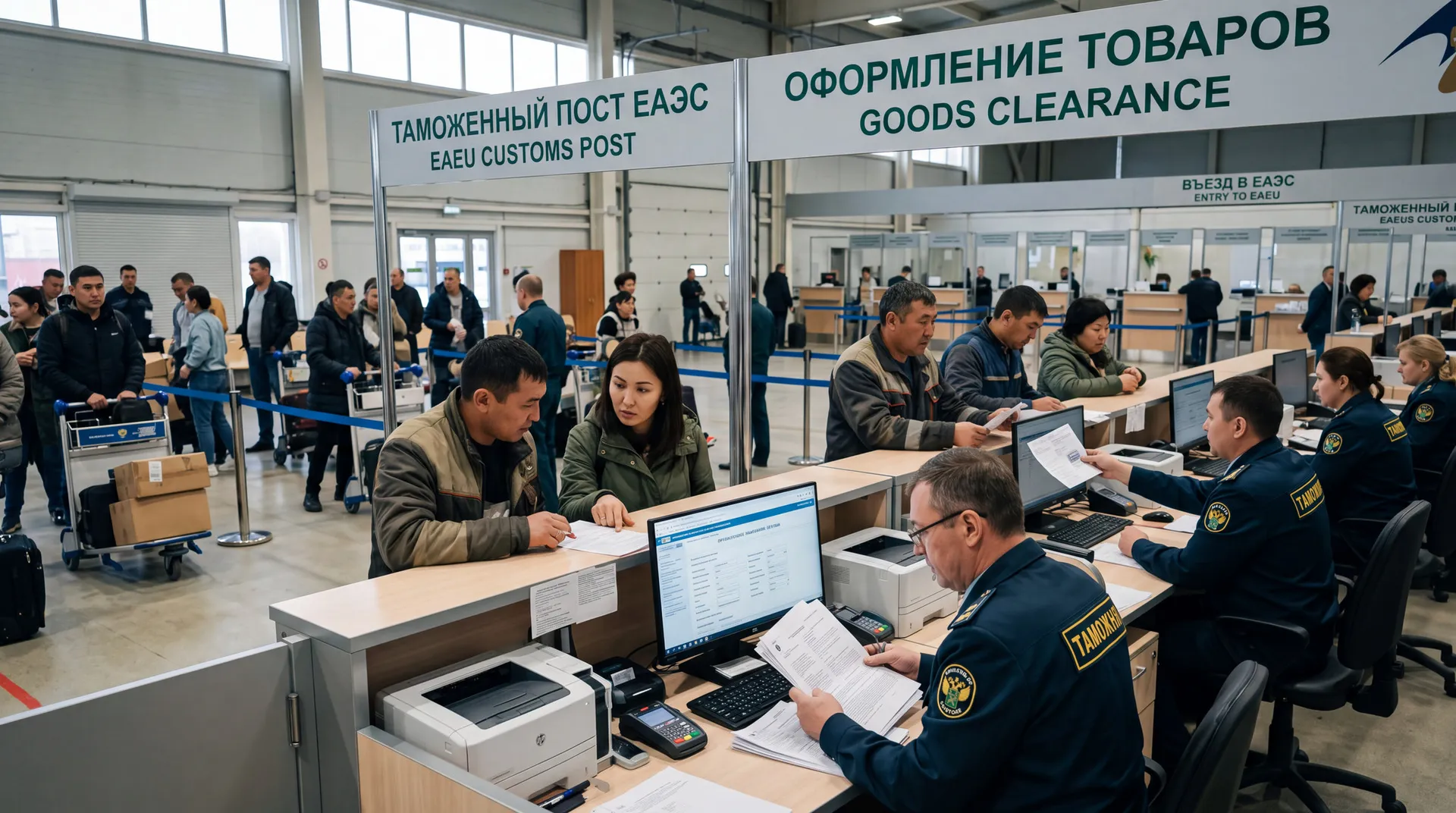
For cargo carriers operating on international corridors, it is not only the physical limitations of the infrastructure that remain a deterrent. Queues at the border, inconsistencies in procedures, and paperwork can slow down cargo traffic even with sufficient capacity on a road or railway line. The synchronization of rules and digital tools in this logic is comparable in importance to the expansion of the physical infrastructure.
Cargo on an international route consistently passes through several jurisdictions, and information about its movement is now distributed among different national systems. Their integration will make it possible to see the route as a single transport process, provided not only that the platforms are technically compatible, but also that approaches to data exchange between countries are coordinated.
Representatives of business, industry associations and scientific organizations participated in the discussion. Their proposals on removing transport barriers and increasing the sustainability of transportation are planned to be included in the roadmap, which will be implemented by the EEC Department of Transport and Infrastructure and the Committee on Transport and Logistics of the CIS Business Center for Economic Development.
So far, the agenda is at the stage of forming joint proposals. However, the logic of the discussion shows a shift in emphasis: from individual infrastructure projects to a model where roads, checkpoints, tariffs, electronic documents and digital systems should work as elements of a single space. When the roadmap is approved, it will determine the specific deadlines and obligations of the parties.
Related materials:
- The unified transit system of the EAEU has been launched: one document for the entire route — what step towards a unified transport space has already been taken
- Russia is switching to electronic transportation documents with 29 countries by 2029 — how transportation documents are digitized between countries
- Integration of the BRICS countries' transport systems: plans and reality — which of these plans is already working in practice