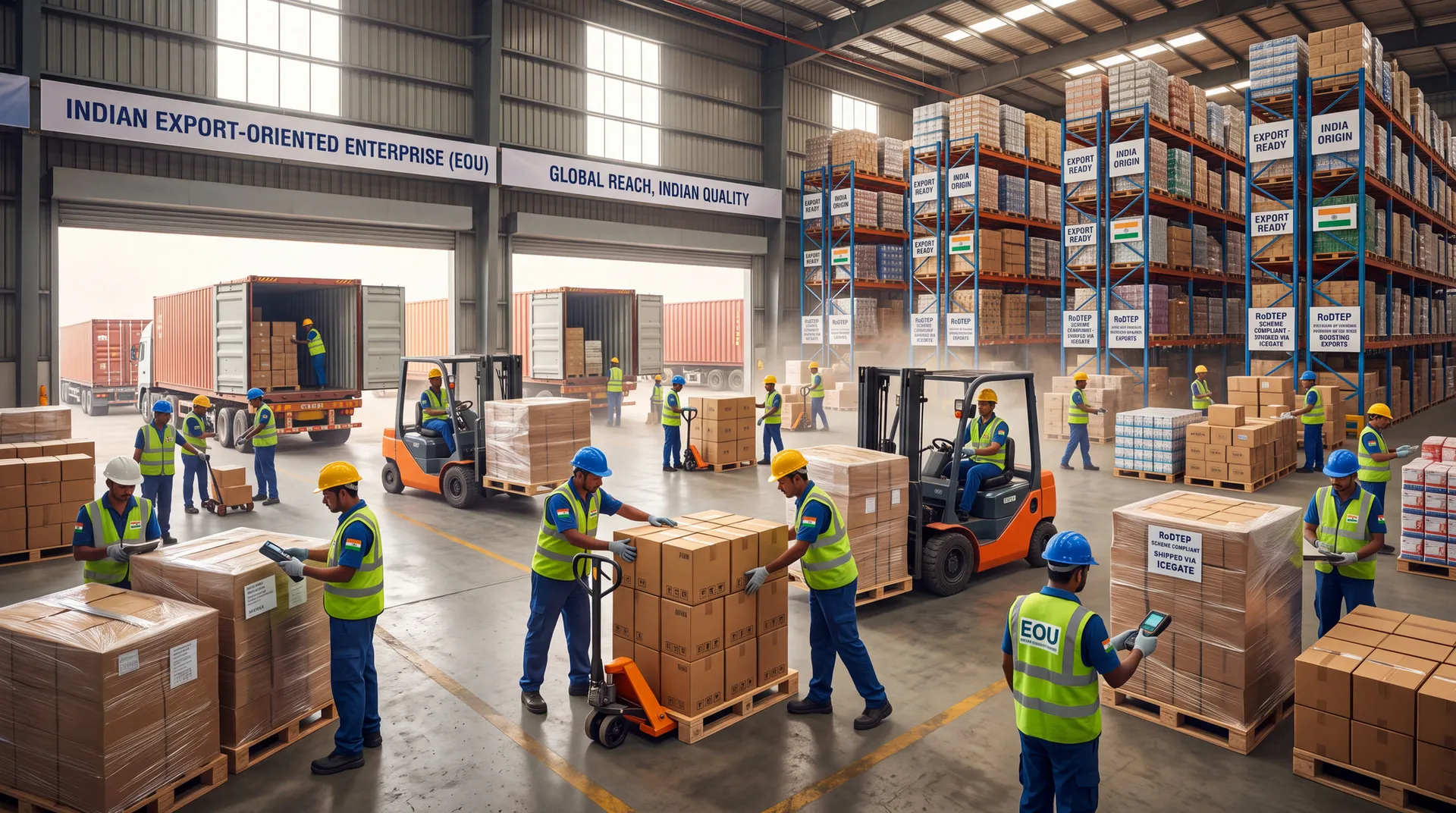
The notice from the Directorate General for Foreign Trade (DGFT) is dated September 30, the same day the previous program expired. The scheme applies to four categories of participants: enterprises from the zones of internal tariff regulation (DTA), holders of advance authorizations, residents of special economic zones (SEZ) and export-oriented enterprises (EOU).
The refund rates still range from 0.3% to 3.9%, depending on the product group. The marginal cost limits within which the refund is calculated have also remained unchanged. All other conditions and requirements of the scheme remain in force.
RoDTEP was introduced in 2021 to compensate for taxes and fees embedded in the cost of exported goods at the production and distribution stage — those that are not reimbursed through other mechanisms at the federal, regional or local level. The logic of the scheme is to prevent domestic fiscal costs from increasing the price of Indian products in foreign markets.
The budget financing of the program in the 2025-2026 financial year was Rs 18,232 crore. For the current financial year, the allocation has been reduced to 10,000 crore rupees. The three-month extension allows exporters to continue receiving refunds in the same volume without having to adjust pricing models and contractual terms with foreign buyers.
For companies working with Indian suppliers or competing with Indian exports in the BRICS markets, the extension means maintaining price parity: subsidies through RoDTEP continue to reduce the actual export value of Indian goods. By December 31, market participants should monitor whether the scheme will be substantially revised — with changes in rates or budget limits — or extended again unchanged.