






Three currency contours of one corridor
Settlements in the Russia–Mongolia–China triangle take place in three currency circuits that intersect but do not coincide.
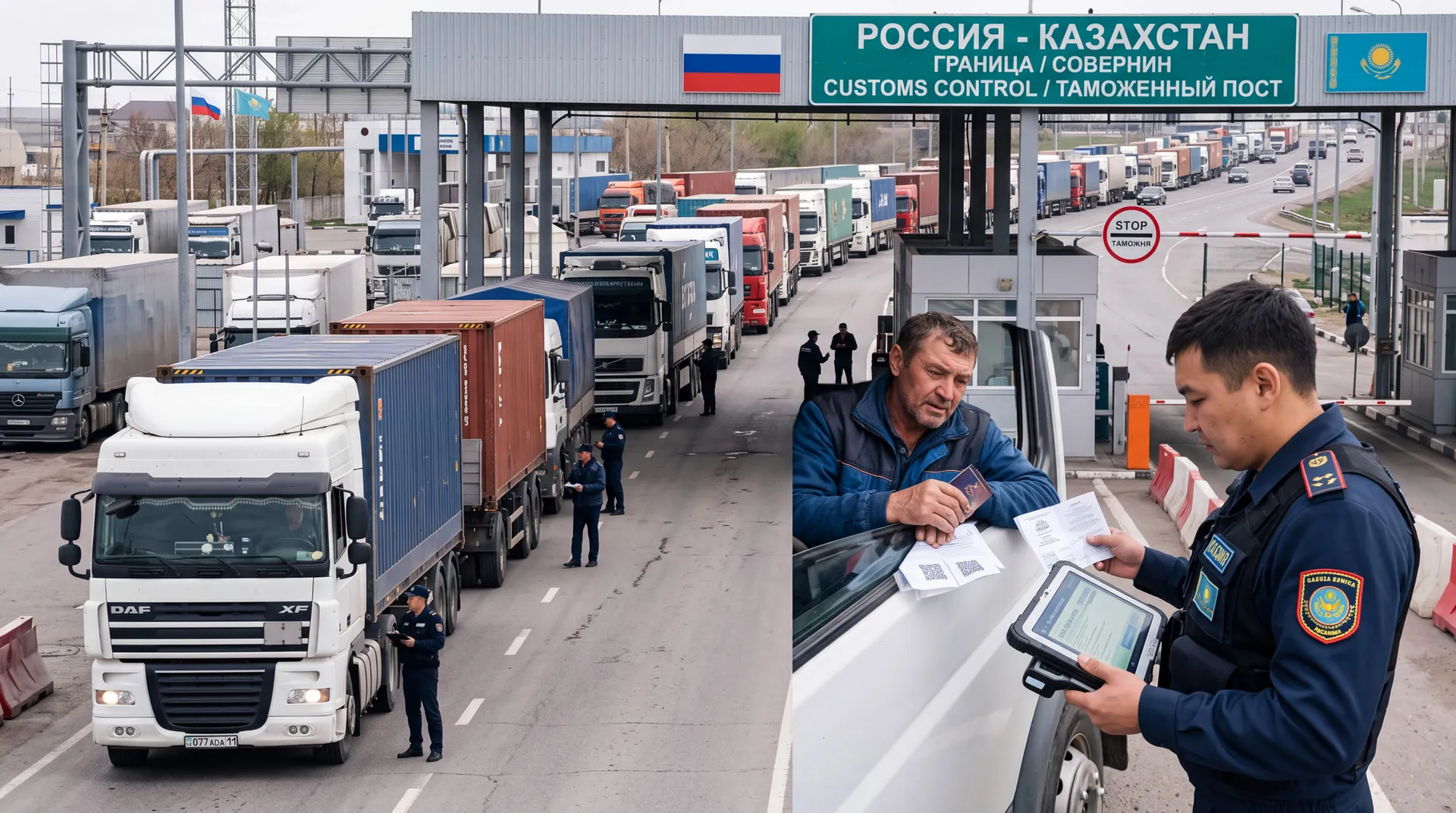
Russian-Mongolian trade has historically been conducted in rubles and dollars. After 2022, the share of the ruble increased, but Mongolian correspondent banks work with a limited number of Russian banks that have not been sanctioned. Practice shows: The choice of a partner bank determines not only the cost of conversion, but also the speed of payment processing.
Mongolian-Chinese trade is conducted mainly in yuan and dollars. Mongolia and China have a currency swap agreement, which gives Mongolian importers access to the yuan through a Mongolian bank. For Russian companies operating through Mongolian intermediaries, this creates an additional conversion link.
Russian-Chinese settlements are increasingly switching to the yuan in 2026. However, trilateral transactions involving the Mongolian side require the approval of three currency positions simultaneously.
The main risk. Multi-stage conversion in each link eats up the margin. A company that has calculated the economics of the transaction in dollars may receive a loss after a real chain of payments ruble → tugrik → yuan.
How payments through Mongolia work
Mongolia is not an offshore company and does not provide anonymity. However, the country has a banking system that has not been subject to Western sanctions, and maintains correspondent relations with banks in Russia, China, Japan and several other countries. This makes Mongolian banks a potential settlement intermediary.
The scheme works as follows: a Russian company opens an account with a Mongolian bank or works through a Mongolian partner with a checking account. The payment goes through the chain of the Russian bank → Mongolian bank → Chinese bank, which in practice means additional fees, deadlines and documentation requirements.
Important: The Mongolian bank conducts KYC and AML verification in accordance with international standards. A payment without a clear commercial basis, invoice and contract will not work — the schemes of "money transit" through Mongolia work only if there is a real trading operation.
EAEU—Mongolia Interim Trade Agreement: what changes in the calculations
The agreement, which entered into force on July 22, 2026, does not directly regulate the currency and the form of payments. However, the reduction of tariff barriers for 367 subheadings is changing the economics of transactions and, consequently, the justification of settlement schemes with intermediaries.
With a lower duty, direct delivery from Russia to Mongolia becomes more profitable than complex multi-stage schemes. This means that some of the schemes that worked with high barriers lose their meaning, and the calculation logic must be revised.
Practical payment formats for businesses
- Direct ruble payment. It works for settlements with Mongolian counterparties who have an account with a Russian bank or a Mongolian bank with a ruble account. The simplest scheme, minimum conversions.
- Yuan payment via the Chinese side. It is relevant for trilateral transactions where the Chinese participant is a party to the contract or an intermediary. The Mongolian partner in this scheme receives yuan.
- Letter of credit. A risk reduction tool for large shipments with an unknown counterparty. Mongolian banks open letters of credit — the cost and terms must be requested separately for each bank.
- Installments and trade finance. A number of Russian companies specializing in foreign economic activity settlements offer financing of transactions in yuan at rates of 8-12% per annum with installments from 1 to 6 months. For the supplier, this means receiving the full amount immediately, for the buyer — a delay.
What to check before the first payment
- The existence of a correspondent relationship between your bank and the partner's bank.
- Currency legislation of Mongolia: restrictions on the export of capital and mandatory repatriation of proceeds.
- Documentation requirements: invoice, contract, transport documents, proof of origin.
- The cost of conversion at each link in the chain and the total cost of the transaction.
- Having a real checking account with a Mongolian partner is not only a matter of registering a legal entity.
- Sanctions compliance: make sure that none of the parties in the chain are on the sanctions lists.
For THE FORUM IN ULAANBAATAR ON SEPTEMBER 14-20, a session dedicated to the implementation of the EAEU-Mongolia agreement, including the practice of settlements, will be held on September 14 at the Forum of Regions. On September 17-20, at the XIX CCI Forum, issues of payments and financing will be on the agenda of the trilateral negotiations. Foreign trade settlement consultants will be present at the contact exchange on September 14th.
Similar materials on the website
- Soyuz Vostok and Mongolian transit: how the gas megaproject is changing the country's position in the triangle — what projects are the payment contour of the corridor being built for?
- Mongolia's free economic zones: what benefits businesses receive and where the free zone regime ends — the second half of the same scheme: origin of goods and preferences
- Account blocking under 115-FZ: how does a foreign economic activity company get into the blacklist of banks - and is it possible to get out of it — what happens to the payment on the Russian side of the chain