





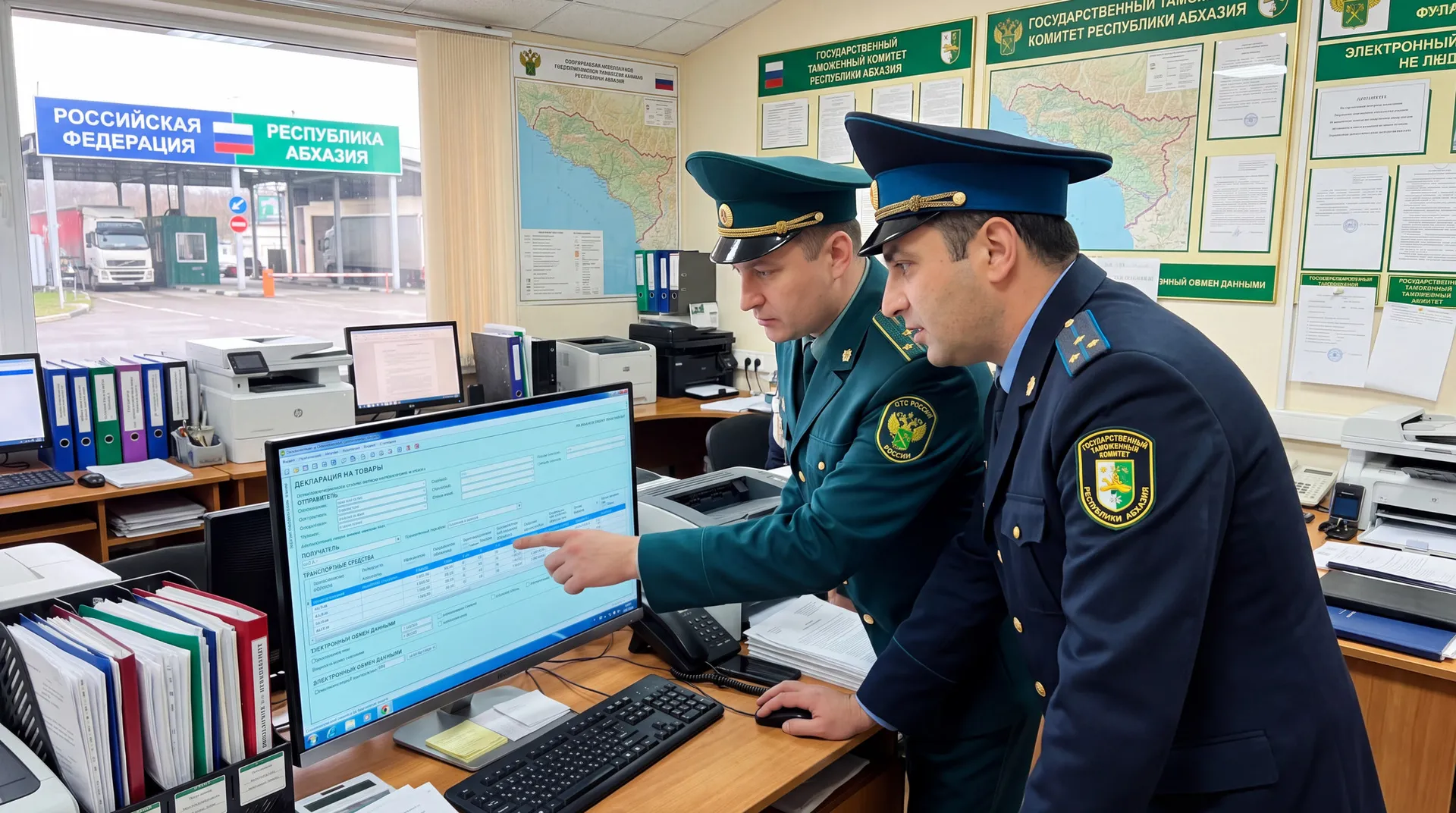
The protocol was signed by Deputy Head of the Federal Customs Service of Russia Tatyana Merkushova and Chairman of the State Customs Committee of Abkhazia Otar Khetsia. The document establishes the electronic exchange of information about the name and code of the goods, their value, quantity and weight, scanning results, as well as the means of customs identification used.
The main practical change is that the results of the control already carried out by one party are accepted by the other without repeated verification in cases stipulated by the protocol. The boundary is shifting from the consistent duplication of the same procedures to the sharing of verification data.
Work on the document has been underway for several years. Back in September 2026, the Russian Government officially agreed to start negotiations on its conclusion. By August 2026, the Abkhaz side announced the completion of technical preparations: the necessary equipment had been purchased, and the form of the customs inspection act had been agreed with the Federal Customs Service of Russia.
The expected effect is especially significant during the two peak periods. The first is the holiday season, when passenger and cargo traffic across the Russian-Abkhaz border increases dramatically. The second is the citrus export season. It is during these intervals that the load on checkpoints is maximum, and delays during repeated inspections are most noticeable.
The State Customs Committee of Abkhazia expects that using the results of the control of the other side will increase the capacity of checkpoints and make the passage of the border more organized. The protocol does not abolish customs control as such — it redistributes it: the information received from the partner becomes the basis for its own procedures, and not a reason for their repetition.
For participants in cargo turnover between Russia and Abkhazia, primarily carriers of agricultural products and tourist goods, the new mechanism reduces administrative costs at the border. The next step is the practical implementation of electronic data exchange, the technical base for which is already ready.