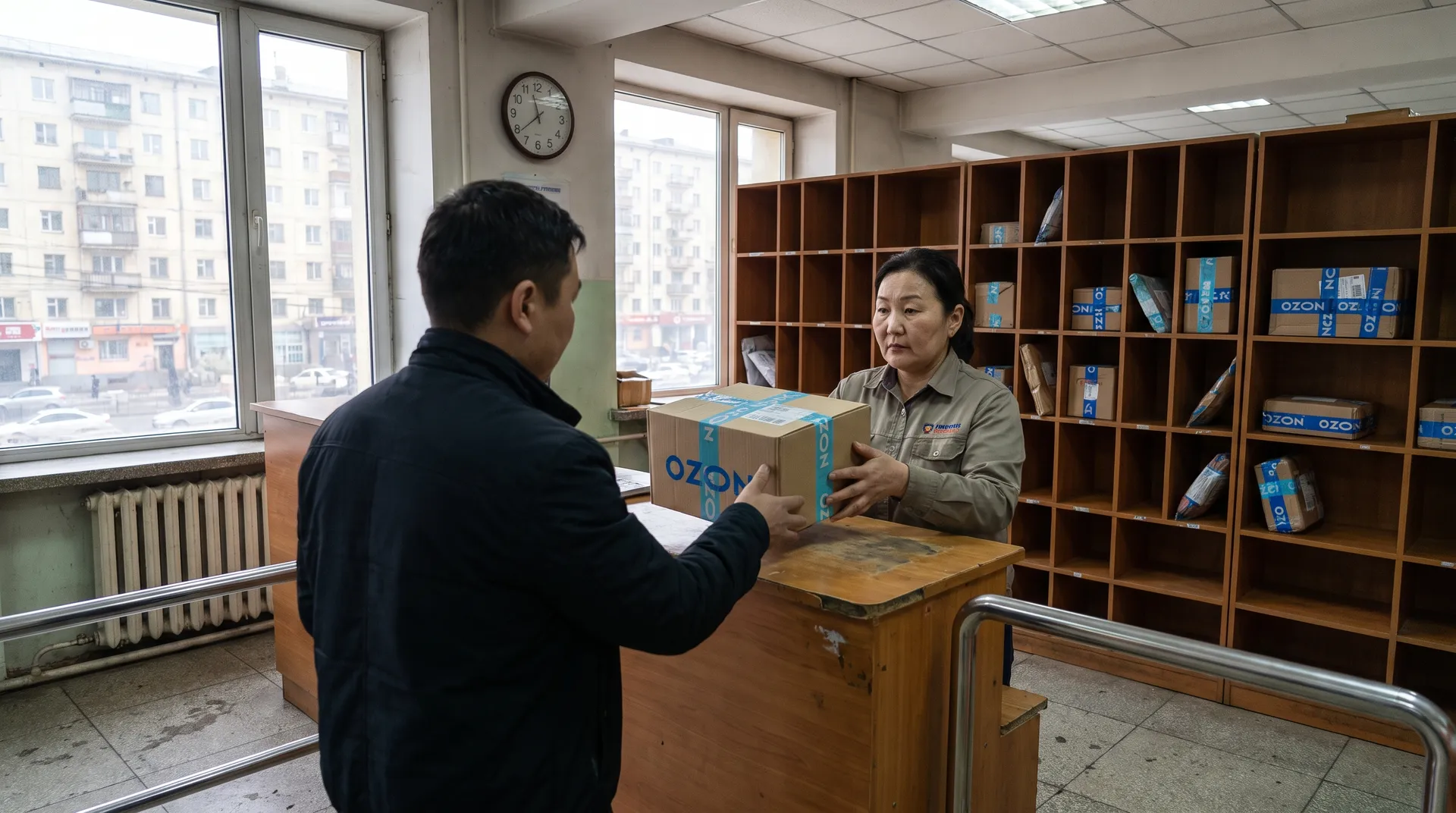
The Ozon marketplace has started operating in Mongolia. Residents of the country can already place orders: more than 90 million products of various categories are available in the catalog — from children's goods to household appliances.
At the first stage, delivery takes up to 10 days, and you can receive an order at Mongolia's Post offices across the country. The company is not building its own logistics infrastructure in the country yet — the model repeats the launch in Turkmenistan in March 2026, where delivery also takes place through the national postal operator.
Mongolia has become the ninth country outside of Russia where Ozon is developing a marketplace. Since 2021, the platform has been operating in Belarus, Armenia, Kazakhstan, Azerbaijan, Georgia, Kyrgyzstan, Uzbekistan and Turkmenistan.
Natalia Boer, head of Ozon CIS, formulated the meaning of the launch for Russian business: entering a new market opens up a channel for sellers to expand their geography. For a seller, this means access to an additional audience without a separate legal entity abroad and without its own logistics — the cross-border scheme falls on the site.
The company did not specify whether to open the opportunity for Mongolian sellers to place goods on the platform. While the design is one-sided: Russian supply and Mongolian demand.
The coincidence of dates is worth noting. The launch coincided with the opening of the Eastern Economic Forum in Vladivostok, where Mongolia is being discussed as a transit hub for Russian business in Asia. In two weeks, on September 14-20, Ulaanbaatar will host a business week with the Forum of the regions of Russia and Mongolia and the SME Corporation contact exchange.
What the seller should do. Check in your personal account whether Mongolia is available in the cross-border trade settings for your categories. Estimate the delivery time: 10 days is not an express, and for impulse demand products, the conversion rate will be lower than in the domestic market. Check product requirements: Category restrictions in cross-border trade are usually broader than domestic ones. And to include cross-border tariffs in a separate line in the unit economy — they are considered differently than in Russia.
Similar materials on the website
- Russia, Mongolia and China meet in Ulaanbaatar: what the business week of September 14-20 will give businesses — platforms for negotiations with Mongolian partners in two weeks