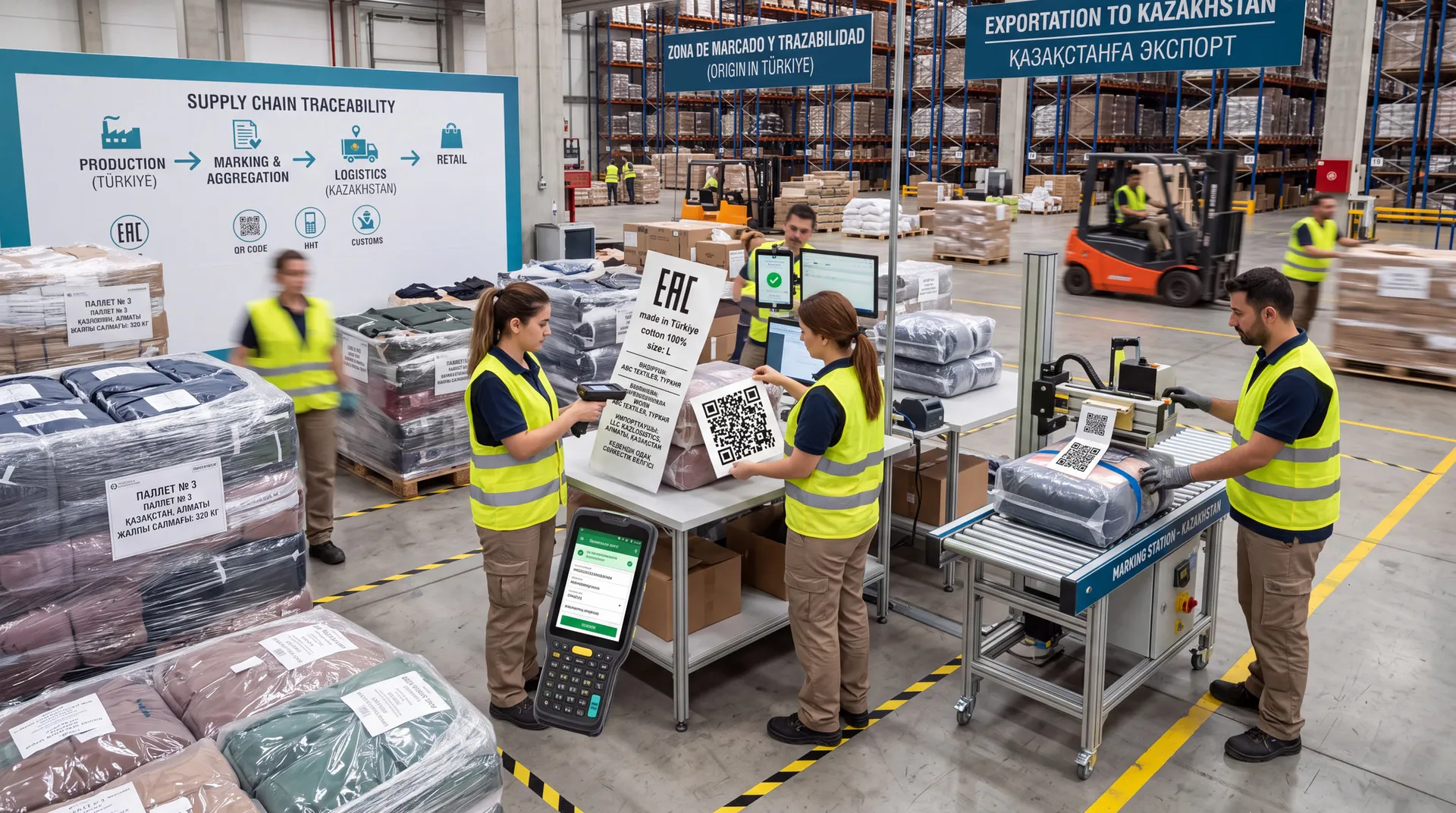
The marking of light industry in the "Honest Sign" was introduced in waves, consistently expanding the list of HS codes that fall under the requirement. The fourth wave includes new categories and positions within the already covered groups. From August 1, selling without labeling codes for products of this wave becomes a violation.
What is included in the 4th wave
The list of HS codes for the 4th wave of expansion was approved by Decree of the Government of the Russian Federation dated 06/29/2024 No. 883. The document covers an expanded list of items in groups: clothing made of natural and synthetic fabrics, outerwear, knitwear, textile accessories, certain types of bedding and table linen.
To accurately determine whether a particular product line falls into the 4th wave: check the HS code in Resolution No. 883 or in the personal account of the "Fair Sign" in the "Light Industry" section.
Three Deadlines you Need to Know
- The first: August 1, 2026 — ban on the sale of new 4th wave products without labeling. In other words, an item that arrives at a warehouse or store without a code cannot be sold from August 1.
- Second: December 1, 2026 is the deadline for labeling leftovers. Goods that were produced or imported before the start of mandatory labeling for the 4th wave can be labeled and sold before December 1. After this date, there will be a complete ban on the turnover of unmarked items.
- Third: the start date of labeling for the 4th wave (before which unmarked imports were allowed) should be checked with the text of Resolution No. 883 for its product group.
What to do during July
For importers of clothing and textiles: conduct an audit of warehouse balances according to HS codes, check with the list of the 4th wave, determine the amount of unmarked balances that need to be processed before December 1. For new batches on order: Make sure that the supplier applies the labeling before shipment or that the company has a labeling process in place upon importation through customs.
On WB and Ozon, the consequences are practical: marketplaces block product cards without correct labeling codes when the ban occurs. If there is a massive discrepancy, there will be a simultaneous loss of sales on the platform.