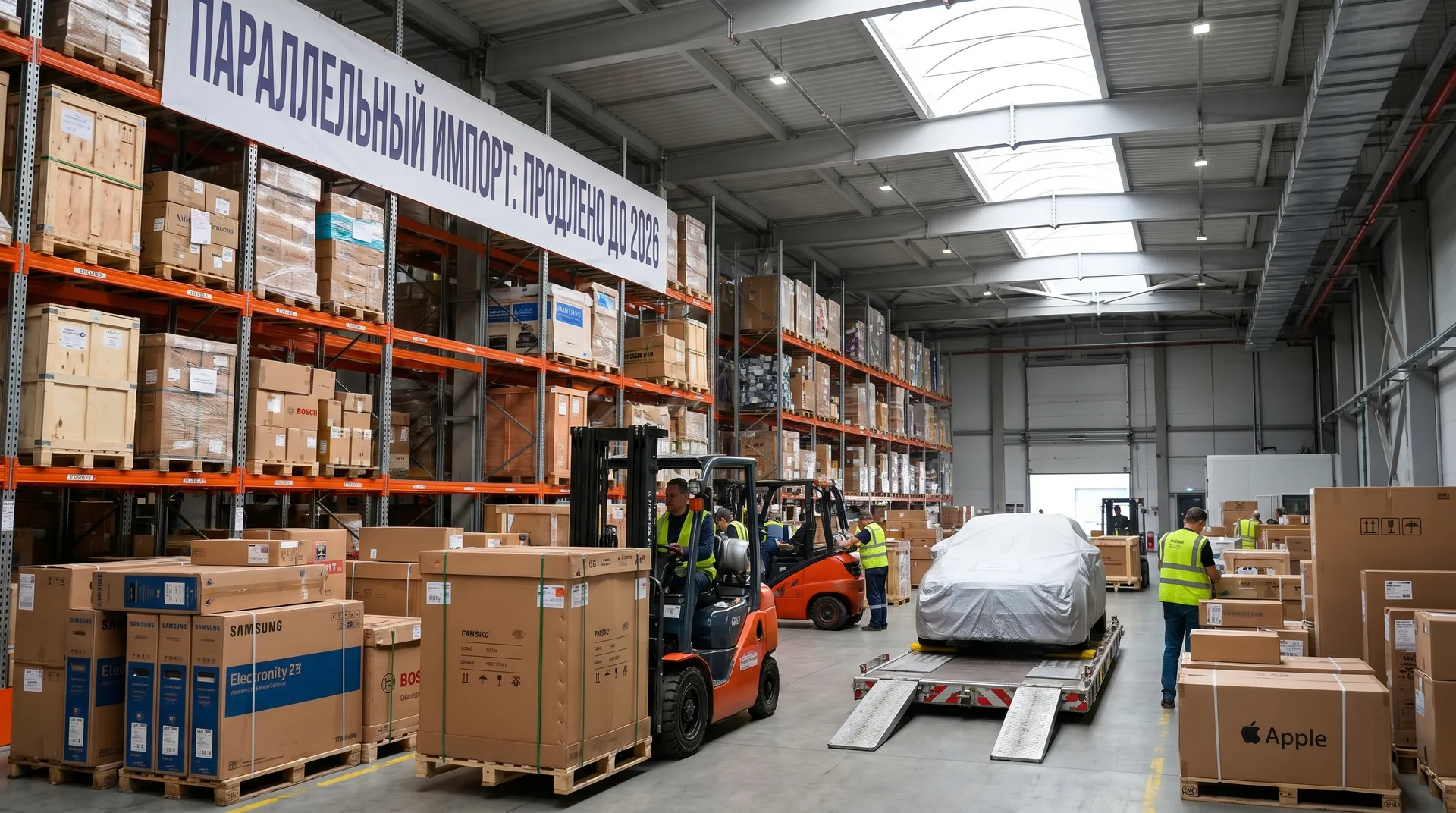
Parallel import in Russia is a mechanism authorized by presidential decree in March 2022. The bottom line: you can import goods from the list of the Ministry of Industry and Trade without the consent of the official distributor of the copyright holder. This allowed the Russian market to gain access to Western goods through third countries, despite the departure of brands.
The mechanism is extended every year. The decree of 2026 is already the fourth extension. But with each iteration, the list is subtly adjusted.
What is excluded from the parallel import from May 27
The order of the Ministry of Industry and Trade No. 4769 dated 05/27/2026 excluded a number of categories of IT equipment from the list. According to information alta.ru computers and laptops, servers, and data storage devices are subject to restrictions — for the brands Acer, ASUS, HP, IBM, Intel, Kingston, Samsung (in terms of products), Cisco.
Logic: these brands either resumed official shipments through third countries, or the government decided not to encourage gray imports in this segment for other reasons.
The import of excluded items without the consent of the copyright holder is an administrative liability, confiscation of the goods.
What's left on the list
Parallel imports remained in place for most other categories: cars and spare parts, industrial equipment, household appliances, some electronics (not included in the exceptions), clothing and footwear from brands not represented in Russia, and agricultural machinery.
The full up—to-date list is available on the website of the Ministry of Industry and Trade. After each adjustment, check the position of your product group according to the current HS code.
What does this mean for importers of IT equipment
There are two options for companies that have worked with excluded brands through parallel import. The first one is to refocus on Chinese counterparts (Lenovo, Huawei, Xiaomi, local manufacturers), which remain on the list. Second: It takes longer and more expensive to build official supplies through intermediary countries with the approval of the copyright holder, but it is legal.
Starting from September 1, 2026, the technology fee will add up to 5,000 rubles per unit for any legal import of electronics. This should be incorporated into the financial model for any option.
Why has the mechanism been extended without time limits?
Parallel imports have become a structural element of Russian trade, rather than a temporary measure. Its cancellation is impossible in the current conditions — the market depends on it in too many categories. Restrictions are applied point-by-point, not by global cancellation.