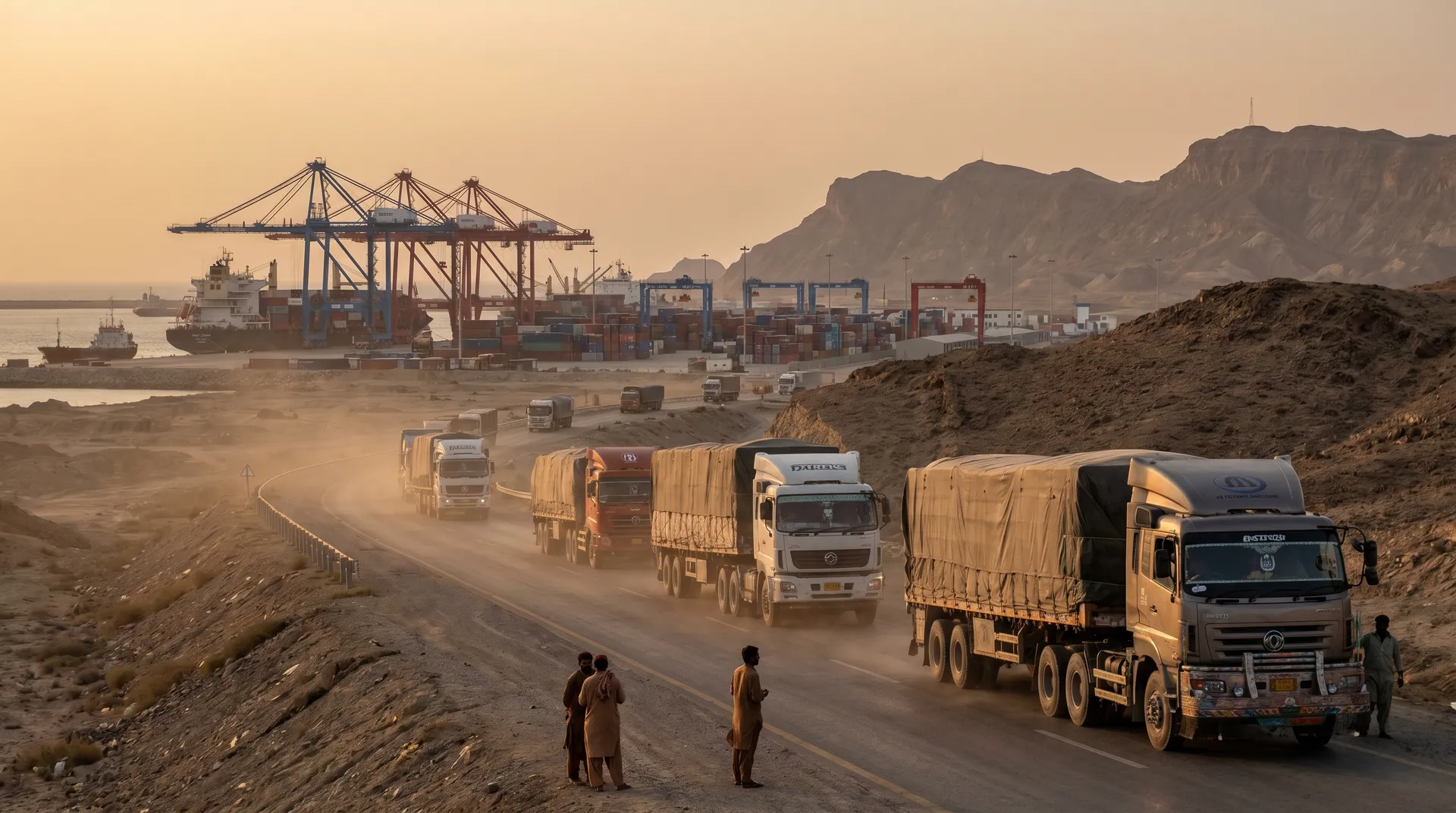
Iran is accelerating the development of a transport corridor through Pakistan and the port of Gwadar, turning it into one of the key alternatives to routes through the Strait of Hormuz. After the opening of a full-fledged land transit in late April, cargo traffic in the direction began to grow rapidly. For businesses, this is no longer an experimental scheme, but a working route that is gradually becoming part of the Eurasian logistics system.
The port of Gwadar is becoming an important point of the new transport architecture of the region. Its importance has increased dramatically against the background of instability in the Persian Gulf and increased risks to shipping through Hormuz. Companies working with Iran seek to diversify supplies and prepare alternative cargo transportation channels in advance. That is why the overland shoulder through Pakistan began to rapidly gain importance for container and multimodal transport.
Russia and India are already considering connecting the route to the North–South international transport corridor. For Moscow, this is an opportunity to expand the southern supply route and reduce dependence on narrow offshore areas. For India, this is an additional outlet to Eurasian trade and strengthening its position in regional logistics. At the same time, New Delhi maintains restrictions on cooperation with Iran in the field of defense products, and civilian trade is developing through separate economic and trade initiatives.
For Russian companies, the situation is changing practically. A number of operators are already building operational chains through Pakistan, including transshipment, warehousing and combined routes. The main interest is related to the fact that Gwadar is gradually becoming a cargo distribution point between the Middle East, South Asia and the Eurasian space.
The new route is especially important for the supply of industrial products, agricultural exports, container shipments and project logistics. Companies are trying to fix more stable delivery schemes in advance while the market is still in the formative stages. In the logistics industry, this is considered the right moment to enter: the infrastructure is actively developing, and competition among international operators remains limited.
An additional factor is the growing role of Pakistan as a transit territory. Islamabad gets a chance to strengthen its position in international trade by servicing cargo flows between Iran, India, Russia and the Persian Gulf countries. For the region, this means the gradual formation of a new land-sea hub with access to several strategic areas at once.
For the participants of the foreign economic activity, the main conclusion is already obvious: routes through Gwadar are no longer a backup option and are beginning to be perceived as a full-fledged part of the new logistics map of Eurasia.