More than 100 billion rubles will be allocated for the development of the Northern Sea Route in 2027-2029.
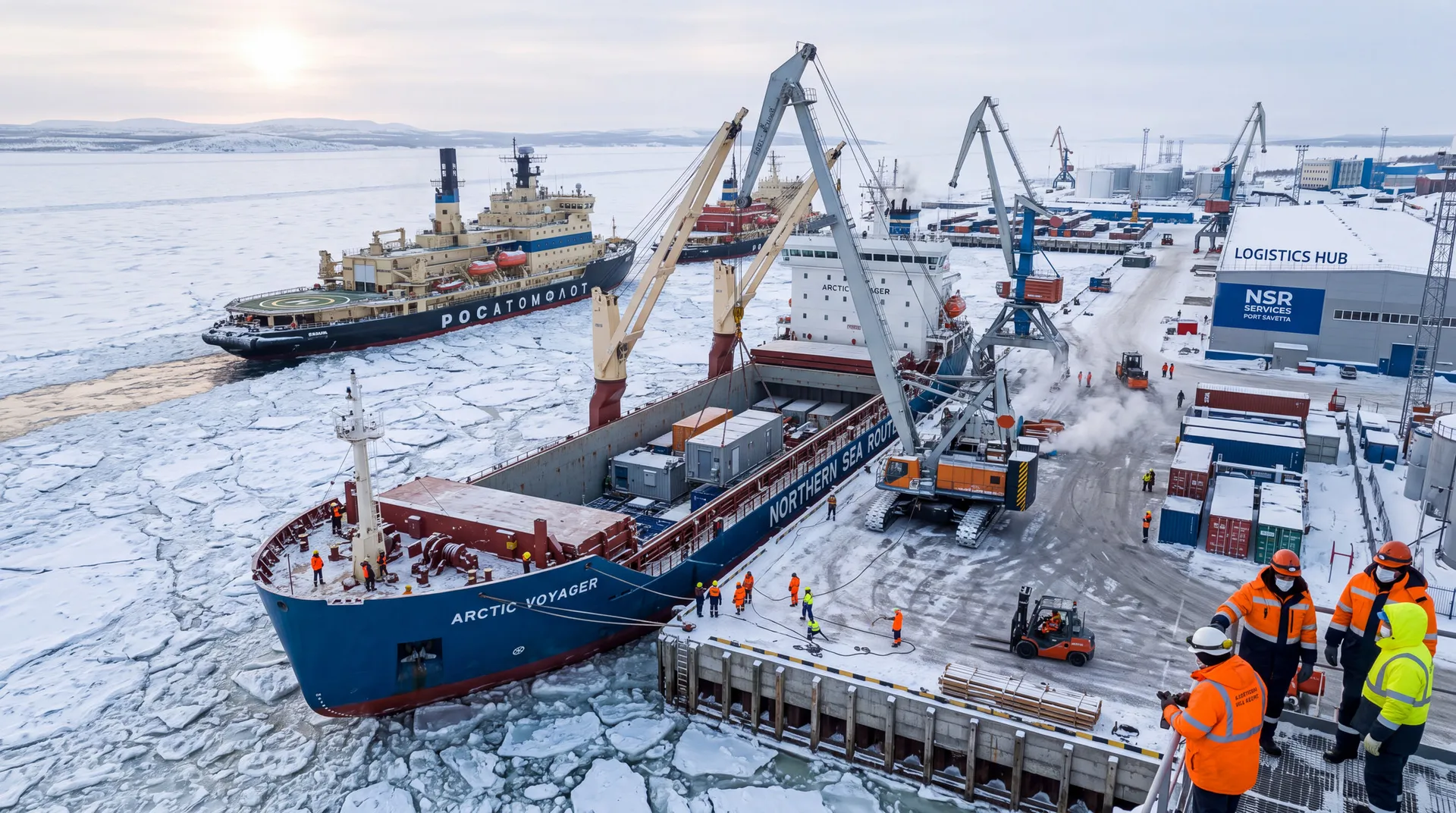
In 2027, 9.8 billion rubles will be allocated to the port infrastructure of the Northern Sea Route — such figures are recorded in the explanatory note to the draft federal budget for 2027 and the planning period 2028-2029.
The total amount of financing of the Great Northern Sea Route in three years will exceed 100 billion rubles. The distribution by year is uneven: in 2027 — 50.3 billion rubles, in 2028 — 14 billion rubles, in 2029 — 36.06 billion rubles. The peak load falls on the first year of the three-year period, which indicates the priority of capital investments at the start.
A separate line in the budget includes subsidies for the organization of regular transportation along the NSR: 387.8 million rubles in 2027, 408.2 million rubles each in 2028 and 2029. For cargo owners, this means the emergence of subsidized flights with predictable schedules, a critical factor in planning supply chains in the Arctic.
The budget provides 15.4 billion rubles for the development of the transport system as a whole over three years: 1.16 billion rubles in 2027, 7.16 billion rubles in 2028 and 7.05 billion rubles in 2029. Part of the funds will be used to ensure transport security.
In parallel with the budget decisions, the regulatory and investment base of the route is being formed. Rosmorrechflot has agreed on an investment declaration for the Talagi seaport construction project in Arkhangelsk. A draft order on tariffs for Atomflot's icebreaking services on the NSR has been developed. The document will directly determine the cost of passage for commercial vessels.
In the diplomatic sphere, a memorandum on cooperation in the development of the Northern Sea Route between Russia and India may be signed by the end of 2026. India is one of the key trading partners in the context of BRICS, and its connection to the Arctic route can create a new cargo flow between Russian ports and Indian customers.
For participants in foreign economic activity focused on the BRICS countries, the combination of these solutions opens up a planning horizon: infrastructure will be built, regular flights will be subsidized, and the tariff base for icebreaking operations will be fixed. The next practical step is to wait for the approval of Atomflot's tariffs and the conditions for subsidizing scheduled transportation in order to include the NSR in the calculation of logistics costs.