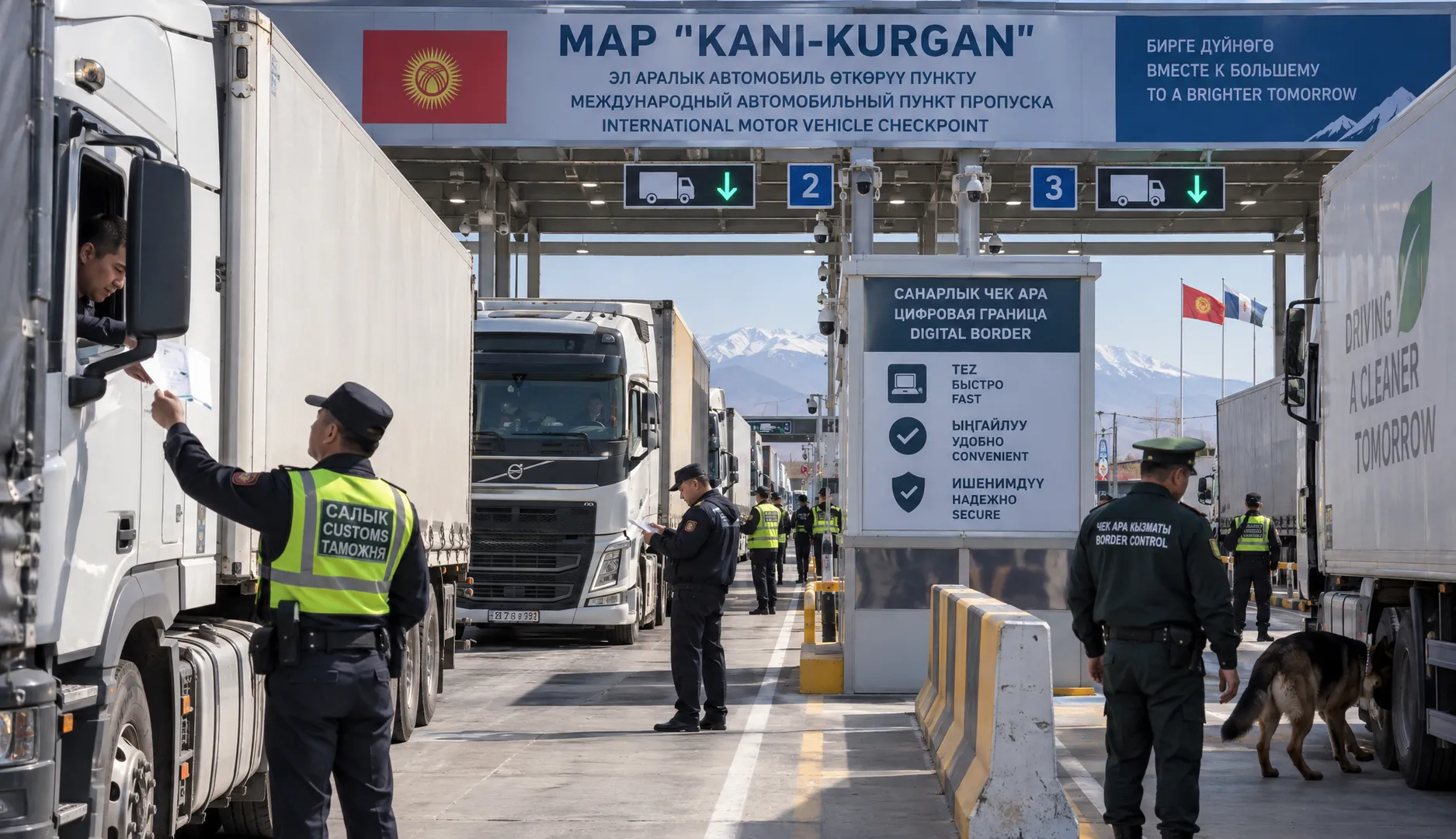
The pilot project will cover six checkpoints:
- MAPP "Kani-Kurgan", MAPP "Pogranichny" and MAPP "Kraskino" on the border with China;
- Kyakhta checkpoint on the border with Mongolia;
- Tagirkent-Kazmalyar checkpoint on the border with Azerbaijan;
- MAPP "Hassan" on the border with North Korea.
The choice of sites covers key areas of cargo traffic from the BRICS and EAEU countries.
The mechanism is based on prior notification: the carrier submits basic information about the cargo no later than two hours before arrival at the checkpoint. Information is automatically sent to all the agencies involved — the border and customs services, Rosselkhoznadzor, Rospotrebnadzor, the Federal Tax Service, the Ministry of Internal Affairs, Rostransnadzor, Rosavtodor. Repeated submission of documents to each department separately is excluded.
Polina Davydova, Director of the Digital Transport and Logistics Association, announced the expected effect at a meeting of the Transport Committee of the CIS Business Center for Economic Development.:
"Digital solutions can provide up to 30% time savings. I think that next year a pilot will be conducted to create such a digital single window based on international automobile checkpoints."
At the first stage, the service will be placed on the basis of the State Information System of Electronic Transportation Documents (GIS EPD). The system already has an electronic queue for trucks and a coastal transportation portal for carriers from the EAEU countries. After the development of the National Digital Transport and Logistics Platform GosLog is completed, the service is planned to be transferred to it.
The legislative framework is being formed in parallel. The relevant draft law on the creation of the system passed its first reading in the summer of 2026. Its entry into force is scheduled for September 1, 2027 — the pilot precedes a full launch and must confirm the mechanism's operability before the law is passed.
Once operational, the system will be expanded, starting with priority road crossings in key logistics areas. Importers and exporters who regularly work with road transport through China and Central Asian routes will have the opportunity to monitor the readiness for passage in advance and minimize downtime at the border.
Related news:
- EPD became mandatory: 82 million documents in two months and five unresolved problems — how does GIS EPD work, on the basis of which the window will be launched
- A portal scanner for trucks without stopping has been launched at MAPP Pogranichny — a scanner for trucks without stopping at MAPP Pogranichny
- MAPP Bugristoe received security scanners without stopping trucks — security complexes at MAPP Bugristoe
- How to transport goods from China now: an honest analysis of price and speed — which routes are now used to transport goods from China