The agreement was signed in Minsk on June 27, 2025, and Russia ratified it by Federal Law No. 133-FZ of May 25, 2026. The average import duty rate on EAEU goods in the UAE is reduced from 5% to 0.6%. The Eurasian Economic Commission estimates the potential annual savings of the Union's exporters at $266 million, and the increase in trade turnover in the medium term at $5-6 billion. The existing exports covered by the preference amount to more than $12.1 billion.
Among the goods receiving preferential access to the Emirati market, the EEC names agricultural products and industrial products. For some items, the fee is reset immediately from the date of entry into force of the agreement, for others, a phased reduction is provided according to the tariff schedule. The overall figure of "86% of goods" does not mean a single rate: for each item, the conditions are determined by a separate line in the tariff application.
For an importer importing goods from the UAE to Russia, the mechanism works in a mirror manner. The preferential rate is applied only if three conditions are met simultaneously: the item is included in the EAEU tariff schedule with a concession, the product has a confirmed Emirati origin, and the requirements for transit and transshipment are met. Shipping cargo from Dubai by itself does not make a Chinese or Indian product an Emirati product.
The issue of origin is particularly acute for jewelry products. The UAE is a major trading hub through which products from different countries pass. The EEC explicitly stated that a simple assembly of imported components in the UAE should not automatically assign an Emirati origin to a product. If the frame and stone were imported from a third country and the production does not meet the established criteria, such a product cannot claim a preference. If the certificate of origin turns out to be unreliable, the EAEU customs authorities will refuse to apply the preferential rate — the most-favored-nation rate will be applied instead, or a security payment will be required.
A separate mechanism is tariff quotas. For some goods, the discounted rate is valid only within the established volume. For one of the positions of milk powder, the quota is 1,000 tons in the first year and increases to 2,000 tons from the third year; the quota rate is 0%. A different rate is applied above the quota. The quota and the regular tariff preference are different modes, and they should not be confused when declaring.
The agreement covers more than just tariffs. The document includes provisions on customs cooperation, technical barriers, sanitary and phytosanitary measures, electronic commerce, intellectual property protection, transport and logistics. The EEC associates the agreement with the prospect of using the UAE more actively in international logistics chains and connecting the country to the North—South corridor.
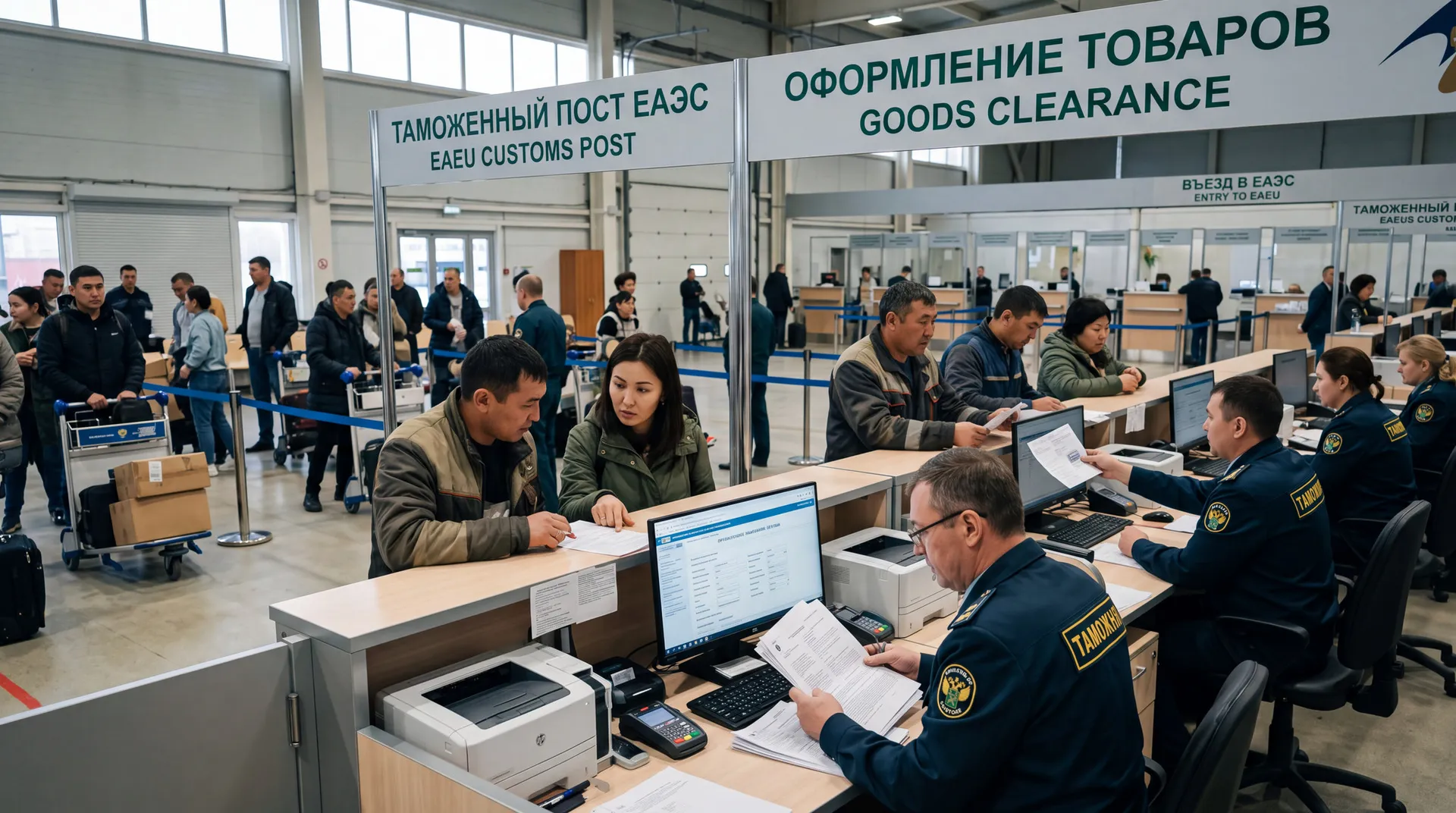
For the exporter, the reduction in duties reduces the cost of entering the Emirati market, and the UAE's well-developed logistics infrastructure opens up the opportunity to use the country as a transit hub for further supplies to third markets. This can only be used if the documents are executed correctly: work with the agreement begins with the HS code, the rules of origin and the corresponding line of the tariff schedule — and ends at the customs counter.
Related materials:
- Free trade between the EAEU and the UAE will start on October 6. How and when the date of entry into force of the agreement was announced
- The EEC has added preference codes for the UAE, Mongolia and Indonesia — which code should be indicated in the declaration in order to receive benefits
- The UAE–Russia freight increased 2.7 times: $10,360 per container — how much does shipping cost, with which to compare the savings on duty