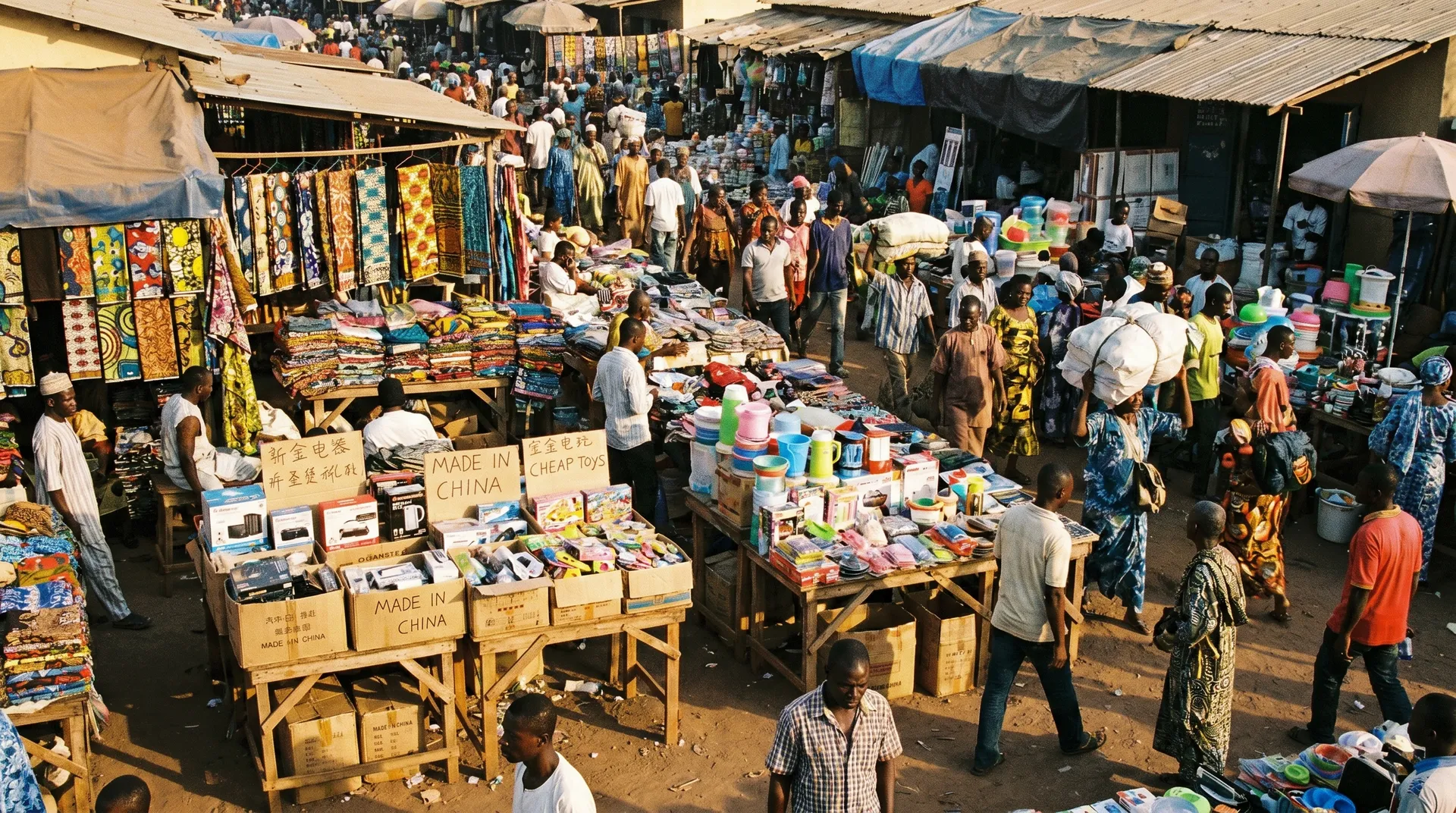
Xi Jinping announced the decision to cancel duties for 53 African countries during a meeting with Trump in Beijing on May 14. The initiative is not new — it was discussed within the framework of the China-Africa Cooperation Forum (FOCAC). But now it has received public confirmation at the highest level and entered into force on May 1.
What exactly happened
China has imposed zero duties on goods imported from 53 countries of the African continent. This means that African raw materials, semi-finished products, and agricultural products enter the Chinese market without customs duties.
The number 53 covers virtually the entire continent — most African countries gain access to the Chinese market without a price barrier.
The measures fit into Beijing's broader strategy of building relations with the Global South. China has been Africa's largest trading partner since the mid-2000s. The trade volume exceeded $282 billion in 2023. The zeroing of duties is the next step towards deepening the dependence of African economies on the Chinese market.
What goes from Africa to China
Africa supplies China primarily with raw materials: oil, natural gas, non—ferrous metal ores, copper, cobalt, gold, as well as agricultural products such as coffee, cocoa, cotton, cashews, sesame. Cobalt from the DRC represents about 70% of the world's reserves and is a critical material for the battery industry.
After the duties are reset, African suppliers of raw materials gain a competitive advantage over other sources. For China, this means reducing the cost of critical materials and strengthening its position in the supply chains of batteries, electronics and metallurgy.
What goes from China to Africa
The flow in the opposite direction is much larger: China exports industrial goods, electronics, household appliances, building materials, textiles, and automobiles to Africa. The abolition of African duties on Chinese exports is a separate issue for negotiations, and it is resolved within the framework of bilateral agreements, not by this decision.
But the economic logic is clear: when African states sell raw materials to China without duties, they receive currency, which they spend on buying Chinese goods. A closed loop.
How is this changing global trade chains?
The zeroing of duties will affect several segments.
Metals and minerals. Copper, cobalt, lithium, manganese — all this comes mainly from sub-Saharan Africa. Reducing the input cost for Chinese processors means cheaper production of batteries, electric motors, and electronics. In the future, there will be pressure on prices for alternative suppliers of similar raw materials.
Coffee and cocoa. Africa is a major supplier of these crops. After the duties are reset, African coffee becomes cheaper for the Chinese market, which means that competition with Asian and Latin American producers is growing. For Brazilian and Vietnamese exporters, this is a signal of pressure on market share in China.
Cotton and textiles. African cotton goes to the Chinese textile industry. Reducing the input cost will support the competitiveness of Chinese textiles in global markets.
What does this mean for Russia?
This decision does not have a direct impact on Russian foreign trade — Russia does not supply China with the same items as Africa. But there are several indirect consequences worth considering.
First, China is deepening its control over the supply chains of critical materials through African sources. This reduces its dependence on other suppliers and strengthens its negotiating positions in dialogue with any partners, including Russia.
Secondly, Russian companies working with African markets within the framework of the BRICS agenda (Nigeria, South Africa, Egypt, Ethiopia, Uganda) are now competing in these markets with an even more active Chinese presence. Beijing not only supplies goods to Africa, it builds infrastructure, logistics, and settlements. This is a long-term competition for a place on the continent.
Third, for logistics companies operating on China—Africa routes through Russian infrastructure or with the participation of Russian carriers, the increase in turnover is a potential volume.
The scale of the solution
China has taken similar steps before, within the framework of the Belt and Road Initiative and FOCAC. But each time the list of countries and product categories expanded. Now the coverage is almost the entire continent.
For comparison, the European Union provides duty-free access to least developed countries through the EVA (Everything But Arms) scheme, but the list of countries is much narrower. The United States grants preferences to 35 African countries under the AGOA program. China is overlapping both mechanisms geographically in one step.
What's next
The decision came into force on May 1, meaning it is already in effect. The first results in trade statistics can be seen in the data for May–June. The logical next step is for China to establish settlement mechanisms with Africa in yuan, which will make trade even more independent of the dollar.