Bill No. 665-9 was adopted in the first reading on November 17, 2026. The basic composition — Part 1 of Article 20.4 of the Administrative Code of the Russian Federation — covers violations without aggravating circumstances: without special fire protection and without serious consequences. It is according to him that most of the verification regulations of the Ministry of Emergency Situations pass.
According to current regulations, the organization pays 300-400 thousand rubles. The bill sets a fork of 600-800 thousand rubles — the upper limit adds 400 thousand rubles at once. For sole proprietors, the range shifts from 40-60 thousand to 80-120 thousand rubles. Officials will pay 40-60 thousand instead of the current 20-30 thousand, citizens — 10-30 thousand instead of 5-15 thousand. The bill retains the opportunity to limit itself to a warning on the basic composition.
A separate scale is provided for violations during the special fire protection regime (Part 2 of Article 20.4 of the Administrative Code). Currently, this amount is 400-800 thousand rubles for organizations — it is also proposed to double it. Repeated violations at extremely high, high or significant risk facilities will cost the company 800,000–1.6 million rubles instead of the current 400-800 thousand. The administrative suspension of activities for up to 30 days remains in place.
The most severe penalties are for cases where a violation has led to a fire with serious harm to health or death of a person. The fine for the organization will increase from 1-2 million to 2-4 million rubles. The alternative — suspension of activities for up to 90 days — remains in the arsenal of supervisors.
For businesses with their own or leased warehouse and production facilities — and these are the majority of importers working with physical shipments — the increase in fines changes the price of inaction.
Typical violations that the Ministry of Emergency Situations records during routine inspections:
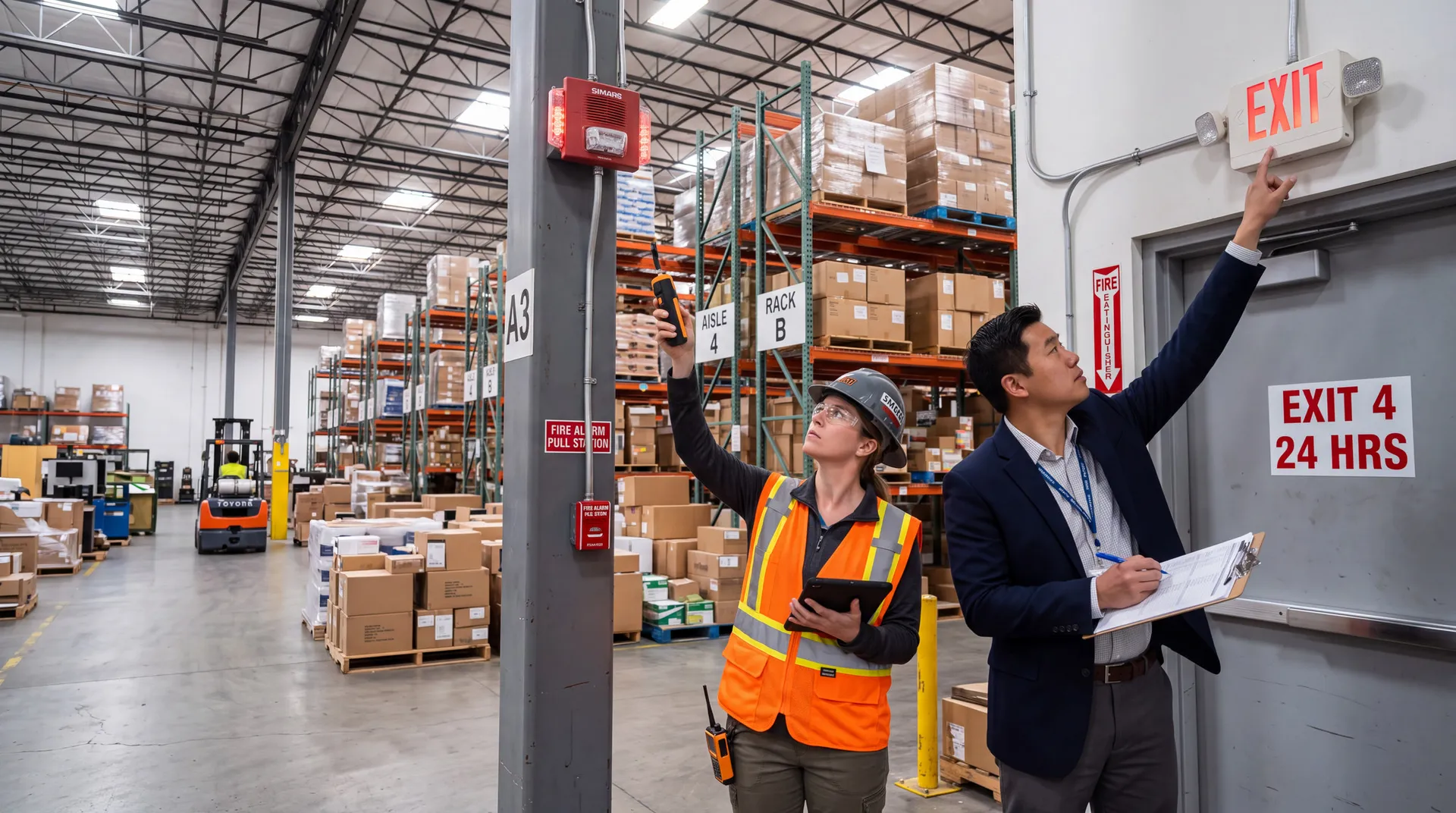
- faulty fire alarm system
- non-functioning fire extinguishing and warning systems
- blocked evacuation exits
- problems with fire-fighting water supply
- the lack of up-to-date instructions and briefing logs.
Failure to comply with the requirements of past inspections automatically translates the violation into a repeat one — and this is already the upper part of the new scale.
The bill has passed only the first reading, the new amounts are not yet valid. Before the standards come into force, companies can conduct an internal audit: to check the serviceability of equipment, the condition of evacuation routes, the availability of mandatory documentation and the fact of elimination of violations from the previous regulations of the Ministry of Emergency Situations.
Related news:
- Fines for violations of fire safety are proposed to be doubled — the original version of the draft law on fire fines
- The Federal Customs Service and the Ministry of Emergency Situations are strengthening control over the import of fire-technical products — control over the import of fire-technical products
- Warehouse fires reduced sellers' participation in November sales — how warehouse fires affected sellers' sales
- Warehouses are on fire, the algorithms continue to work. What should an importer and a seller do — humanly and legally - what should a seller and an importer do if a warehouse burns down