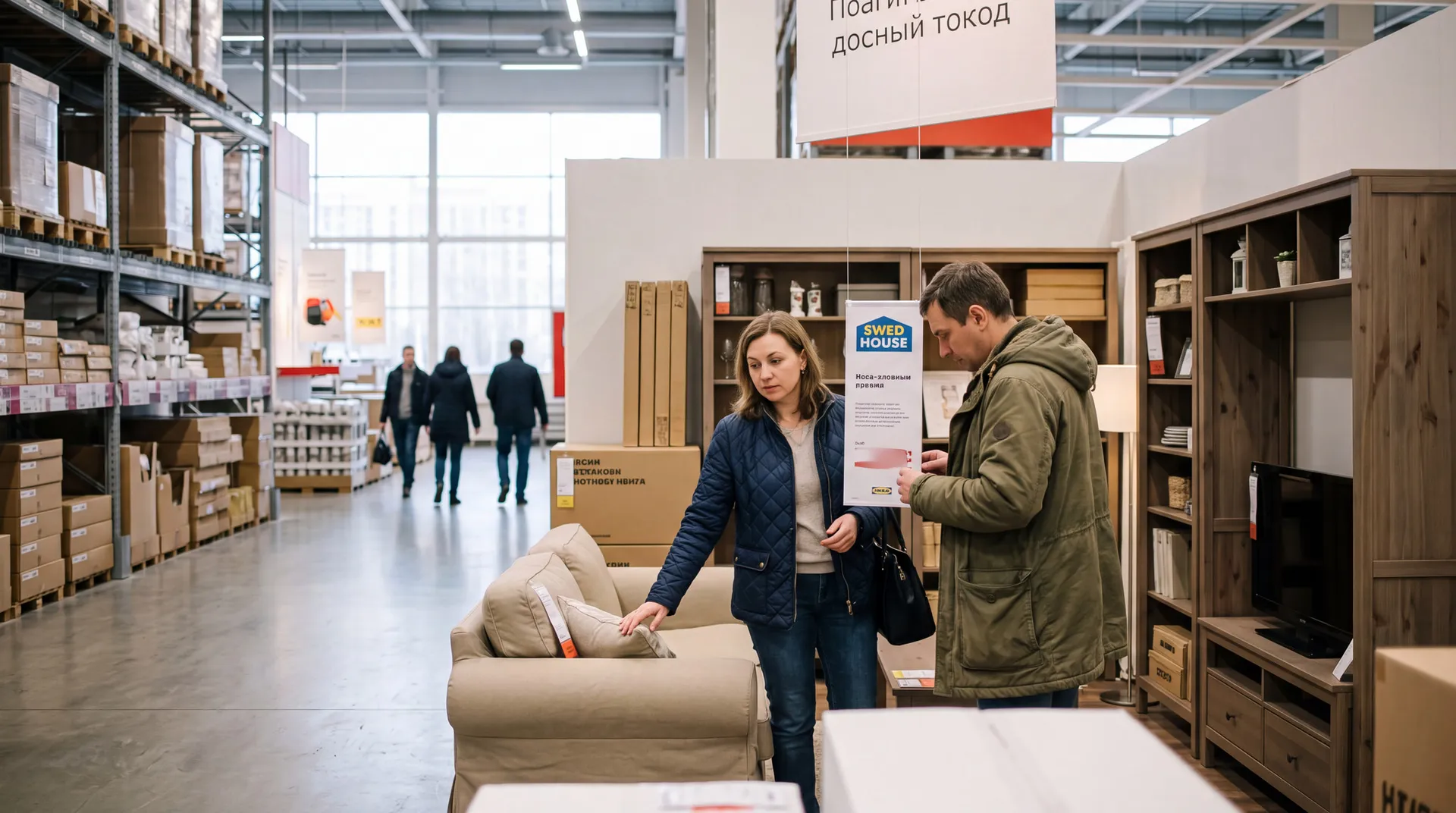
By the end of the 2026 financial year, IKEA's retail sales decreased by 1.9% to €43.8 billion from €44.6 billion a year earlier. Adjusted for currency fluctuations, the decrease was 0.7%. Inter IKEA Group's revenue decreased from €26.3 billion to €25.9 billion, net profit — from €1.5 billion to €1.4 billion. The staff decreased by 5 thousand people: from 222 thousand in 2025 to 217 thousand in 2026. This is the third consecutive decline in sales.
In July 2025, representatives of Ingka Group stated that they remain hopeful of resuming operations in Russia, but there are no necessary prerequisites for this yet.
There is no longer any infrastructure to rely on when returning. IKEA sold its Russian manufacturing assets after leaving the market. In 2023, Gazprombank Group acquired 14 Mega shopping malls formerly owned by Ingka Centers. The areas of the former IKEA stores were occupied by other operators.
Alexander Shestakov, President of the Association of Furniture and Woodworking Industry Enterprises of Russia (AMDPR) and CEO of the First Furniture Factory, assesses the situation as follows:
"It will be much more difficult for IKEA to return due to the current market situation: the niche that was vacated with the departure of the Swedish concern has long been occupied. This is because almost all the furniture presented at IKEA was produced by Russian enterprises, and these productions did not disappear anywhere: they found new sales channels, began to operate under their own brands, as a result of which domestic companies quickly took their place. During IKEA's absence, the Russian furniture market simply continued to develop and grow."
IKEA's competitive advantage — sales organization, service, and comprehensive interior solutions — has ceased to be exceptional. Russian manufacturers have mastered the same format.
"IKEA's strengths were, first of all, sales organization, service and the ability to offer the customer a ready-made interior solution. But even from this point of view, the Russian market has made significant progress in recent years: manufacturers often do not offer a separate piece of furniture, but a comprehensive interior design and the ability to adapt the solution to a specific customer. For example, just this year we opened two special spaces — a furniture studio and a new salon with full-fledged interior areas. Other major market players are developing in the same direction," adds Shestakov.
With the advent of political prerequisites, IKEA will be faced with the task of finding retail space, building logistics, restoring the assortment and re-forming supply chains. Brand awareness remains — IKEA has extended the right to the Ikea Family brand in Russia until 2036 — but this is not enough to restore market positions in an environment where the structure of demand and the competitive environment have fundamentally changed.
Related news:
- IKEA doubles its bet on India: 2.22 billion euros for stores, online and purchases — where IKEA invests money instead of Russia
- Retail chain commissions for young brands reach 70% — what commissions do young brands face in the networks
- Refunds on marketplaces will raise the prices of goods by 8-12% in 2026 — why prices on marketplaces are rising
- Parallel Import: The magic word that you misunderstand — what parallel import really means for bygone brands