The Ministry of Economy has outlined the procedure for blocking goods through an Chestny ZNAK without trial

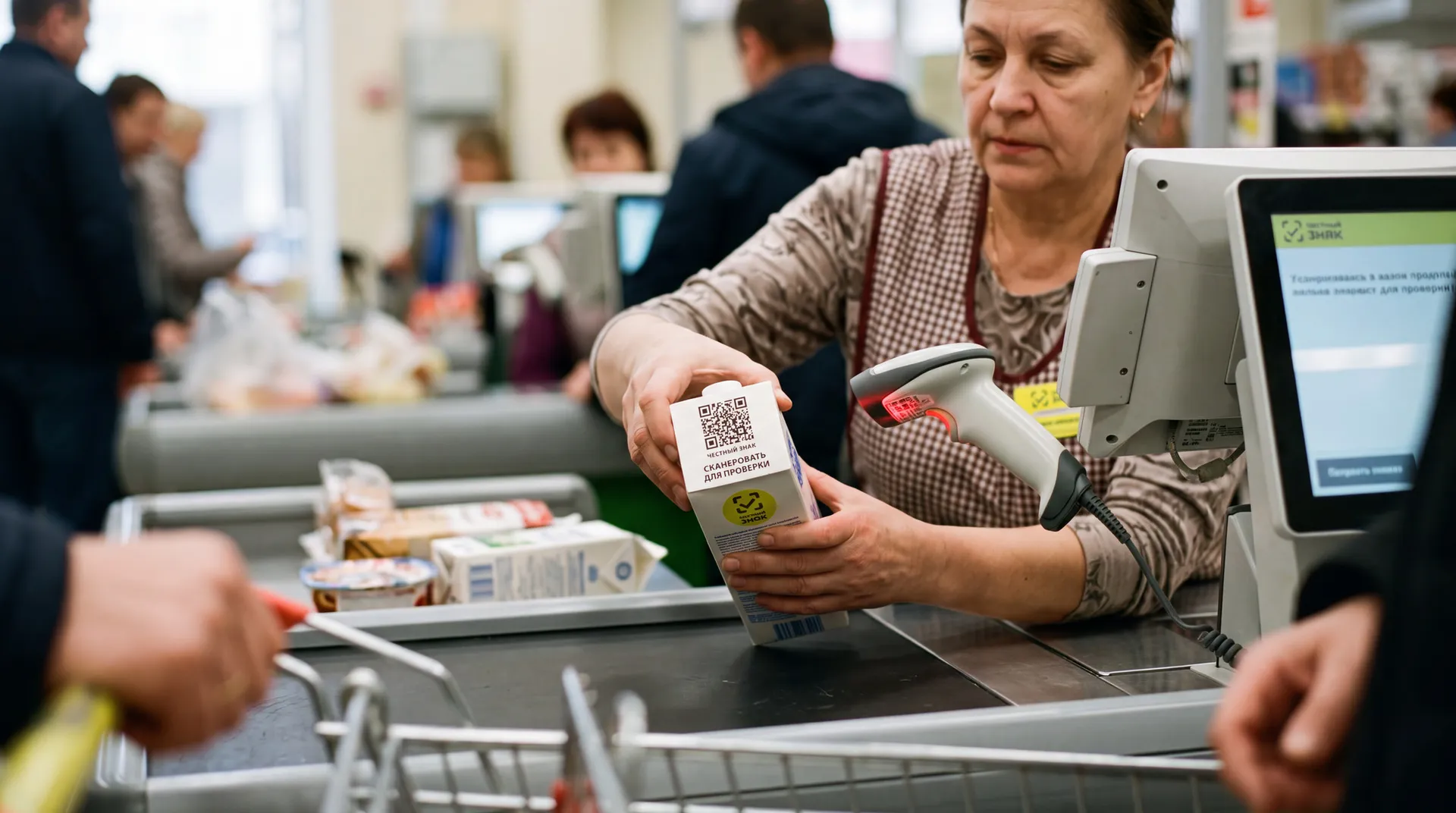
The resolution will enter into force simultaneously with the law it has been drafted to comply with. Before this date, sales can only be suspended through the courts, including in the event of a threat of mass poisoning. After March 1, 2027, the regulation of the regulatory authority is sufficient: the marked goods will be blocked at the cash registers through an "Chestny ZNAK" automatically.
The document provides for two separate decision-making mechanisms. The first one concerns the chief sanitary doctors by region and their deputies — the corresponding procedure is being prepared by Rospotrebnadzor. The second applies to the control and supervisory authorities - Rosstandart and Rosselkhoznadzor — and it is for this scenario that the Ministry of Economy has prescribed a detailed procedure.
The basis for issuing the order will be the results of inspections, investigations of accidents and the causes of mass illnesses. The order is entered into the unified register of control and supervisory measures within one business day, and a copy is sent to the seller. The information is published on the website of the control body and in the Chestny ZNAK system. The notification is also received by Rosaccreditation, and if there is a serial certificate of conformity, the certification body, which is required to conduct inspection control.
The operator of Chestny ZNAK, the Center for the Development of Advanced Technologies, clarified: the restrictive measures will affect only the batch of products for which the risks to life and health have been confirmed. The rest of the manufacturer's product range is not subject to blocking.
Sellers still have the right to appeal the order, but this will require them to independently check for violations. The application is considered within five working days. If the order is found to be unlawful, the business has the right to claim compensation from the budget, including compensation for lost income for the period of suspension of sales.
The business community as a whole supported the project. Marina Bludyan, Vice President of Opora Russia, noted that the blocking mechanism itself may look "repressive" due to the risk of suspension of sales due to a competitor's complaint, so a clear decision-making procedure is an "important milestone" that allows to restore order without prejudice to entrepreneurs.
Artyom Sokolov, President of the Association of Online Commerce Companies, highlighted a separate rule: "It is important that there is a rule on the mandatory publication of a rebuttal when the order is canceled."
Stanislav Bogdanov, Chairman of the Association of Omnichannel Retail Companies, said that he had no significant comments, and the practical nuances of the new procedure would have to be worked out in dialogue with the regulator.
For importers who supply labeled products to the Russian market, the new mechanism adds a requirement to internal processes: it is necessary to identify in advance those responsible for monitoring the register of prescriptions and build a chain of rapid response — from receiving a notification to filing an appeal within the allotted five working days.
Related news:
- From March 2027, the cash register will block the sale of dangerous products — a law that introduces a lock at the cash registers
- The Chestny ZNAK has become a tool for tax control of the Federal Tax Service — how is the "Chestny ZNAK" used for tax control
- An Chestny ZNAK received the right to verify the reality of production and refuse codes — the right of an "Chestny ZNAK" to refuse codes
- Import label requirements: what is written in the law and how it ignores the market — labeling requirements for imported goods