The full list of regions that have adopted relevant laws as of November 20 includes the Amur, Astrakhan, Vologda, Kaliningrad, Leningrad, Nizhny Novgorod, Penza, Rostov, Ryazan, Saratov, Smolensk, Tomsk and Ulyanovsk Regions, the Trans-Baikal, Krasnoyarsk and Perm Territories, St. Petersburg, the Republics of Karelia, Mari El, Altai, Tatarstan, Yakutia, North Ossetia—Alania, Udmurtia and Chuvashia, Donetsk People's Republic, Nenets and Yamalo-Nenets Autonomous Districts. Later, the Kemerovo, Kirov, Yaroslavl and Bryansk regions joined them — a total of 32 subjects.
The regions received the right to impose temporary restrictions after the adoption of a federal law signed by President Vladimir Putin in June. The law allows subjects to impose a ban for up to five years. The lower and upper limits of the restriction period are March 1, 2027 and March 1, 2032, respectively. Administrative liability is provided for any violation of the regional ban.
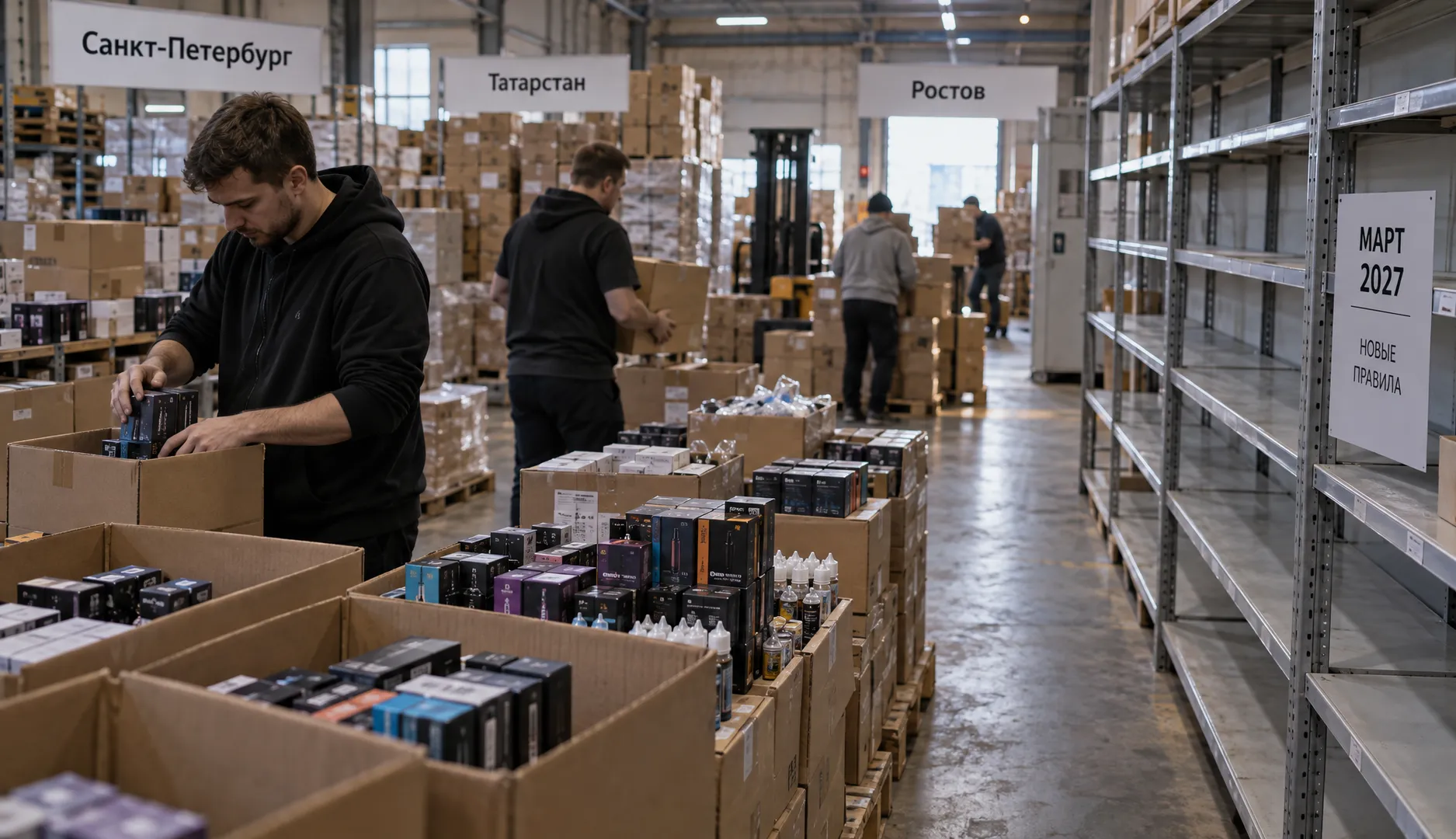
For the participants of the nicotine-containing products import market, the situation is taking on concrete outlines. Among the regions with a ban are St. Petersburg, Tatarstan, Rostov, Nizhny Novgorod and Krasnoyarsk Territories: large consumer markets with developed retail infrastructure. In total, the affected entities account for a significant share of turnover in the vape product segment.
Importers supplying e—cigarettes and liquids from the BRICS countries, primarily from China, where the main production is concentrated, will face the need to review contractual volumes and distribution channels before March 2027. Goods imported under existing contracts will not be able to be sold at retail in 32 regions after the ban comes into force. Warehouses in these regions will turn out to be a non-operational asset for storing such products.
The other regions of the federation have not yet made similar decisions, but the mechanism has already been worked out and is available to any region until 2032. It is advisable for importers to monitor legislative activity in the subjects of their presence and lay down a scenario for extending the ban when planning supplies on the horizon of 2025-2026.
Related news:
- Starting from August 20, vapes and alcohol are strategically important goods — vapes are on the list of strategically important goods
- Tobacco sales license: mandatory from March 1, 2027 — tobacco sales license from March 2027
- The sale of tobacco to children will become grounds for revocation of the license from March 1, 2027, when the tobacco license may be revoked.
- Import label requirements: what is written in the law and how it ignores the market — labeling requirements for imported goods