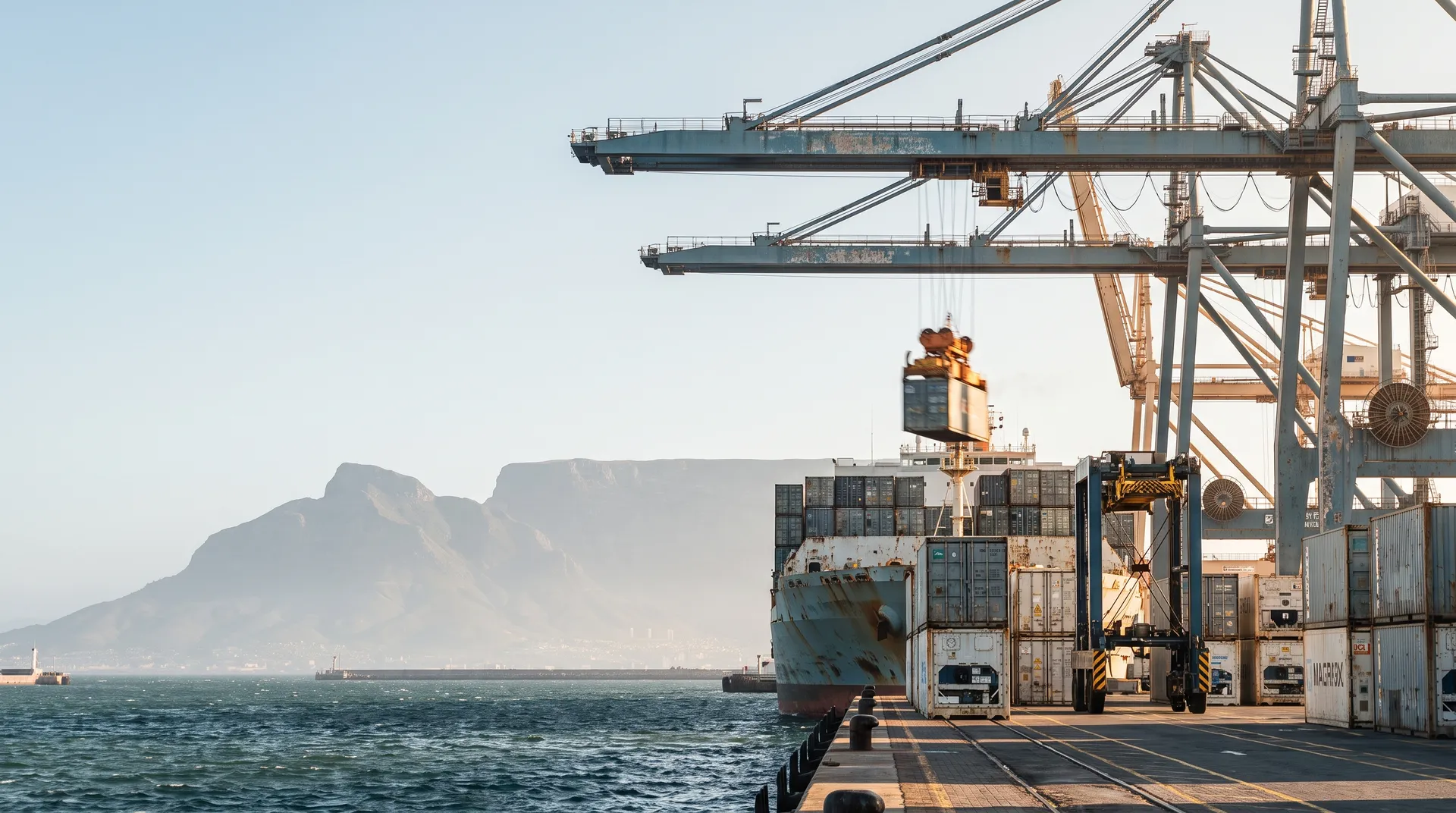
The port of Cape Town recorded an improvement in operating performance before the export season. The figures were provided by the Minister of Transport of South Africa Barbara Krechy.
The terminal's container turnover increased by 16% in the first quarter of fiscal year 2026/27 compared to the same period last year. The average turnaround time of a truck decreased to 39.9 minutes, an improvement of 35% over the year. The work of the railway arm has improved by 82%. The average waiting time for a ship dropped from 115 to 44.3 hours.
The ship's handling time at the container terminal was reduced from 103 hours in 2023/24 to 55 hours in the current period of 2026/27. The average waiting time at the anchorage has improved by 65% in four fiscal years.
Investments in technology are behind the result. All 28 new gantry cranes on pneumatic gear have been put into operation, and four additional gantry loaders received in June have been tested and approved for operation. Ten permanent mooring tension installations have reduced downtime due to the long wave by 92% starting in 2023/24.
A separate topic is private operators. Nine of the port's eleven terminals are operated by private companies, and tenders have been announced for a multi-purpose terminal and a floating dock.
Cape Town's location on the route around Africa is important for Russian business. Some of the traffic bypassing Suez goes through South African ports, and Cape Town's reputation as a bottleneck was one of the arguments against this route. Reducing the waiting time for a ship by almost three times changes the calculation for the lines that form the schedule.
The sustainability of the improvements remains questionable. Crechy called prolonged periods of strong winds a particular risk for Cape Town: the terminal is forced to include recovery measures after weather disruptions in planning.
What a business should do. Forwarders working on the route around the Cape of Good Hope need to recalculate transit time based on new turnover figures. Companies negotiating bids on the South African route should rely on waiting time statistics.: She provides an argument against port delay surcharges.
Similar materials on the website
- Fesco reduced container clearance in Vladivostok — how to measure and reduce port downtime at the other end of the route