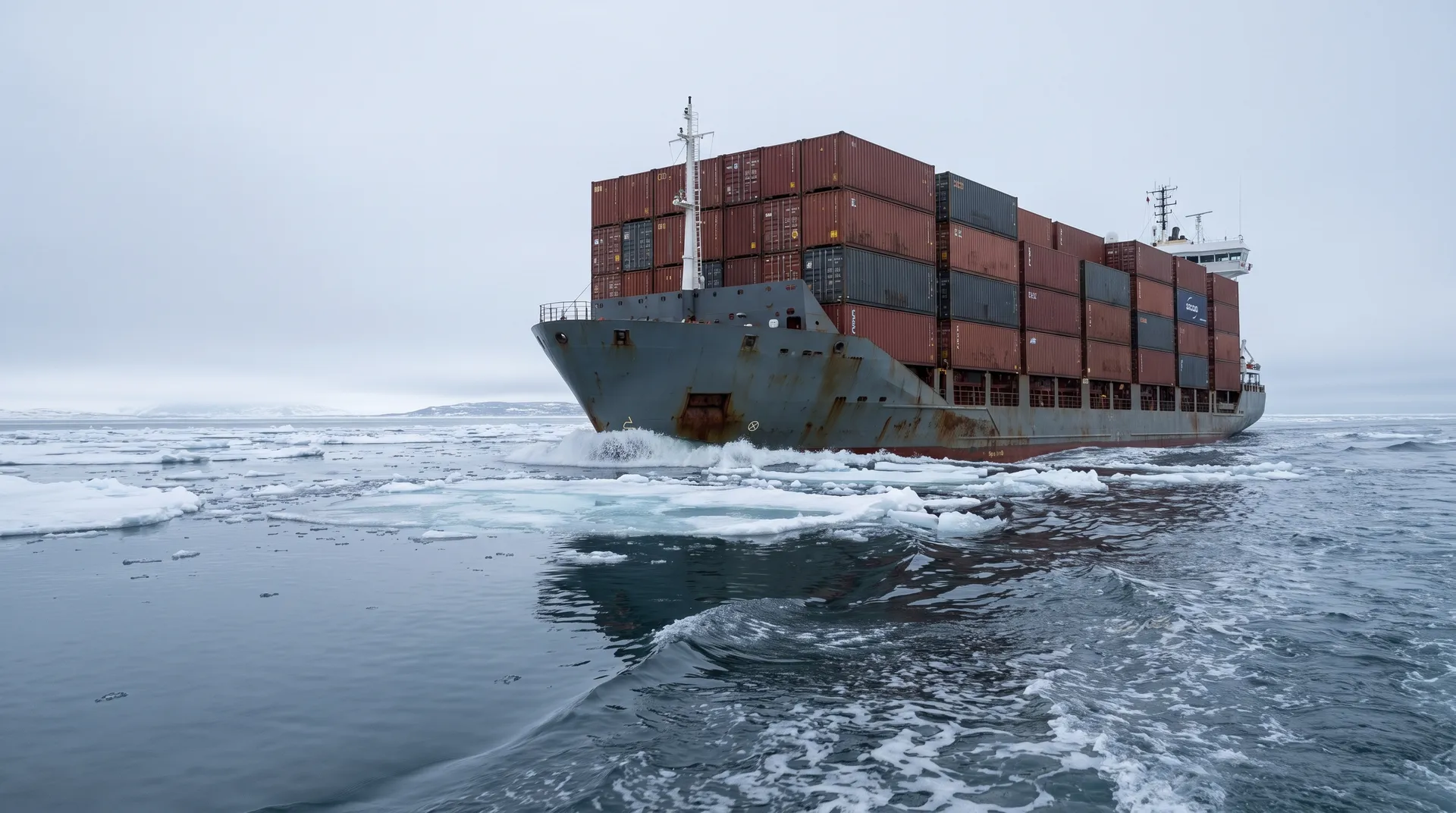
Sealegend Shipping has launched a regular weekly service along the Northern Sea Route. The first flight of the route, which in China is called the "China—Europe Arctic Express", started from the port of Ningbo-Zhoushan. The Dubai Tower container ship makes calls at Philixstowe, Rotterdam, Hamburg and Gdynia.
The key figure is the deadline. It takes 20 days to complete the Arctic route. The traditional route through the Suez Canal takes about 40 days. Halving directly affects the cost of money on the way: with a shipment worth $1 million and a financing rate of 20% per annum, twenty saved days release about $11,000 in interest alone, not counting the effect on inventory turnover.
The composition of the first shipment shows what kind of cargo the service was designed for. On board are energy storage devices, traction batteries, photovoltaic modules and other components for alternative energy. This is a high unit cost per cubic meter and sensitivity to deadlines, that is, the nomenclature for which the premium for speed pays off.
The main limitation of the route is the season. The ice conditions allow navigation from July to October. The regularity within the window means that shipments can be scheduled, rather than adjusted for one-time flights, but the planning horizon still rests on the closing of the season.
For the Russian side, the launch means loading the port and icebreaking infrastructure with commercial traffic unrelated to commodity exports. The Northern Sea Route is moving from the project category to the scheduled line category.
Importers and exporters working on the China — Northern Europe route should do a specific thing before the end of August: request rates and slots for September and October exits, compare them with current rates via Suez, taking into account security surcharges in the Red Sea, and calculate the overall effect using the formula "freight plus the cost of money en route plus insurance premium". For expensive, compact nomenclature, the Arctic route often benefits from this calculation even at a higher base rate.
Similar materials on the website
- China—Europe railway transit through Russia increased by 40 percent — the second land corridor in the same direction, for comparison of terms and rates