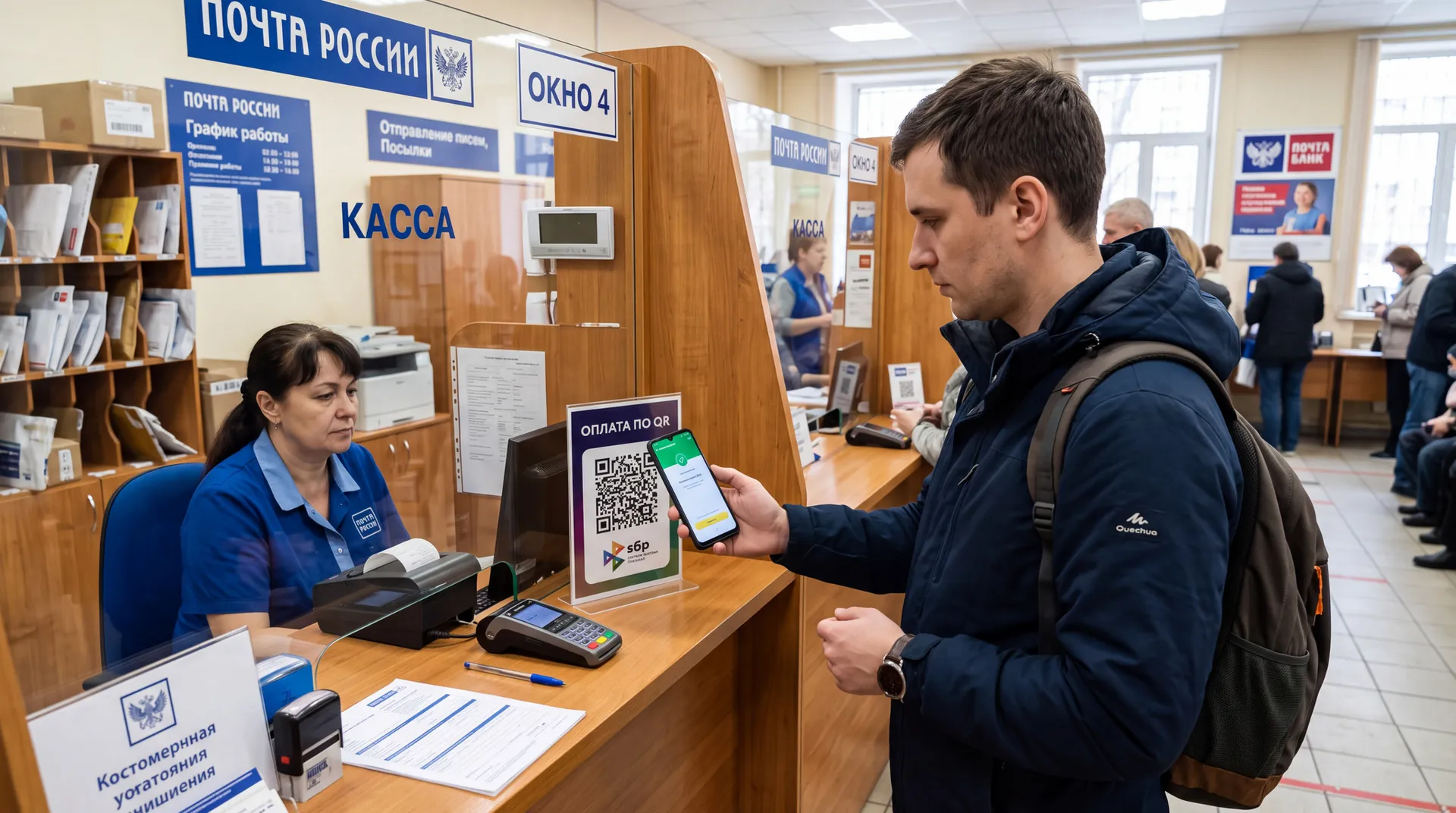
The integration took about seven months: work started in February 2026, and the first transaction took place in September of the same year. The technical implementation was carried out by Pochtatech, the IT department of the Russian Post, together with VTB Bank.
The digital ruble is the third form of the Russian national currency along with cash and non—cash funds. Its key difference from the usual non-cash money is that digital rubles are stored in accounts directly on the Bank of Russia platform and represent a direct obligation of the regulator, not a commercial bank. All transactions are recorded on the Central Bank's platform.
There are no fees for payments and transfers in digital rubles for individuals. The transfer can be sent by phone number, regardless of which bank the recipient's account is open with, provided that both participants have digital wallets. The wallet is opened through the application of any bank participating in the platform, and it can be used from the applications of all connected banks where the client is serviced.
You can pay for Russian Post services in digital rubles using a QR code from a familiar banking application - you do not need to install a separate service specifically.
"The integration of the digital ruble is an important step in the digital transformation of the Russian Post. We have integrated the new payment method into the company's existing IT infrastructure to make paying for services simple and convenient for citizens through familiar banking applications," said Dmitry Chudinov, Deputy General Director of the Russian Post.
For importers and exporters working with postal delivery channels, the launch means expanding the range of payments within Russia. The digital ruble as an obligation of the Central Bank theoretically simplifies payment verification and reduces dependence on the infrastructure of commercial banks. So far, we are talking about paying for the services of the Russian Post itself, but the scale of the network — all branches of the country — makes this channel significant in terms of coverage. The next practical question for businesses is when and in what format the digital ruble will appear in settlements with legal entities and in cross-border transactions.
Related news:
- The digital ruble will reduce the commission for payments to 0.3% from 2027. What fees do businesses expect for payments in digital rubles?
- A universal QR code has become mandatory for banks and large retailers - how does QR code payment change in banks and retail
- Russian Post is changing the order of work with shipments from March 1, 2027 — other changes in the work of the Russian Post
- Financial calculations in foreign economic activity: why the old rules no longer work and what replaced them — how calculations in foreign economic activity work after abandoning the old schemes