Two railway corridors to the ports of the Northwest will add 50 million tons of throughput capacity.
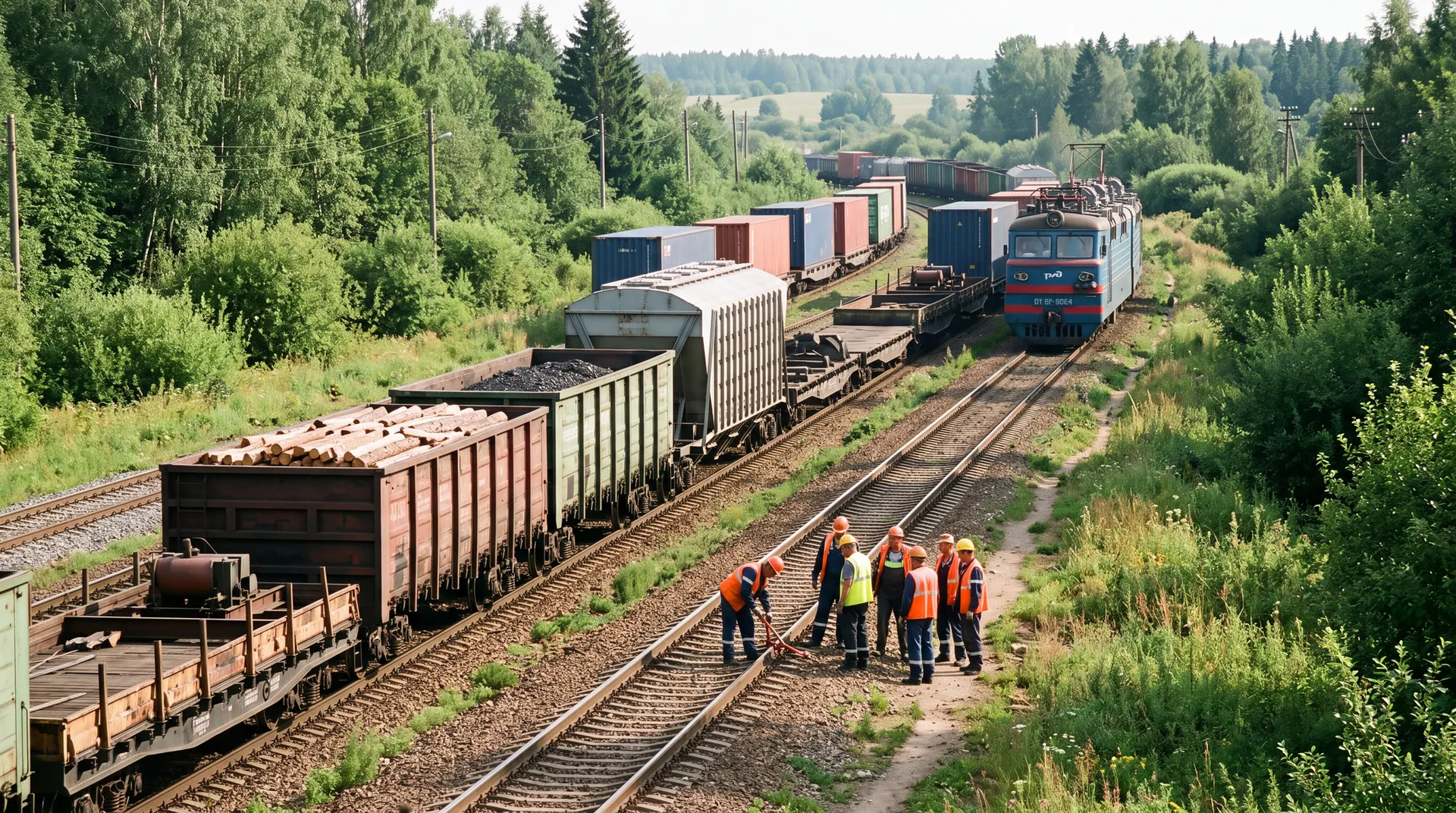
The decision on the Nevel–Dno–Luga–Gatchina route was made at the Eurasian Intergovernmental Council in Minsk. The expansion of the section will add up to 20 million tons per year to the transportation capacity of the infrastructure on the route of Belarusian goods to the ports of St. Petersburg, Bronka and Ust-Luga.
The head of the Leningrad Region, Alexander Drozdenko, explained the logic of supporting the project.:
"We support the decision to expand the railway section from Nevel to Gatchina, because these routes are quite busy today — goods are going in both directions within the framework of Russian-Belarusian cooperation."
In parallel, the reconstruction of the historical Pskov–Gdov–Slantsy railway with an extension to Ust-Luga is being worked out. The route existed in the first half of the 20th century, and was partially destroyed after the Great Patriotic War. The project of its restoration was first presented in April last year. At the first stage, the reconstruction will provide 15 million tons of additional capacity, with the continuation of work — the same amount. In total, the two corridors are capable of adding up to 50 million tons per year.
"We are considering the option of restoring the Soviet railway along the Pskov–Gdov–Slantsy route with access to the developing ports of Ust-Luga," said Drozdenko.
The need for alternative routes arose due to sanctions restrictions: Belarusian enterprises lost the opportunity to use Lithuanian and Latvian ports in the previous mode and reoriented to the Russian Northwest. The current railway infrastructure in this direction is operating at the capacity limit, which creates risks of delays and rising transportation costs for all participants — both Belarusian shippers and Russian exporters and importers competing for the same schedule lines.
The expansion of the existing stage and the possible opening of a new corridor through Pskov reduce this risk: cargo traffic is distributed along two independent routes, both leading to the deepwater terminals of Ust-Luga and adjacent ports. For Russian importers who import goods through Northwestern hubs, this means less competition for wagons and port windows during peak periods.
The deadlines for the implementation of the projects are not specified in the official statements. The inclusion of the Nevel–Gatchina stage in the EAEU priority list translates it into the status of an interstate obligation, which accelerates financing and design. The fate of the Pskov–Gdov–Slantsy–Ust-Luga route is still under consideration.
Related materials:
- Russia has closed railway crossings on the borders with Finland, Latvia and Estonia — why does cargo flow from the Northwest go to Russian ports
- Minsk — Novorossiysk in 5 days: train from one container — which route Belarusian cargoes are already taking to Russian ports
- Russian Railways freight tariffs will increase by 8.5% from October 1. What is the current cost of shipping by rail to ports