The new rates cover two modes of transport and several tariff groups. For most cargo, except goods with GNG codes 1001, 27090090, 2710, 2711, 27090010, 3901 and 3902, the rail fee will be 800,000 soums excluding VAT for 600–800 km, 1 million soums for 801–1,000 km and 1.3 million soums for 1,001 km or more. Road transport will cost more: 2.8 million soums for 0–300 km, 5.2 million for 301–600 km, 6.6 million for 601–800 km and 7.6 million soums for 801 km or more.
A separate scale applies to wheat (GNG code 1001). By rail, the fee per wagon ranges from 6.8 million soums on a short haul (0–300 km) to 26 million soums for distances over 1,001 km. The road tariff for wheat starts at 12 million soums and reaches 33 million soums on long routes. All amounts are exclusive of VAT.
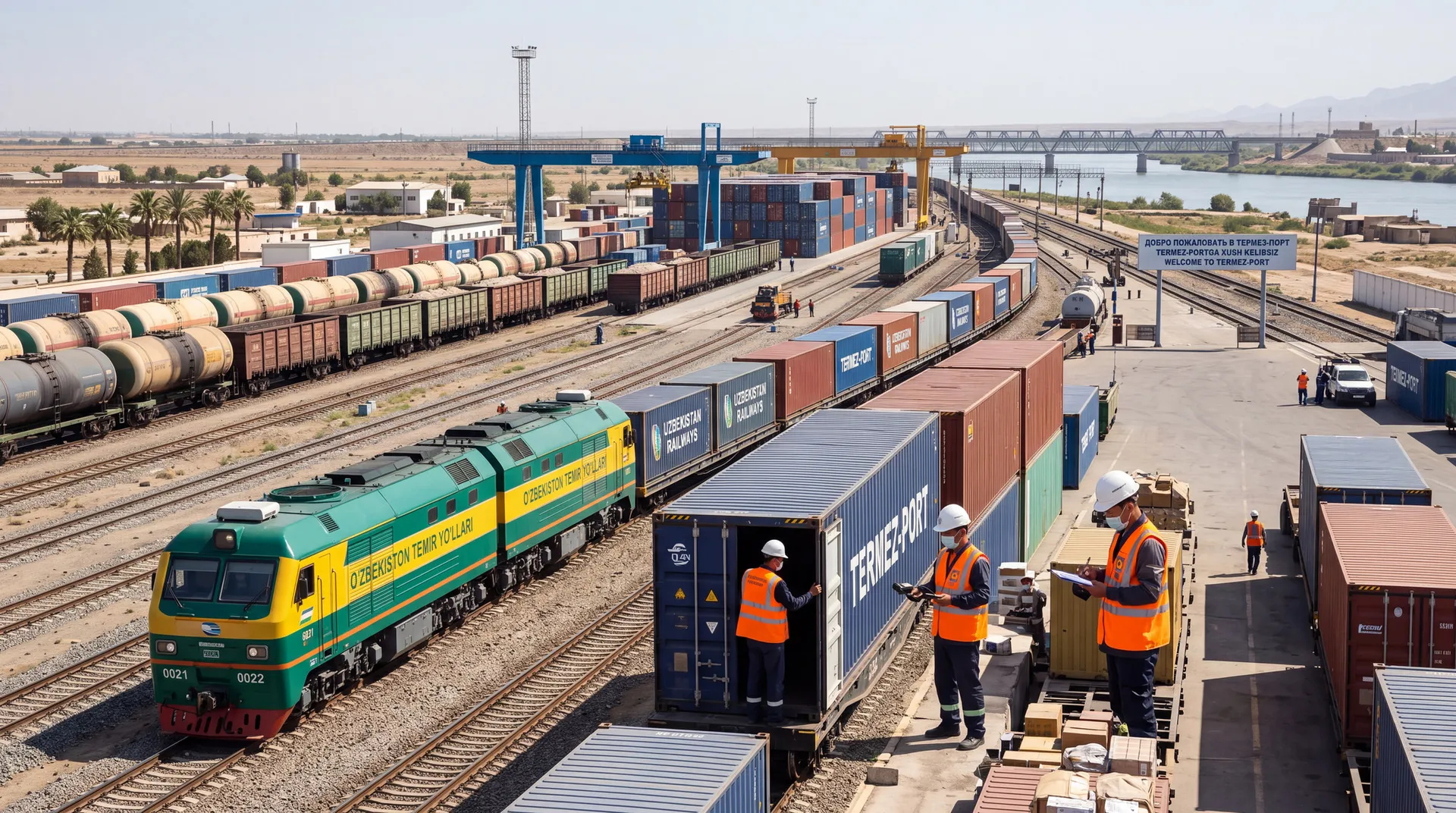
A separate group of rates applies to local traffic to Termez-Port station (code 736704). For general cargo, the fee will range from 3 million soums (0–300 km) to 8 million soums (over 1,001 km) per wagon. Wheat in this direction is charged from 13 million to 33 million soums depending on distance.
Termez is the key border crossing on the Afghan route. It handles the main flow of Uzbek exports to Afghanistan, which is why this route received a dedicated tariff line.
The Afghan market remains dependent on imports across a wide range of goods. According to the World Bank, in March 2026 the country’s food imports grew by 19%, mineral products by 14% and chemical products, including fertilisers, by 24%.
“The most realistic supplies to Afghanistan are food, grain and flour, vegetable oils, mineral fertilisers, fuel and petroleum products, rolled metal, timber, building materials, and certain types of agricultural and energy equipment. Demand is confirmed by the structure of Afghan imports. The market depends on imports of basic goods, raw materials and intermediate products,” said Maria Popova, CEO of WEVED.
For exporters working through Uzbek transit, the new fees mean the logistics component of the contract price has to be recalculated. Grain traders will face the heaviest burden: wheat tariffs are several times higher than rates for other cargo. Companies planning deliveries to Afghanistan in 2026 should check the current rates with the Uzbek carrier in advance and adjust their commercial offers to account for the new fees.
Related news:
- Kazakhstan raises railway tariffs by 23–24% from 21 September 2026 — how rail tariffs in Kazakhstan will rise
- Kazakhstan and Uzbekistan will launch cross-border QR payments — how payments between Kazakhstan and Uzbekistan will become easier
- Russian Railways freight tariffs will rise by 8.5% from 1 October — how much rail freight in Russia has gone up
- Two railway corridors to North-West ports will add 50 million tonnes of capacity — new rail capacity for exports through the ports