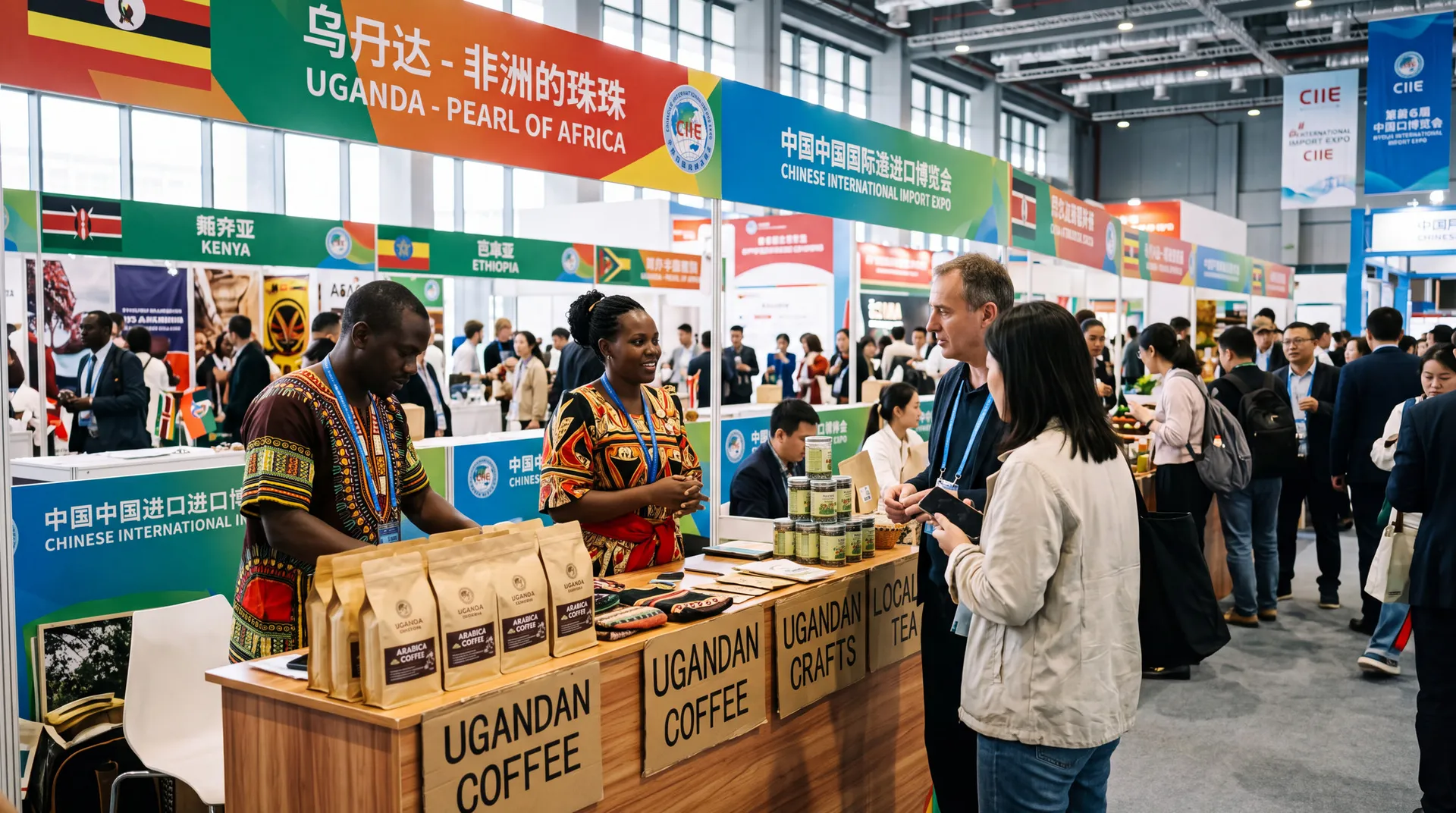
Ugandan NUCAFE exports over 50,000 tons of coffee beans annually, about 30% of which go to China, one of the fastest—growing markets for the organization, which unites more than 2 million farms.
"Previously, African green coffee beans were subject to a duty of 8% when imported to China. The zero tariff has made Ugandan coffee more competitive and has given us confidence in exploring the Chinese market," said Joseph Nkandu, Executive Director of NUCAFE.
Kenyan Sumseron Coffee & Tea Ltd. has already shipped 50 tons of grains under the zero tariff regime by the time of publication. John Seroni, the company's founder and CEO, noted that margin growth has allowed for increased production capacity.
"With the increase in profitability, the company has gained more confidence to expand production. By promoting high standards of openness and introducing zero duties, China has benefited the entire African coffee chain," Seroni said.
In parallel with the tariff changes, companies are using the China International Import EXPO (CIIE) as a channel for finding partners. Ugandan Kimco Processors Ltd. participates in the exhibition for three years in a row. Executive Director Marta Vandera said that already at the first CIIE, visitors lined up, asking about the origin and taste characteristics of coffee.
"CIIE has provided us with an exceptional product demonstration platform and has allowed us to establish contacts with many Chinese partners," Vandera said.
Seroney emphasized that the exhibition accumulates buyers, logistics providers, packaging and equipment suppliers — a complete chain of resources. Thanks to this, the company expanded its export geography to the USA, the EU, Canada and the UAE.
A separate area is the localization of processing in Uganda. Inspire Africa Coffee Park, the country's first industrial coffee processing park, is being built in the Ntungamo district in the southwest of the country. Some of the installed equipment is made in China. In September 2024, more than ten engineers of the park were trained to work with sublimation equipment in Weifang (Shandong Province).
"Local employees have gradually mastered equipment management and production technologies. The development of local processing facilities helps propel the coffee industry up the value chain," explained Duncan Abigaba, the park's director of Market Operations.
For Russian and other exporters competing in the Chinese market, the situation is changing: African suppliers gain a price advantage due to zero duties and at the same time invest in processing, moving from raw material exports to the supply of finished products. Nkandu expects to deepen cooperation with Chinese partners in the field of recycling technologies in order to retain a greater share of added value within Uganda.
Related news:
- 9th CIIE in Shanghai: 4,142 companies from 162 countries, a record 440,000 square meters. m. — the scale of the 9th CIIE Exhibition and what it gives to exporters
- South Africa opened the Chinese market: zero duties led to a 25% increase in exports — how China's zero duties increased South Africa's exports
- REC presented Russian design at CIIE in Shanghai: 63 manufacturers — what Russia came up with at CIIE in Shanghai
- 9th CIIE Exhibition in Shanghai: China opens imports to 180 countries — how China uses CIIE to open imports
- Features of logistics with Africa and the BRICS countries — features of logistics when working with Africa