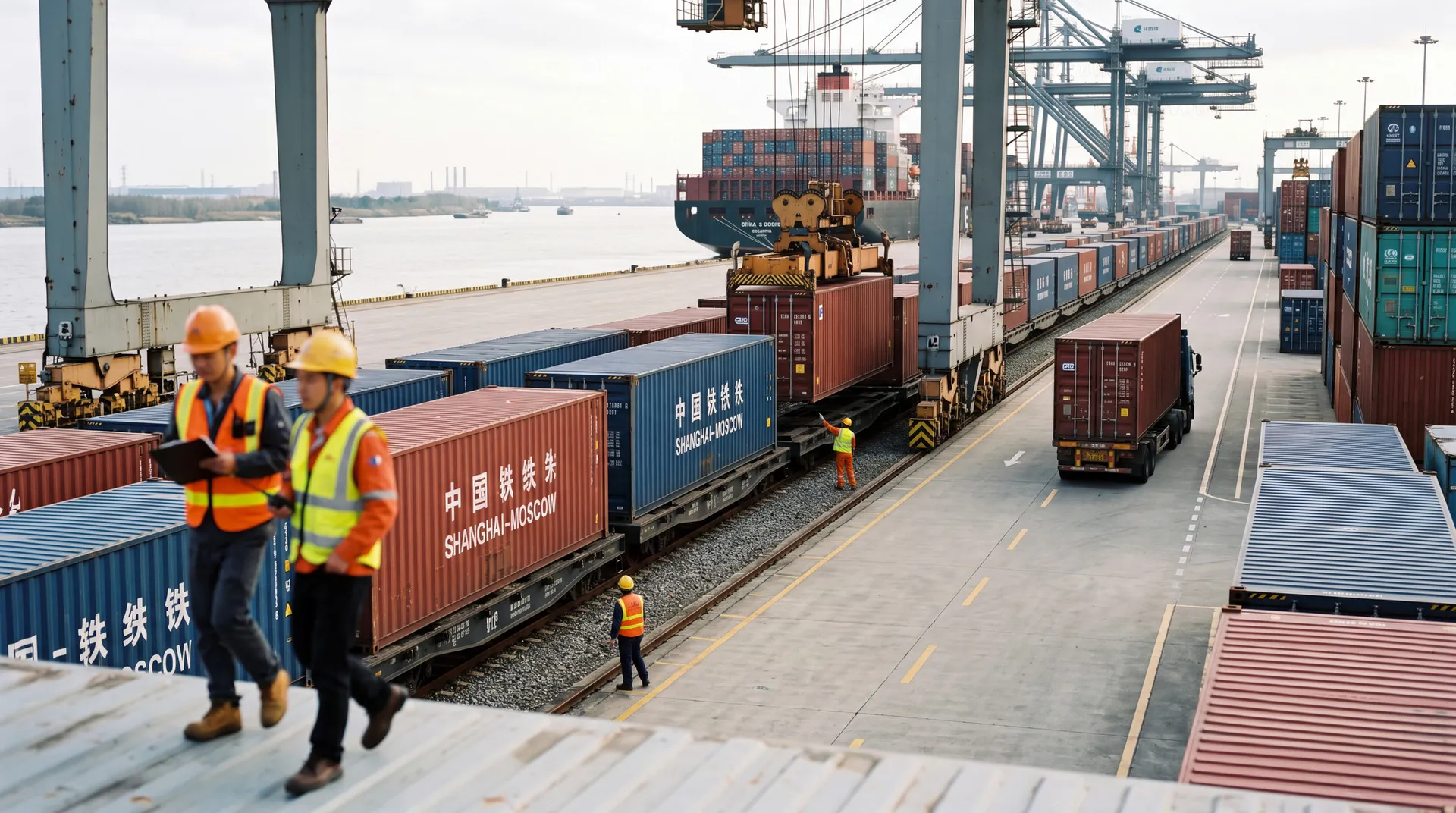








The changes are fixed by two regulations published on October 22: the Decision of the EEC Council dated 09.09.2026 No. 110 and the Decision of the Board of the EEC dated 21.09.2026 No. 131. Both documents introduce special rates through Notes 804C)–808C) to the EAEU Single Customs Tariff, a mechanism that allows for the application of increased duties for a limited period without constant changes in base tariff rates.
The most sensitive changes affected imported clothing. Combined rates are set for the commodity subheadings listed in Decision No. 110: 15% of the customs value, but not less than 1.50–2.25 euros per kilogram. The specific value of the minimum depends on the EAEU HS code. The promotion does not apply to all the clothing of the respective groups, but only to the items included in the appendix to the decision.
The combined rate works as follows: the importer calculates the duty in two ways — based on cost and weight — and pays the larger of the two amounts. For a batch of clothing with a customs value of 10 thousand euros and a weight of 1 thousand kg at a rate of 15%, but not less than 2.25 euros / kg, the duty on the cost will be 1,500 euros, the minimum payment is 2,250 euros. The payment amount is 2,250 euros. If the customs value of the same shipment reaches 20 thousand euros, the duty on the value will amount to 3,000 euros and exceed the minimum: payment — 3,000 euros. Combined rates hit low-cost clothing supplied in large quantities the hardest: it is there that the minimum payment per kilogram is regularly higher than the percentage calculation.
The Board's decision No. 131 introduces increased rates for industrial and electronic products. The new rates apply to protective helmets, vending machines, certain types of timber and radio equipment. The rates are fixed through Notes 805C)–808C) to the EAEU ETT.
Council decision No. 110 additionally establishes a rate of 5% of the customs value for a number of items of industrial products — through a separate note 804C). This list includes some types of shut-off valves, electric motors with a capacity of over 375 kW, as well as specialized cameras: equipment for underwater photography and medical examination. The 5% rate does not apply to the entire product group — the applicability is determined by the specific HS code and the terms of the note.
The Eurasian Economic Commission explained the tariff revision by a change in the market situation: for a number of items, supply volumes increased simultaneously and import prices decreased significantly. The decision was made following the monitoring of a high-level working group led by the Minister for Trade of the EEC Andrey Slepnev. The commission expects that the new rates will protect the existing production facilities of the EAEU countries, save jobs and create conditions for the development of industrial cooperation and import substitution. The increase in duties to the level of WTO tariff obligations is positioned as a tool to protect the union's producers from increased price competition from imports.
The extent to which the increase in customs duties will affect the final price of goods will depend on the structure of supplies, the terms of contracts and the ability of the parties to redistribute additional costs. Importers for the affected items should check the HS codes in existing contracts and recalculate the customs load before the next shipment — special rates are valid until September 30, 2027.
Related news:
- €200 threshold and 5% duty for EAEU e-commerce — from January 2027 — new rules for cross-border e-commerce in the EAEU
- The VAT exemption on imports of six types of equipment will be abolished from 2027 — which VAT exemptions on imports will be abolished
- The EEC simplifies the processing of duty—free supplies through transit countries - how duty-free supplies to the EAEU are simplified
- Customs inspection will switch to electronic format from November 20, 2026 — what is changing in customs inspection