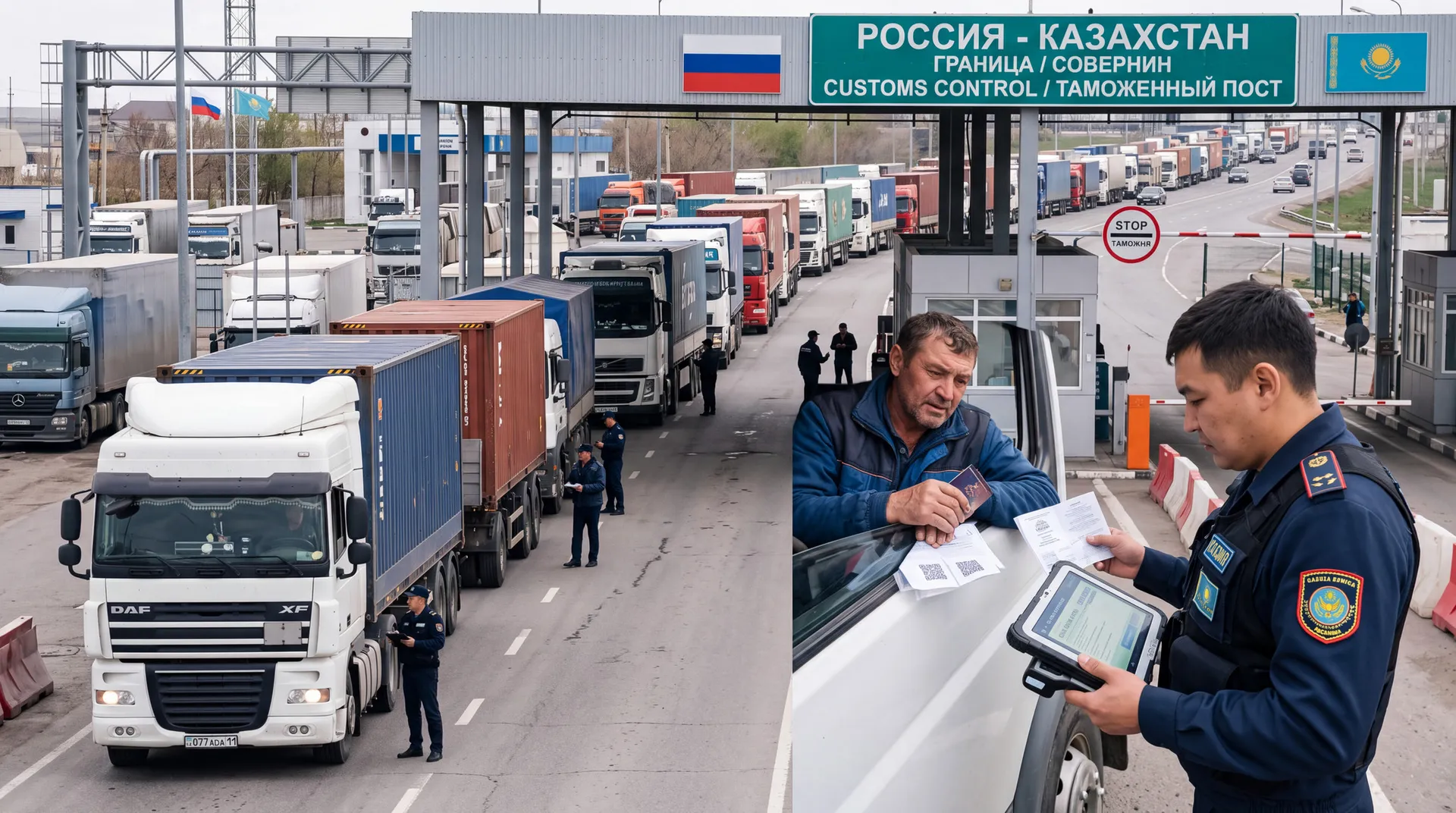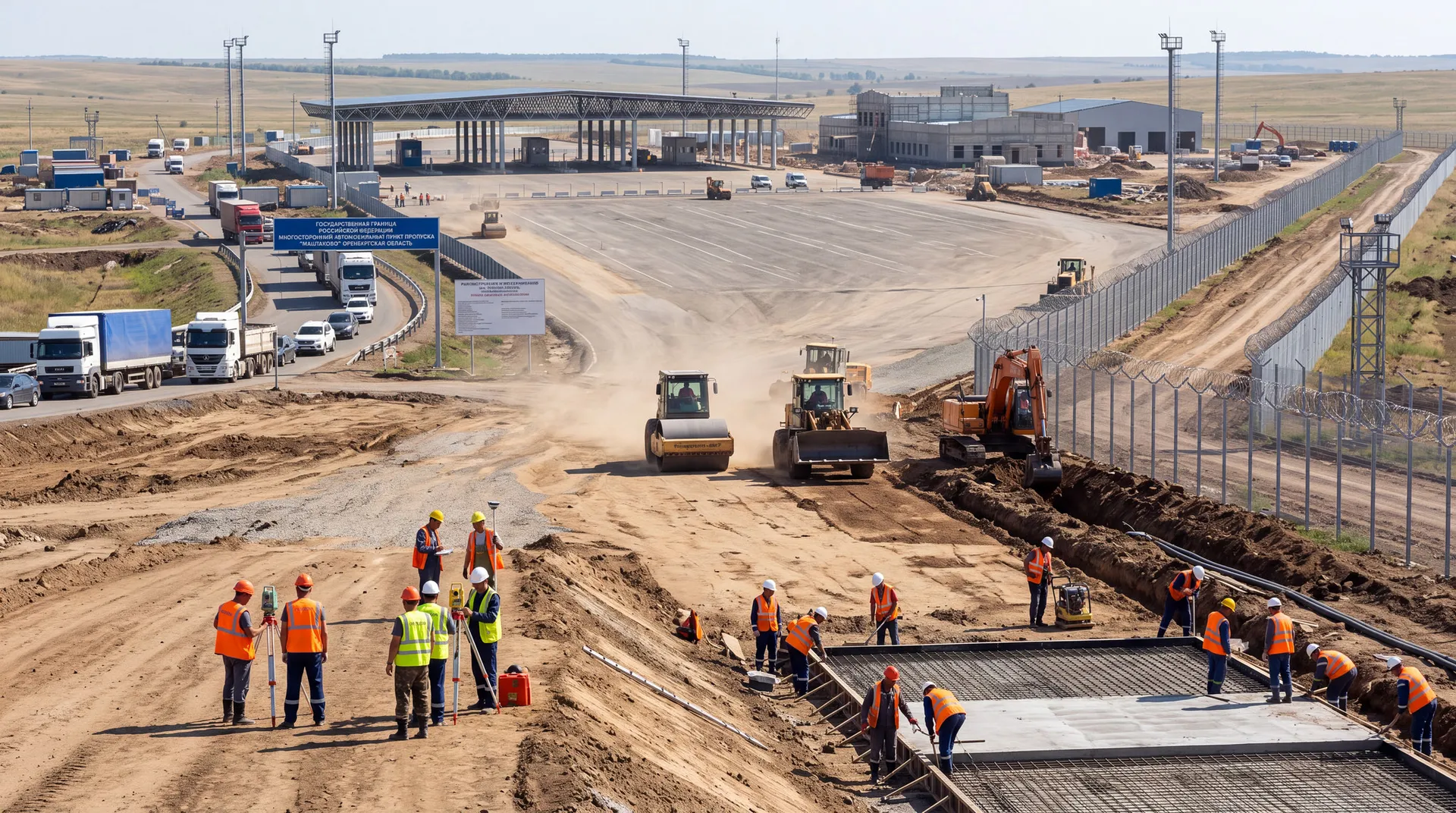
The positive conclusion of the Glavgosexpertiza of Russia was received for the design and estimate documentation for the reconstruction of the Mashtakovo automobile checkpoint in the Orenburg region. All preparatory activities have been completed, and the active phase of construction work will begin in the near future.
"The design and estimate documentation for the reconstruction of the Mashtakovo automobile checkpoint in the Orenburg region has received a positive conclusion from the Glavgosexpertiza of Russia," Rosgranstroy said.
By the time the conclusion was received, a shift camp had already been set up at the site, a temporary road had been filled in and sealed, a 10 kV power supply network had been rebuilt, and a perimeter fence with a safety barrier had been installed. Work is underway on the vertical layout and arrangement of the construction site.
After the completion of the reconstruction, scheduled for the end of 2028, the checkpoint will be able to service 4,659 vehicles per day. The number of lanes will increase from 10 to 36. In addition to the expansion of the lane infrastructure, new buildings and structures will be built at the checkpoint, and modern inspection equipment will be installed to speed up the inspection of trucks.
Mashtakovo checkpoint ranks second in terms of traffic volume among 30 operating checkpoints on the Russian-Kazakh border. Its strategic importance goes beyond bilateral trade: the transition opens access to other Central Asian countries and to China, Russia's largest trading partner. The 2.3-fold increase in throughput directly affects cargo flows throughout the Central Asian region.
Reconstruction is underway on both sides of the border. The Kazakh side started work in August 2025, the main stage from the Kazakh side is expected by the end of 2026. Synchronization of work will avoid a situation in which the expanded Russian section runs into a bottleneck on the adjacent side.
For importers and exporters using automobile transit through Orenburg region, the planning horizon is now clear: until the end of 2028, the access regime remains the same, after that, the infrastructure restriction on this crossing is lifted. Companies building long-term logistics schemes with partners from Kazakhstan, Uzbekistan, Kyrgyzstan and China should take this date into account when designing routes and supply volumes.