The joint announcement by the Ministry of Finance and the State Tax Administration of the People's Republic of China will take effect on April 1, 2027. VAT refunds on exports of new energy vehicles (NEV) will be reduced by 4 percentage points, from 13% to 9%. The excise policy for products subject to consumer tax remains unchanged: the current excise tax exemption and refund benefits remain in full.
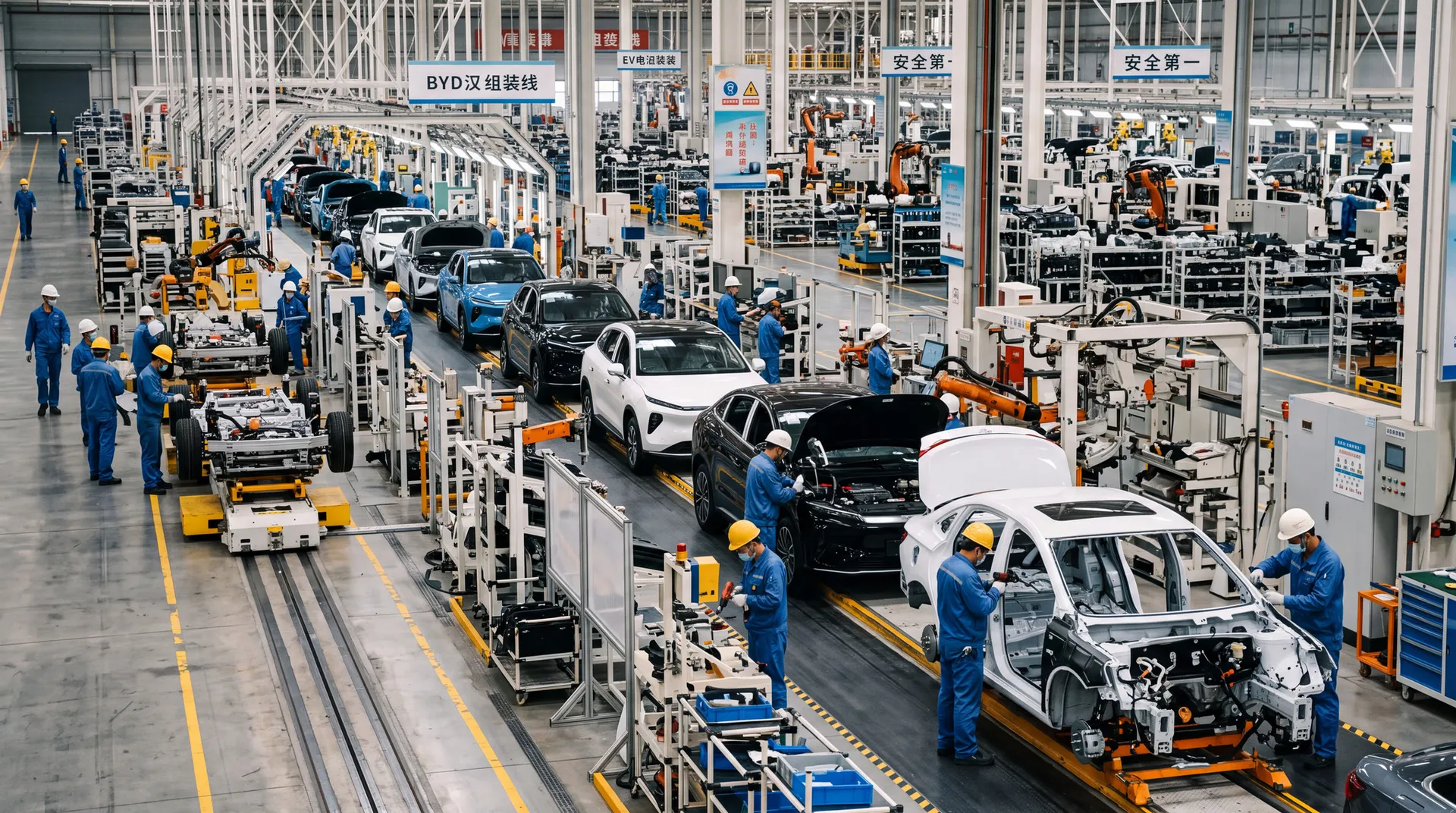
The background for the solution is the industry's record performance. In the first nine months of 2026, NEV production and sales in China showed double-digit growth. Electric vehicles accounted for 53.6% of the total car sales in the country, while exports grew by 130% year-on-year.
Cui Dongshu, Secretary General of the Chinese Association of Passenger Cars, explained the logic of the adjustment.:
"The adjustment is designed to curb price competition in exports, support the survival of the most competitive enterprises, displace competition at the expense of price, and stimulate industrial renewal."
According to him, the change will accelerate the reorientation of Chinese NEV manufacturers to overseas production. The market leaders who already have foreign facilities and strong brands will benefit. Cui also stressed that the measure should not be perceived as an export restriction: a moderate adjustment of incentives should steer the industry away from the advantages of scale of production towards strength in product quality, technology and positioning in global value chains.
For Russian importers and distributors of Chinese electric vehicles, a reduction in VAT refunds means an increase in the cost of Chinese suppliers. Manufacturers without overseas plants will face margin pressure and will probably be forced to revise export prices. Contracts concluded before April 2027 according to the current price conditions should be checked for reservations about changing the tax regime.
The decision continues a series of successive adjustments to export tax benefits to China. In January 2026, the authorities announced the abolition of VAT refunds for solar panels from April 1, 2026. For battery products, the rate was reduced from 9% to 6% for 2026, and from January 1, 2027, the benefit will be completely abolished. The NEV sector has received a milder scenario — partial reduction instead of complete cancellation — but the policy vector is obvious: Beijing is systematically reducing price subsidies for exports in favor of high-quality industry growth.
Related materials:
- China has been tightening car export requirements since 2027 — what else will change for Chinese car exports starting in 2027
- Foreign trade contract in 2026: 3 points that will protect you and 3 that will drown you — how to protect the price in the contract from tax changes
- Permission to export CNC machines from China: what has changed and how it affects the delivery time — as China has already changed the export rules for another group of goods