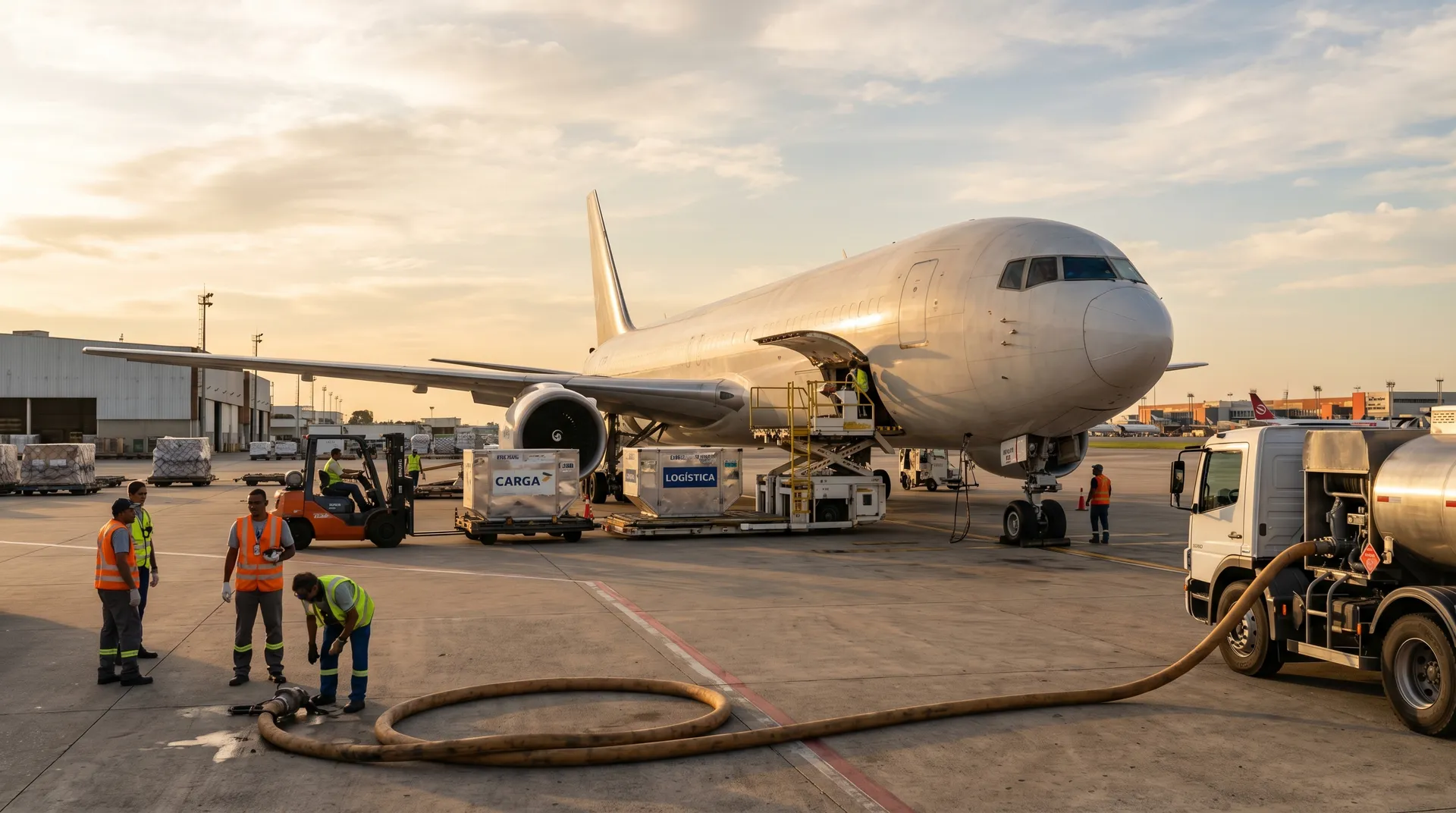
The Brazilian aviation logistics market has entered a new price reality: since April 1, the state-owned Petrobras has raised prices for jet fuel by about 54.8%. To soften the blow to distributors and airlines, the company proposed a scheme in which part of the increase is not paid immediately, but is distributed to subsequent payments.
For foreign economic activity and e-commerce, this is not the “inside story of aviation.” The air duct is the main tool when cargo is expensive, time is critical, and delay breaks the contract: electronics, pharma, components, samples, urgent replenishment of marketplace warehouses. When fuel prices rise in one step, tariffs rise quickly, and part of the capacity leaves the market because carriers and forwarders are rebuilding the network to a more stable margin. Industry estimates by Reuters noted that fuel accounts for more than 30% of airline operating expenses in Brazil, which explains the speed of price and schedule revisions.
The installment plan looks like a “buffer”, but for business it does not negate the main thing: the base cost of delivery has increased. This means that companies will change the rules of the game within the supply chain: somewhere they will replace the airlift with a slower one, somewhere they will lay down a larger insurance reserve, somewhere they will re-sign contracts with indexation of fuel surcharges.
For store owners on marketplaces in other countries that work with Latin America, this is a practical signal: “fast delivery" is becoming more expensive, which means that goods with thin margins will more often go to the sea or combined route. For carriers and 3PL operators, this is a window to offer customers clear schemes: separation of urgent cargo by service levels, planning of air capacity in advance, and transparent fuel recharge rules so as not to argue over the fact.