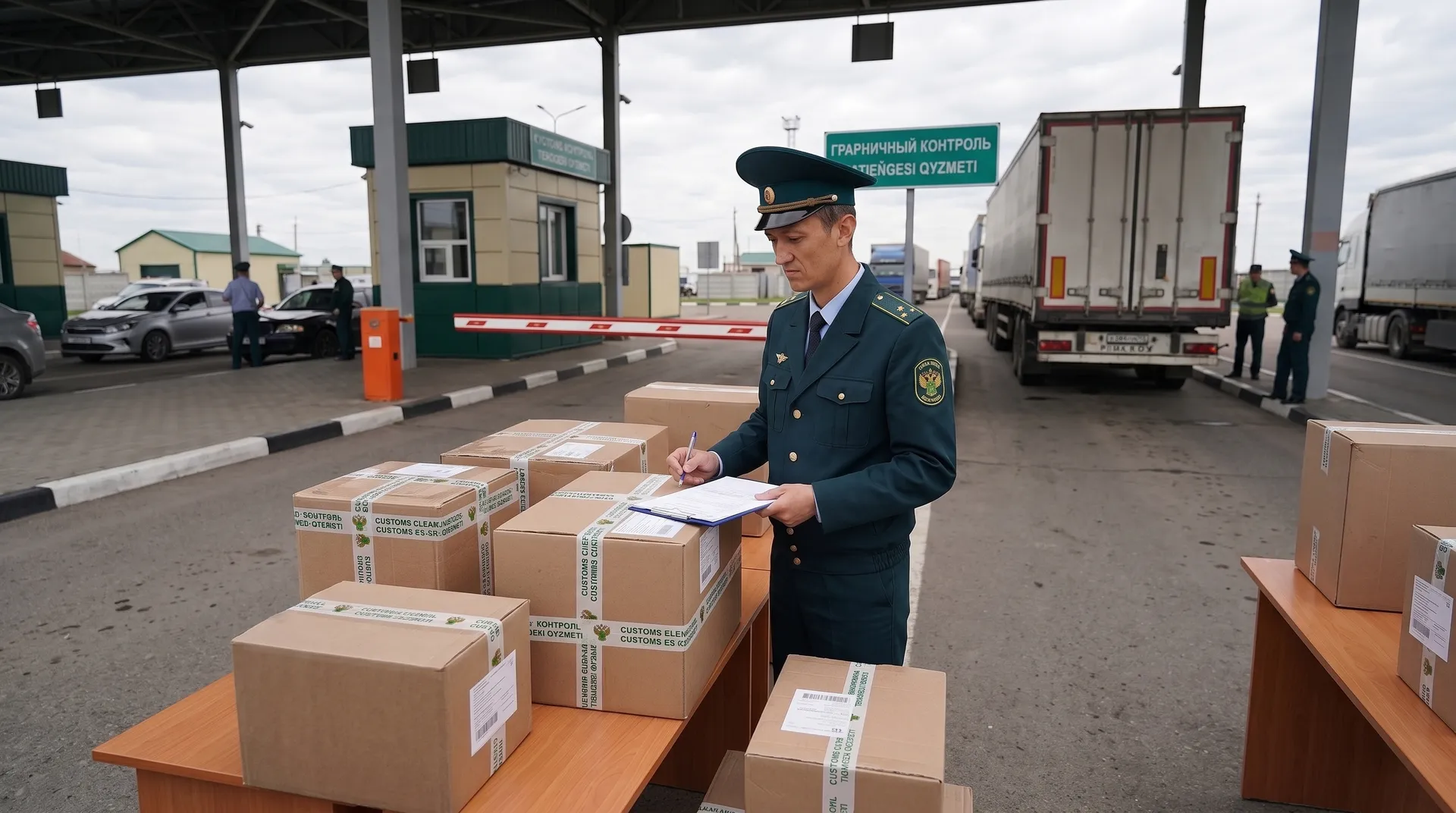
The goods of foreign electronic commerce are allocated in the EAEU Customs Code in a separate category with its own rules of regulation. The heads of Government of the Union countries instructed to ensure that these provisions are ready for practical application by January 1, 2027.
"The key novelty of the amendments to the EAEU Customs Code is the allocation of goods purchased within the framework of foreign electronic commerce into a separate category, with the definition of the specifics of its regulation," recalled the EEC Trade Minister Andrei Slepnev.
There are two figures that are changing the economics of cross-border parcels. The uniform customs duty rate for most e—commerce goods is 5%, but not less than 1 euro per kilogram. The duty-free entry threshold is fixed at 200 euros.
The phrase "at least 1 euro per kg" hits cheap heavy items harder than the percentage part. A package weighing three kilograms and costing 30 euros gives an interest rate of 1.5 euros, and a weight rate of 3 euros. For categories with a low price per kilogram — household goods, tools, accessories — the calculation will be based on weight.
The ratification of the Protocol has already been completed in Armenia, Belarus, Kazakhstan and Kyrgyzstan. Entry into force is expected after the receipt of the last instrument of ratification by the Eurasian Economic Commission. In parallel, Member States are preparing domestic legislation and information systems.
What a business should do. Sellers and operators of cross-border e-commerce have less than a year to rebuild. Recalculate the unit economy for positions with a low cost per kilogram — for them, the new design gives the greatest increase in load. Evaluate where it is more profitable to switch from the parcel scheme to wholesale import with subsequent sale within the country. Logisticians should think in advance how to count and present the weight for each shipment: the amount of payment depends on this.
Similar materials on the website
- Since August 30, the rules for declaring postal items have been changed — how parcels are processed, to which new rates will be applied.
- The EEC has changed the filling out of the declaration for express cargoes - a neighboring contour of regulation of cross—border shipments