







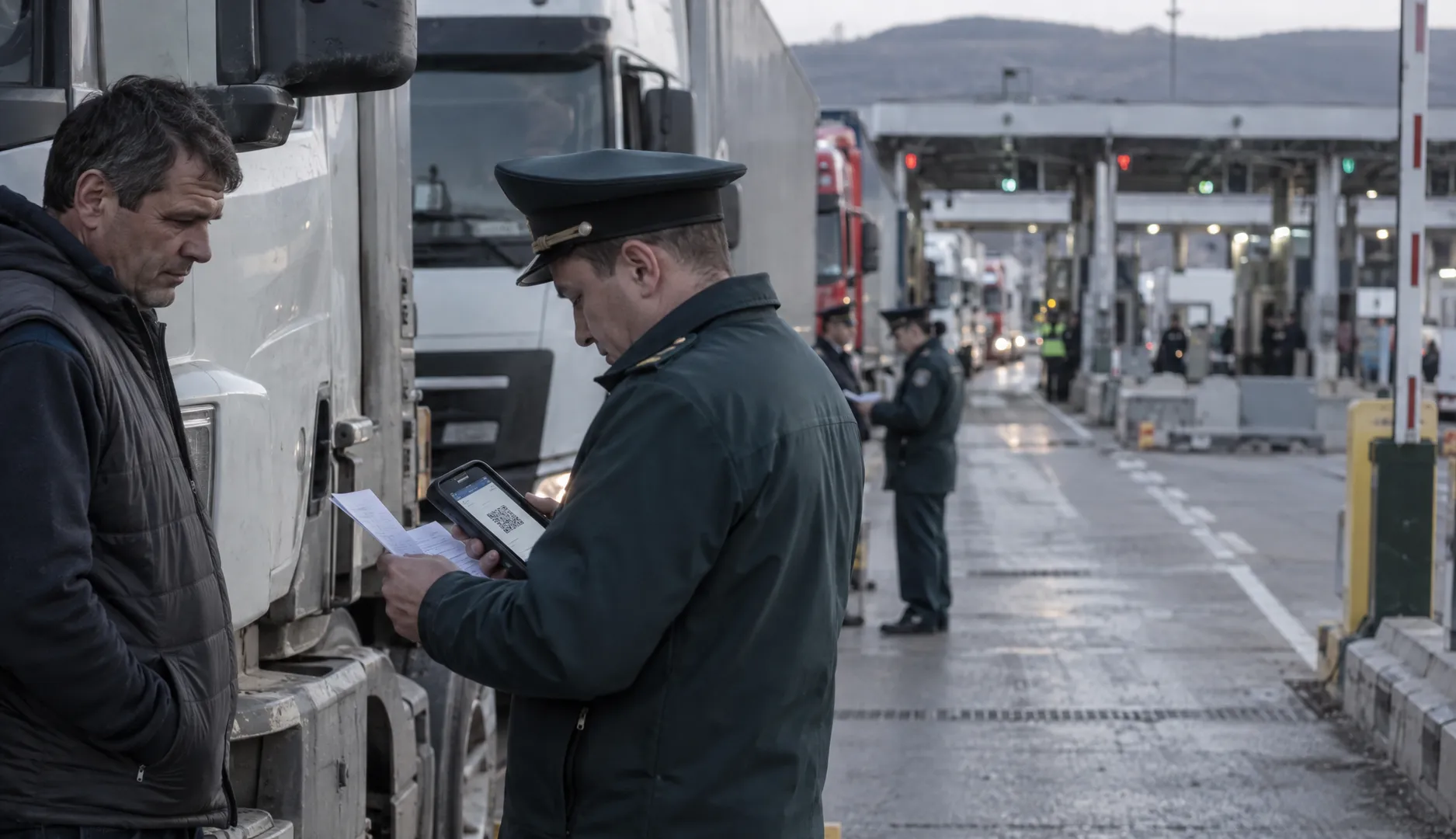
The security payment under the SPOT system is calculated against future VAT and excise duties. Before the arrival of the cargo, the importer draws up a document on the upcoming delivery of goods (DPP) and receives a QR code for checking at the border. So far, the mechanism applies only to road transport; for supplies from Belarus, the obligation to make payments has been postponed until July 2027.
The problem arises when the conditions of carriage change after the DPP is issued, for example, the carrier is replaced or the information about the cargo is adjusted. The current procedure requires you to issue a new DPP and make the payment again. At the same time, the funds initially transferred remain blocked: they cannot be used to pay other taxes or returned to the bank account until the desk check is completed.
The mechanics of freezing look like this: the company transfers 2 million rubles, then changes the carrier and deposits another 2 million. 4 million instead of 2 million are temporarily reserved for one delivery, although tax obligations are not doubled. The indirect tax declaration must be submitted no later than the 20th day of the month following the month when the goods were registered. The desk check takes up to three months, and the countdown does not start from the moment of the repeat payment — the actual period of unavailability of money turns out to be even longer.
"According to Arthur Leer, president of the Association of Exporters and Importers, the temporarily blocked amount may amount to about 20-22% of the value of the consignment, excluding excise taxes."
For small and medium-sized businesses, this is a significant part of working capital. Even the temporary unavailability of several hundred thousand rubles can delay the next purchase and force the attraction of borrowed funds. In conditions of high cost of lending, some of the additional costs — bank fees, transport downtime, re-registration of documents, the work of accountants and logisticians — are included in the final price of the goods.
Added to the technical difficulties are delays in displaying security payments for one to three hours, errors in generating QR codes, and failures in checking documents at the border. If the QR code is not readable, the carrier may be refused a pass until the problem is fixed.
The Federal Tax Service confirmed that the current procedure for changing carriers provides for issuing a new DPP and making the payment again. The Agency is considering the possibility of submitting a correction document, a mechanism that will allow changing information about the carrier without reissuing the delivery. So far, this is only a planned change.
Excessively transferred funds are credited to a single tax account after the completion of the desk check. If the tax balance is positive, the taxpayer has the right to request a refund; it can be claimed within three years. Experts suggest supplementing future changes with a mechanism for automatically releasing previously reserved funds upon reissue or cancellation of a delivery.
Prior to the introduction of the adjustment DPP, importers are advised to carefully check the information about the cargo and the carrier before processing the documents and to reflect all related DPP in the tax statements when submitting the declaration on indirect taxes.
Related news:
- Exemption from security payment on import from Belarus extended until June 30, 2027 — Belarusian supplies are exempt from security payment until June 30, 2027
- From October 1, only one day to correct an error in the DPP — why an error in the DPP must be fixed within one working day
- SPOT from June 1: shipment for 3 million — 660 thousand rubles frozen — calculation of the freezing of working capital using the example of a shipment for 3 million rubles
- The Ministry of Finance clarified the SPOT rules: QR code, consolidated cargo and marketplaces — official explanations of the Ministry of Finance on QR codes and consolidated cargo
- SPOT from April 1, 2026: step-by-step instructions for importers from the EAEU and carriers — step-by-step instructions on SPOT for importers and carriers
- Single Tax Account and customs: why import funds are not part of the Single Tax Account, but a separate story — why import funds are accounted for separately from the Single Tax Account