The truce was concluded just a few hours before the expiration of Trump's next ultimatum. Pakistan acted as an intermediary. Trump wrote on Truth Social: he agreed to a truce at the request of the Pakistani side, provided that Iran fully opens the Strait of Hormuz.
Tehran confirmed its agreement through the official Iranian media. The Iranian Foreign Ministry announced the continuation of the exchange of messages on the details of the agreement.
Terms of the deal
Iran will, within 30 days of the agreement, clear the Strait of Hormuz, the sea mines laid since the conflict began in February. Vessels of all countries receive the right of passage without restrictions, as before the closure. The United States is lifting the naval blockade of Iranian ports in parallel, not after. Neither side takes the first step unilaterally.
After 30 days, there is a 60-day period of negotiations on the nuclear program. Iran will receive $24 billion of frozen assets. The nuclear issue remains open, but it is excluded from the first stage.
The "Hybrid Truce"
The truce has been signed, and the strikes are continuing. On the night of June 1, the United States launched an airstrike on the Iranian island of Qeshm, a few hours drive from Bandar Abbas. Iran responded with a missile attack on an American military base in Kuwait. Vice President Vance commented, "These cease-fire agreements are always a bit confusing."
This is not a classic truce — it is a working scheme for reducing the intensity in parallel while maintaining individual operations. Insurance markets understand this and do not withdraw War Risk Premium immediately.
What happened to the markets
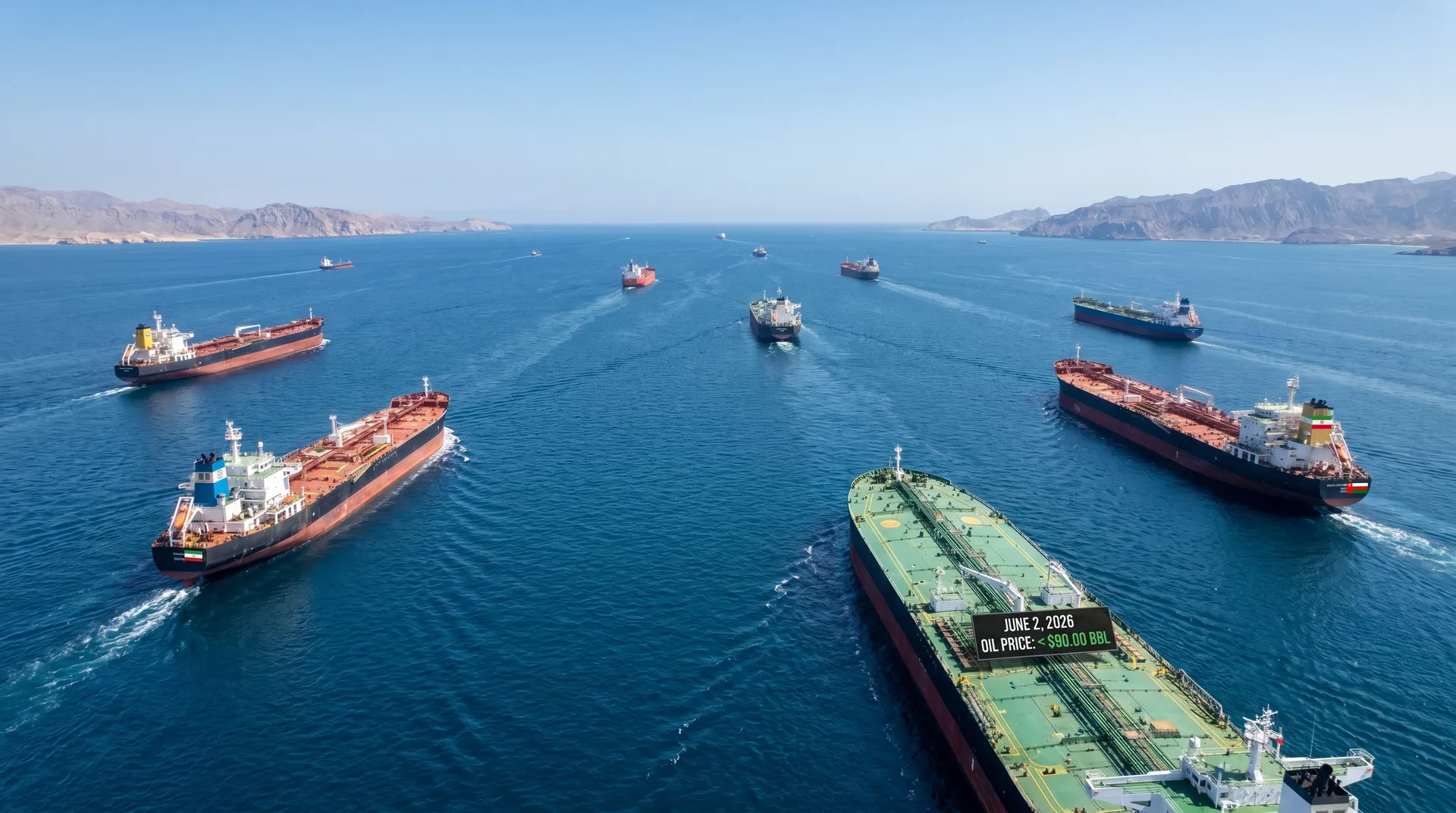
WTI dropped below $90, losing almost 7% on the day. Brent is the same. Goldman Sachs is revising down its year-end forecast. Gas futures in Europe fell by 18.5% as markets anticipate the resumption of Qatari and Emirati LNG supplies through Hormuz.
When freight rates return to normal
Insurers are waiting for a physical clearance — 30 days. After that, the War Risk Premium will begin to decrease in stages. Market forecast: decrease by 40-60% from peak values by the end of July. Freight rates follow insurance with a 1-2 week lag.
For companies working with the UAE, India, and Bahrain via sea routes: plan the normalization of logistics costs starting in mid-July. Before that, the current rates were used as a baseline scenario.