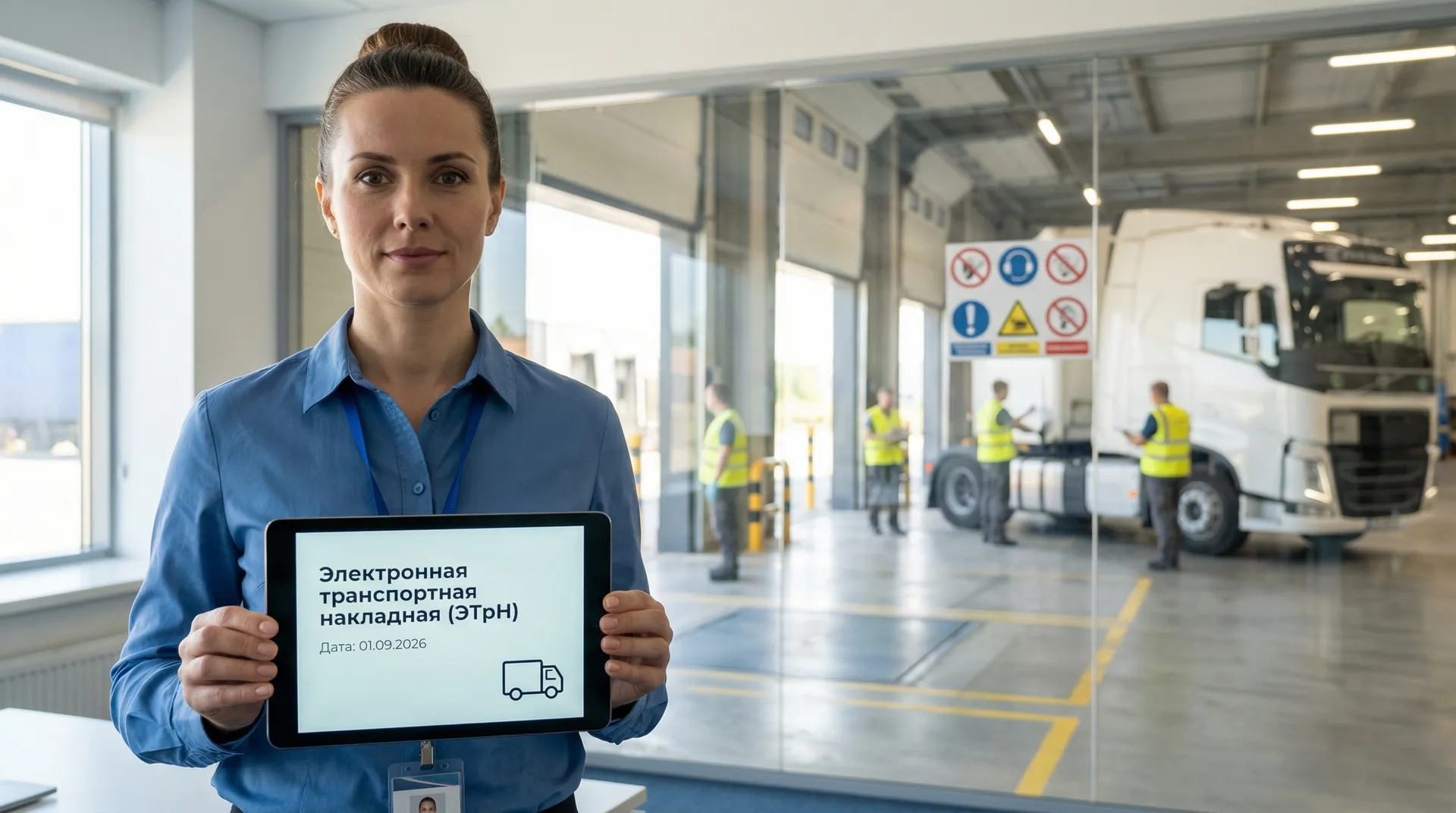
Starting from September 1, 2026, transportation documents in Russia will become mandatory in electronic format. Key forms, which today often live in folders and “on the way” between offices, must be drawn up and exchanged via a digital contour, and information on them is recorded in the GIS EPD. The reversal affects the entire chain: the carrier, the forwarder, the shipper, and the recipient.
For the market, this means reassembling the usual routine. Companies need a qualified electronic signature, setting up machine-readable powers of attorney for employees, connecting to an operator who can transfer documents to GIS EPD, and integrating with accounting systems.
The most sensitive area is located in small businesses and sole proprietors: there is often no separate IT team, and logistics is carried out “manually” through mail and messengers. The costs consist of licenses, improvements, jobs, training, and support.
The expert assessment of coverage shows an important detail for management decisions: it is convenient for statistics to consider everyone who ever receives or sends goods as “affected”, but in real practice there are nuances of contracts and roles of the parties.
Natalia Khobrakova explains: "Therefore, the figure of 95% may be somewhat overestimated."
At the same time, she confirms the market readiness picture that is close to the business: "As for the assessment of about a third of the companies already subject to the changes, it looks realistic and generally corresponds to current practice."
From the point of view of foreign economic activity and BRICS corridors, the topic of EPD is rapidly moving beyond the scope of “domestic accounting”. Russian companies are increasingly building supplies through multimodal routes, where the speed and predictability of document flow affect the cost of money on the way, insurance, warehouse schedules, and terminal slots. The electronic transportation loop simplifies the reconciliation of statuses between participants, speeds up flight closure and transportation calculations, and reduces the number of errors due to manual input.
The practical focus of preparation is simple now.
- First, decompose your shipments according to scenarios and understand where the company is a party to the transportation, and where delivery is included in the cost of delivery, in order to correctly allocate responsibilities and risks.
- Second, check who signs the documents and which powers of attorney the employees need.
- Third: coordinate the exchange rules with the operator's key counterparties in advance so that the shipment does not depend on the “incompatibility” of the processes on day X. The sooner this circuit starts working in the pilot, the less chance there is of stopping shipments during the busiest season of 2026.