In Russia, since September 1, 2026, the mechanism of automatic fines for violations in the turnover of labeled goods has been launched. The system operator describes the principle by analogy with traffic cameras: a violation is recorded by the system, a decision is made without an on-site inspection and without the participation of an inspector.
Changing the control model is more important than the amounts themselves. Previously, a violation was detected during a check, meaning the event was rare and time-consuming: the company had room to fix the process before the next visit. Automatic locking removes this pause. The discrepancy between the data of the cash register, the workflow and the monitoring system becomes the basis for the sanction at the moment when it arose.
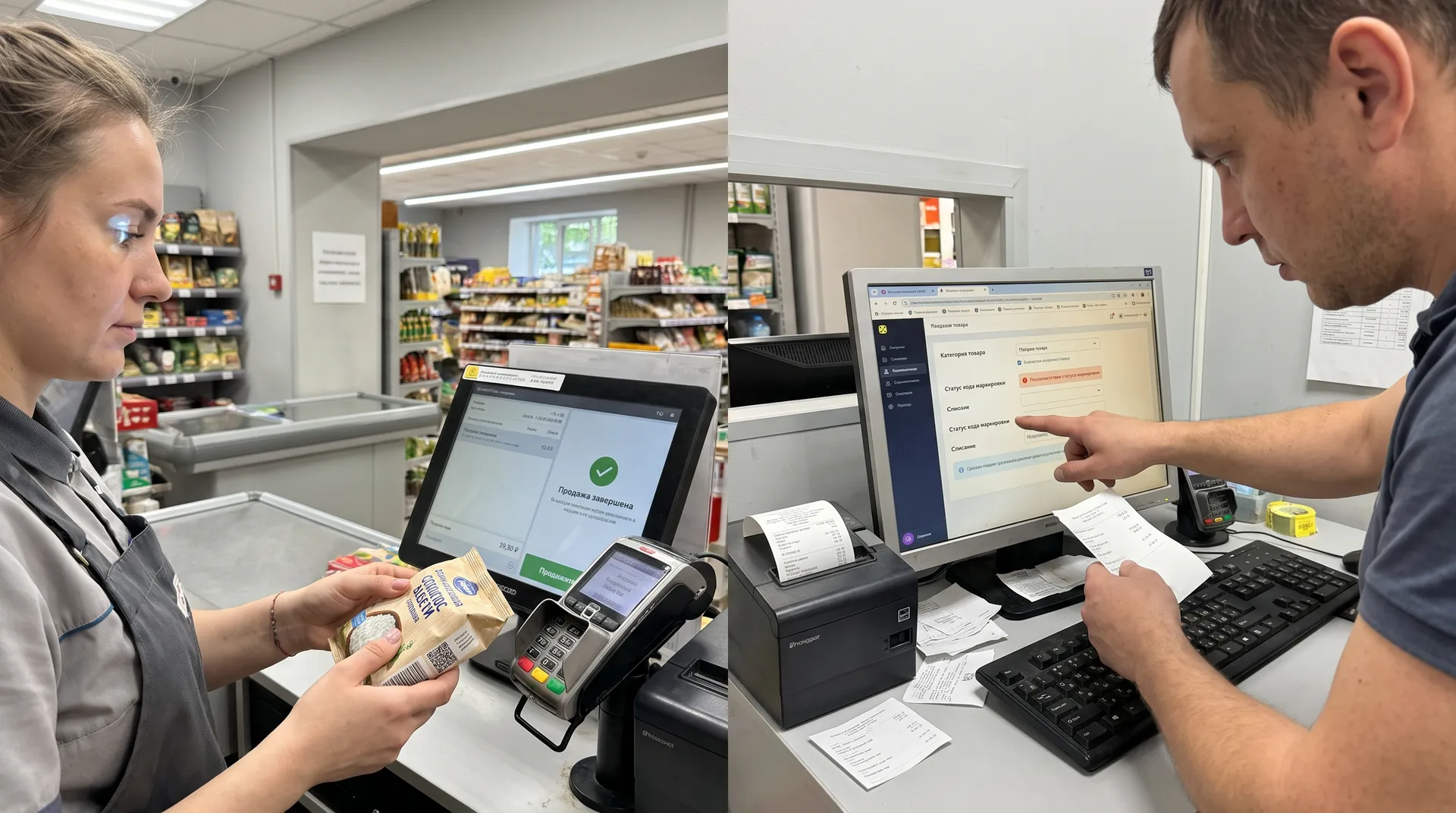
One type of error is particularly sensitive to this, which is technical. Incorrect configuration of the exchange with the operator, a failure in transmitting information about the withdrawal of the code at the checkout, and the out-of-sync of directories between the accounting system and the National Catalog. This is not a one-time error.: it is repeated at every sale until it is found. With manual checks, this resulted in one episode, with automatic checks, an account for each fact.
The launch context increases the risk. Since the same date, mandatory labeling has been extended to cottage cheese, pasta, honey, muesli and instant potatoes, and some items have moved from the category of "Confectionery" to "Dairy products". Each such change requires editing the cards and settings — and each one gives a chance for a discrepancy.
What the business should do in the coming days. Check the correctness of the withdrawal codes at the checkout: conduct control sales for new categories and make sure that the information goes into the system. Check the National Catalog for the product cards for which the product group has changed. Set up internal monitoring of exchange errors with the operator — it is more expensive to find out about a failure from a fine resolution than from your own report. And to sort out the appeal procedure in advance: with automatic production, the time limit for objections is usually short.
Similar materials on the website
- Automation of the UPD for an "Honest mark": how to avoid fines for labeling errors — where exactly the workflow breaks and how it is repaired