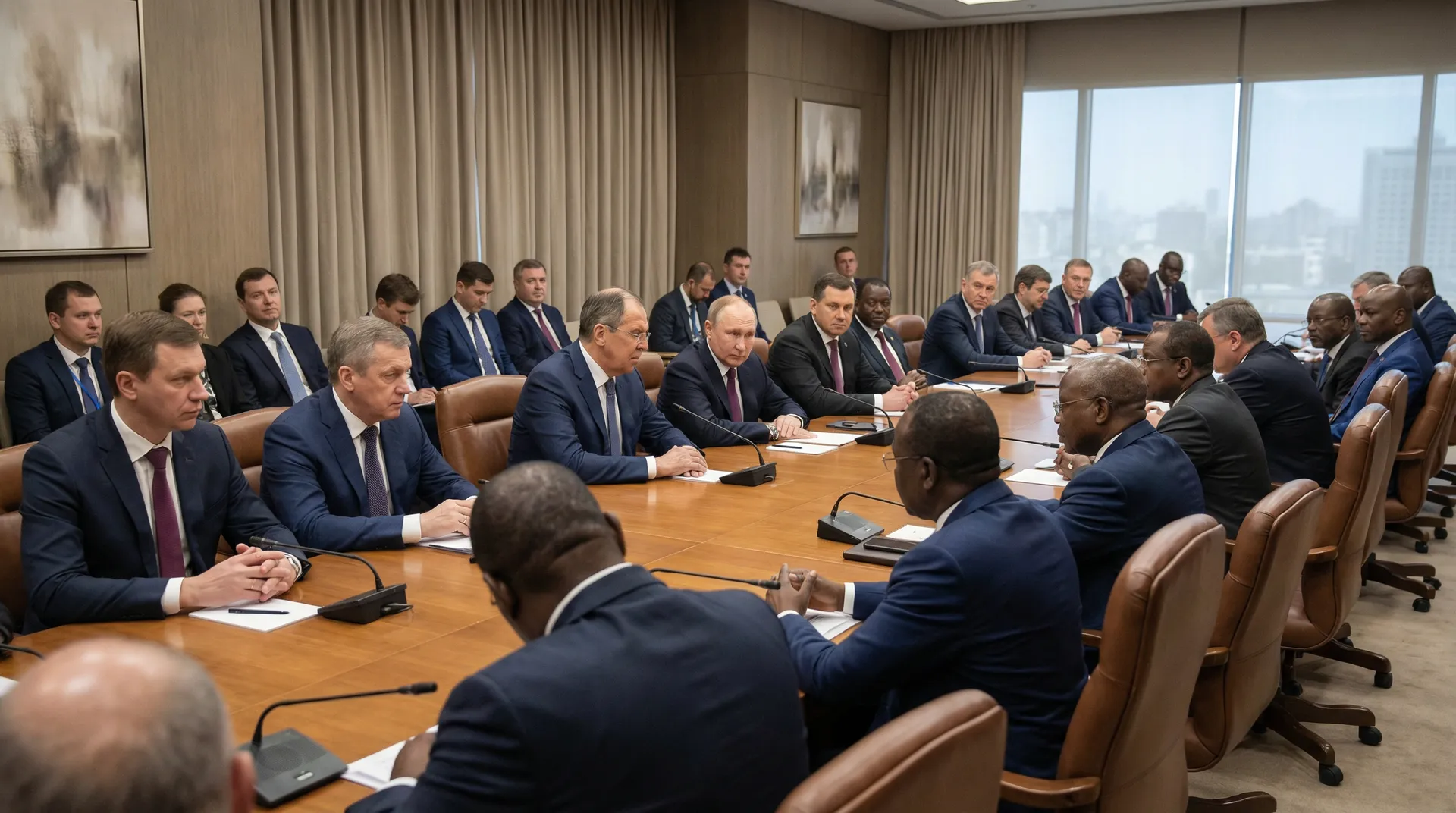
Russia and the African states have agreed to systematically expand cooperation in trade, environmental protection and the humanitarian sphere. The relevant agreements were reached at the second ministerial conference of the Russia–Africa Partnership Forum, which was held for the first time on the African continent in Cairo.
The key outcome of the meeting was the approval of a joint action plan for the period 2026-2029. The document was approved by the Ministers of Foreign Affairs of Russia and African countries and sets out the priorities for further development of the partnership. This was reported to the Russian Ministry of Foreign Affairs.
The conference was attended by representatives of the foreign ministries of 52 African States, as well as the executive bodies of eight regional integration associations. This level of representation confirmed the growing interest of African countries in building a sustainable and multi-level dialogue with Russia.
The central events of the forum were talks between Russian Foreign Minister Sergei Lavrov and Egyptian President Abdel Fattah al-Sisi, as well as a joint press conference by the Russian and Egyptian foreign ministers. The parties discussed the regional agenda, prospects for economic cooperation and preparations for the next stage of the Russian-African dialogue.
The Ministers agreed to launch and expand joint projects in a number of priority areas. These include trade, environmental protection and climate, education, healthcare, culture, sports, youth policy and information cooperation. Such a wide range of areas underlines the comprehensive nature of the partnership and its focus on long-term development.
Following the conference, a joint statement was adopted reflecting the agreed approaches of the parties to solving global and regional problems. In addition, during the forum, a number of bilateral documents were signed aimed at the practical implementation of the agreements reached.
"We have reason to say that the conference has created a good foundation for high–quality preparations for the third Russia—Africa summit, which is scheduled for 2026," Sergey Lavrov said.
Over the course of two days, the Russian delegation took part in more than 20 bilateral and multilateral meetings. The Russian Foreign Minister held talks with representatives of the Republic of the Congo, Burundi, Tanzania, Botswana, Gambia, Namibia, Equatorial Guinea, Togo, Mauritania, Malawi, Seychelles, Rwanda, Egypt, Algeria, Zimbabwe, Tunisia, South Sudan, as well as ECOWAS.
Experts note that the coordination of the action plan until 2029 translates the Russia–Africa dialogue from the format of political declarations into a practical plane, creating the basis for sustainable trade, economic and humanitarian cooperation.