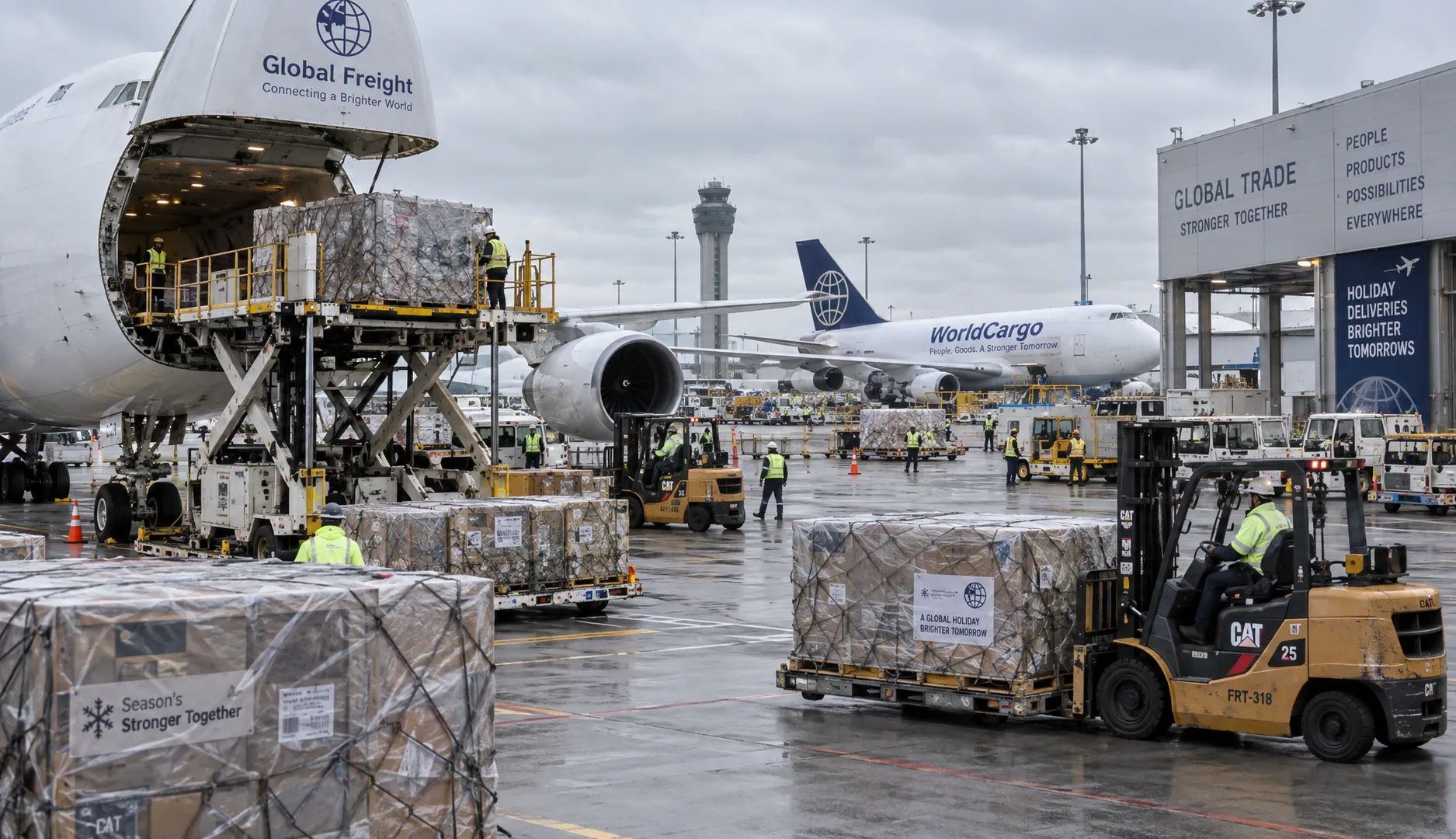
The Baltic Air Freight Index for the reporting week rose by 6.6% compared to the previous one and recorded the highest value since the beginning of the year. According to the TAC Index, the current rates "significantly exceed the peak values of the previous two seasons." Analysts attribute the growth to the traditional New Year's Eve rush: the market is entering the busiest weeks before Black Friday and Thanksgiving in the United States, as well as before Christmas in Europe.
The most significant dynamics are on routes from Asia. Rates from Hong Kong increased by 4.6% over the week and by 29.2% year-on-year. From Shanghai — plus 5.7% compared to the previous week and plus 21.1% compared to the level of last year. Of the other major East Asian hubs, Seoul and Taiwan, the picture is not uniform: rates from Seoul mostly increased, while from Taiwan towards the United States there was a slight decrease. From Southeast Asia, rates rose from Vietnam, and from Bangkok they decreased slightly, amid reports of accumulated congestion disrupting import and export volumes.
TAS Index noted: "Rates from China to the United States have slightly decreased from recent highs."
European hubs showed a sharp recovery after the previous week's decline. Frankfurt gained 9.9% over the week, mainly due to destinations in the United States and China. London grew by 5.6%. Transatlantic rates traditionally strengthen during this period: in winter, passenger flights are reduced, along with the abdominal capacity of aircraft available for cargo.
North America also saw growth on transatlantic routes to Europe and the UK, as well as towards China and Korea. At the same time, the rates on South American destinations did not rise.
It is noteworthy that the increase in rates is taking place against the background of falling prices for jet fuel. According to the IATA Jet Fuel Price Monitor, for the week ending November 6, the average fuel price decreased by 6.5% compared to the previous week and by 7% compared to the level a month earlier. Cheaper fuel did not deter the growth of freight rates — the demand for capacity turned out to be a determining factor.
For companies shipping cargo by air from China, Hong Kong, and other Asian hubs to Europe, the United States, or the BRICS countries, the coming weeks will be the most expensive of the year. Planning shipments based on peak surcharges and booking capacities in advance will reduce the financial burden before a possible decline in rates after the holiday season.
Related news:
- Air freight from Hong Kong to Europe rose in price by 8.8% over the year — as air freight rates from Hong Kong increased in the fall
- Wuhan Ezhou Airport has opened cargo routes to Africa and South America — new cargo routes from China to Africa and South America
- Ethiopian Cargo has launched on the CargoAi platform: 30,000 freight forwarders have access to flights — how freight forwarders book air transportation through digital platforms
- Container transportation through the Far East will rise in price by 50-80 thousand rubles by December — how much will container transportation through the Far East add by the end of the year
- Air cargo transportation in BRICS: pros, cons and cost — pros, cons and cost of air cargo transportation