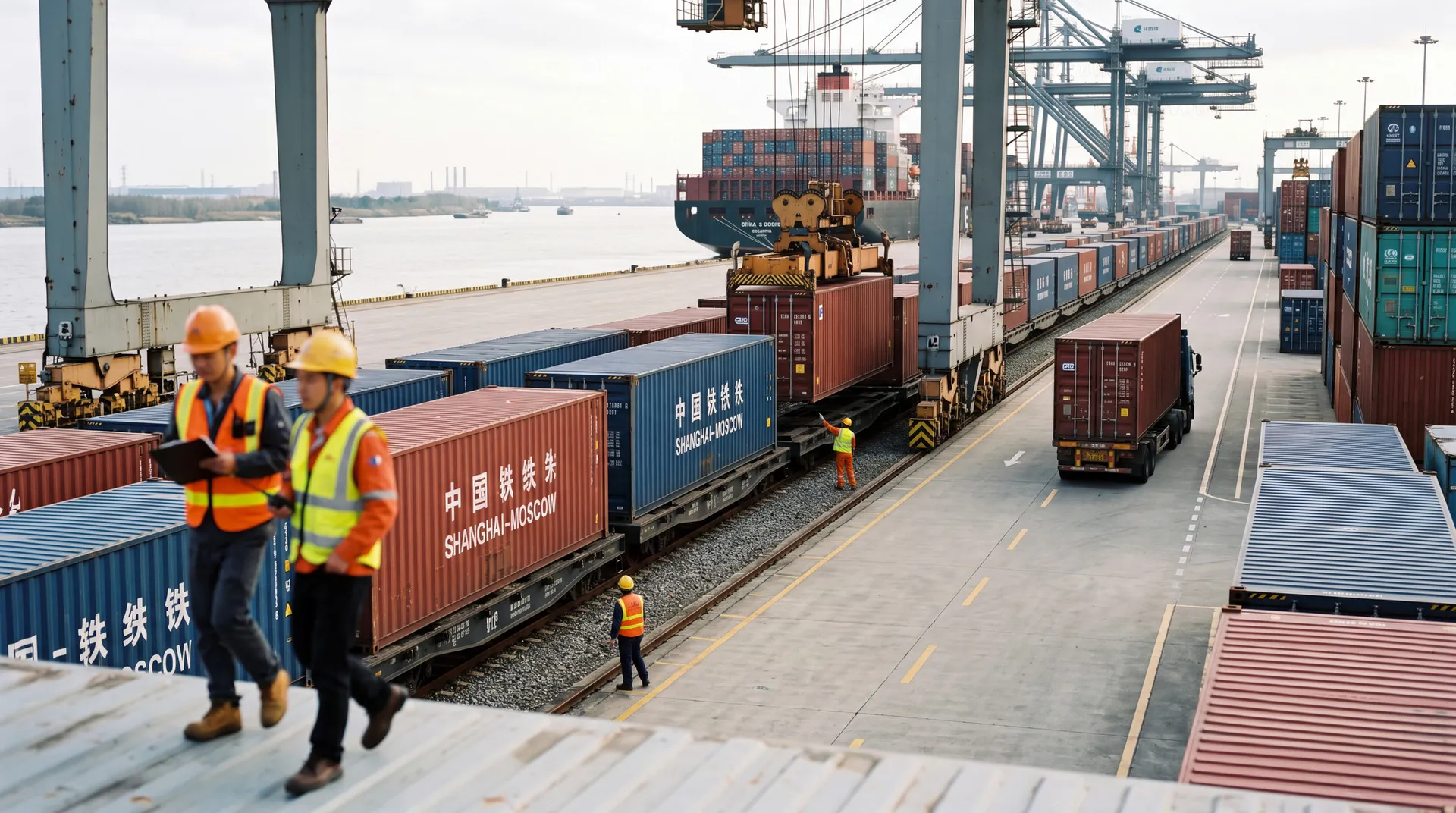








The eight categories are ranked from highest to lowest priority. First in line are shipments to restore traffic, fight fires and deal with emergencies when a state of emergency or martial law is declared, as well as special and military cargo. Right after them come containers in all types of traffic and international transit.
Third place goes to domestic and export shipments of high value-added goods from the list of priority products, as well as energy hydrocarbons in specialised rolling stock. The fourth level covers perishable and socially important food cargo; during the heating season, coal for power plants and the housing and utilities sector is added to it. Fifth place is reserved for raw materials, components and equipment for domestic plants. Export raw energy cargo in general-purpose rolling stock takes the penultimate, seventh place. All other shipments come last.
When capacity is insufficient even within one category, the carrier divides the available throughput and carrying capacity of the section across the entire declared volume using a proportionality coefficient. If the cargo still cannot pass, the shipper is offered an alternative route or a different shipping period. Up to 5% of capacity in each category is reserved for requests submitted after the end of the planning period.
For grain and oilseed exporters from Russia and Kazakhstan, the new procedure formalises a restriction that already exists in practice. Yevgeny Karabanov, head of the analytics committee of the Grain Union of Kazakhstan, commented on the situation:
“The situation on grain and oilseed export routes is now determined not so much by demand as by infrastructure capacity. Grain shipments are slow due to KTZ restrictions caused by network congestion; loading limits towards the Saryagash and Bolashak border crossings are particularly telling, where restrictions remain for a number of Uzbek Railways stations.”
The formal order of priority means that when the network is congested, grain and oilseeds in general-purpose wagons will automatically give way to container and transit shipments. Shippers working with Kazakhstan’s rail infrastructure should reconsider their shipment planning horizon and agree alternative routes in advance, especially on the Saryagash and Bolashak routes, where restrictions by Uzbek Railways already apply.
Related news:
- Kazakhstan deepens the port of Aktau: Middle Corridor cargo flow to grow by 30% — how the Middle Corridor across the Caspian is developing
- Russia and Kazakhstan launched freight transport with the e-CMR electronic waybill — how the electronic waybill works between Russia and Kazakhstan
- Kazakhstan raises railway tariffs by 23–24% from 21 September 2026 — how rail tariffs in Kazakhstan will rise
- Russian Railways freight tariffs will rise by 8.5% from 1 October — how much rail freight in Russia has gone up