Indian companies have significantly increased purchases through the Belarusian Universal Commodity Exchange: by the end of 2025, the amount of exchange transactions involving Indian residents amounted to almost $5 million, which is three times more than a year earlier.
At first glance, the figure does not look "gigantic" on the scale of foreign trade, but for the exchange channel it is an indicator of a qualitative shift: when residents of the country begin to work regularly through the exchange, it means that they have accepted the rules of the game — standardized contracts, transparent pricing and a more understandable execution system. For foreign economic activity, this reduces transaction costs: fewer "gray" negotiating discounts and more market benchmarks, which are easier to protect in contracts and financing.
The growth driver is raw materials and supplies for light industry. Belarusian manufacturers supplied cotonized flax fiber to India, while Belarus, on the contrary, received items in demand for processing and production: pure wool and polyester tops.
This is an important marker: trading is not built around a single commodity, but around a clear industrial cooperation, where the exchange acts as a "secure gateway" for transactions according to standardized specifications.
The next step is to expand the range. Indian suppliers have expressed interest in selling food products through exchange trading (among the items discussed are rice, nuts, tea, coffee, dried fruits). The logic is clear: the exchange allows you to "bypass unnecessary intermediaries," which means putting pressure on the final price and speeding up turnover.
For the Belarusian market, this potentially means more competitive supplies, and for Indian manufacturers, a channel of access to customers with more transparent requirements for documents and quality.
What does this mean for logistics and 3PL:
- The demand forecast is more stable. Exchange transactions are repeated more often and are better planned than one-time "acquaintance" deliveries, which means it is easier for carriers to manage capacities.
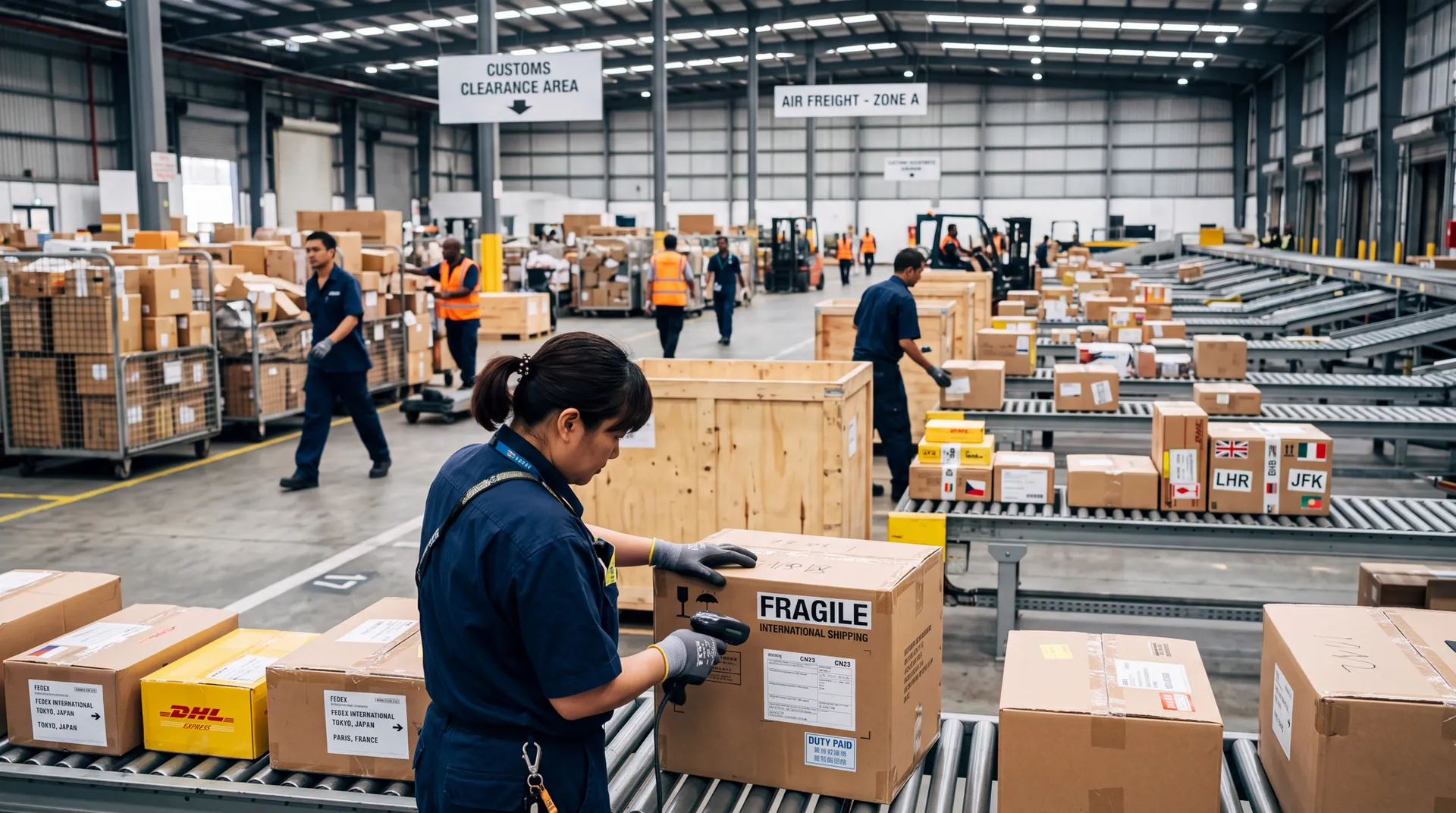
- More requirements for documents and tracing. The exchange channel raises the bar of compliance: specifications, certificates, origin, packaging, and quality control become part of the hardware of the transaction, not an application.
- The growing role of consolidation and warehouse preparation. Textile raw materials and food products are different categories in terms of logistics, but both like proper packaging, batch size and clear identification, otherwise losses eat into margins.
A separate indicator of maturity is the growth of institutional presence: as of mid—February 2026, 14 Indian residents were accredited on the exchange, some of them first came to the site in 2025.
In other words, "three times" is not a surge of one company, but a signal of the expansion of the circle of players. For the participants of foreign economic activity in the BRICS circuit, this is a story about how trade is gradually moving away from disparate chains to more formal, scalable mechanisms where price and execution become more predictable.